

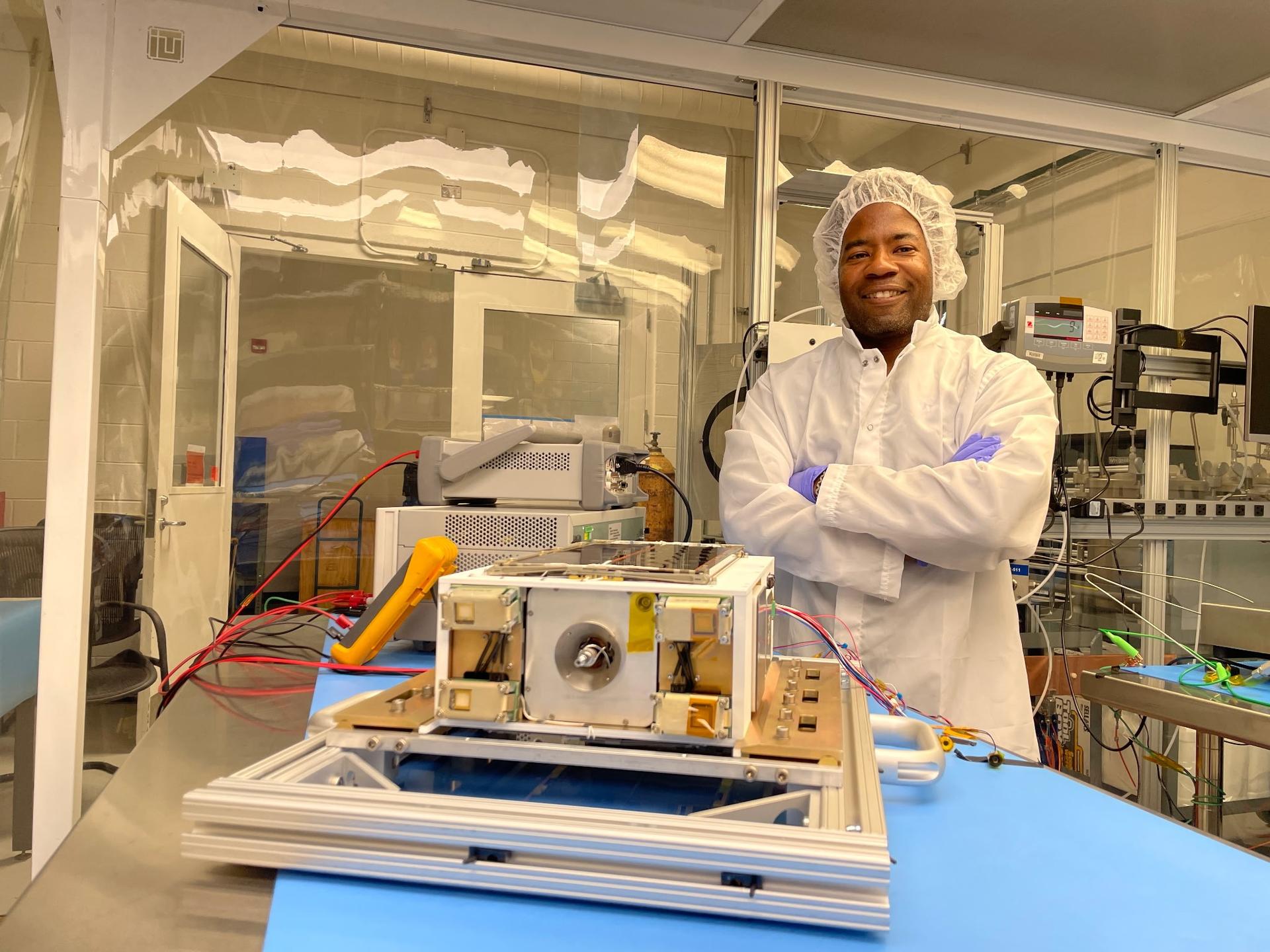
A small NASA satellite designed to prove that one propulsion system can do the work of two has finished its ground testing and is preparing for launch. The ASCENT Propulsion Dual Mode mission, a 6U CubeSat roughly the size of a large shoebox, is manifested to fly no earlier than 1 October 2026 on a SpaceX Falcon 9 from Vandenberg Space Force Base in California.
One tank, two kinds of engine
Spacecraft usually carry two separate propulsion systems: a high-thrust chemical system for fast manoeuvres such as reaching the right orbit, and a low-thrust electric system for slow, efficient adjustments such as holding position. ASCENT combines both. Chemical engines and electrospray thrusters draw on one shared tank of non-toxic propellant. NASA’s aim is to cut weight and volume while keeping the freedom to manoeuvre, which matters most on small satellites.
Three tests before flight
At NASA’s Marshall Space Flight Center in Huntsville, Alabama, engineers put the spacecraft through:
- Leak testing with pressurised helium inside a vacuum chamber;
- Thermal-vacuum testing, simulating the extreme temperatures and vacuum of space;
- Spin testing, which measures the spacecraft’s mass properties and centre of gravity so it can fly stably and keep its antennas pointed to Earth and its solar panels facing the Sun.
Project manager Nehemiah Williams said that making sure the propulsion system works across all the different teams involved is what makes the mission successful.
What happens next
Once released into an orbit about 325 miles (roughly 520 kilometres) above Earth, the spacecraft will begin a nine-month demonstration. If it performs as planned, the design could offer a lighter, simpler way to power future small satellites.
Launch dates in spaceflight can change. This report reflects NASA’s announcement of 25 September 2026.



Leave a Reply