

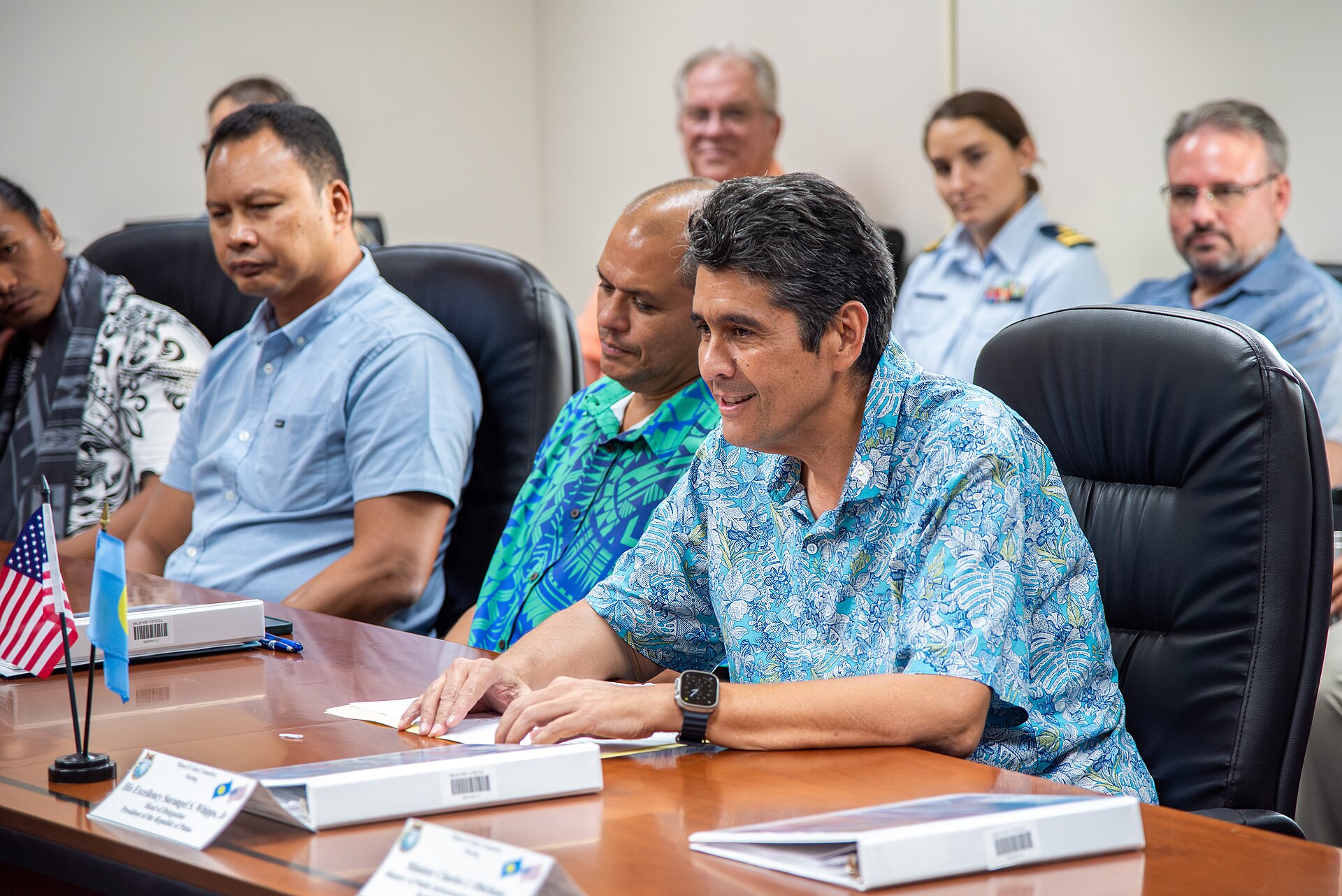
Leaders from across the Pacific Islands Forum meeting in Koror, Palau, endorsed the Belau Declaration for Urgent and Inclusive Climate Action on 4 September 2026, naming climate change the single greatest threat to the security, livelihoods and wellbeing of Pacific peoples and demanding faster access to grant-based finance ahead of the COP31 climate summit.
The declaration capped the 55th Pacific Islands Forum Leaders Meeting, held under the theme “B.E.L.A.U: Building Economies, Life, Action, Unity” from 30 August to 4 September, the first time the annual gathering has returned to Palau in twelve years. Leaders called for a faster transition away from fossil fuels, greater investment in renewable energy, and continued progress toward keeping the 1.5C warming limit within reach.
“Not a future risk”
Several ministers described the declaration as recognition of harm already under way rather than a distant scenario. Vanuatu’s Minister for Climate Change Ralph Regenvanu said “loss and damage is a reality that currently exists in my country, not a future risk.” Tuvalu’s Minister for Home Affairs and Climate Change Maina Talia said funding was needed “to stay alive, to stay in our countries.”
Palau’s President Surangel Whipps Jr, who took over as incoming Forum chair, urged major powers engaging in the region to direct their attention toward climate funding rather than strategic rivalry. He also used the gathering to launch a prospectus seeking roughly $2 billion to move Palau’s electricity supply to 100 percent renewable sources.
Money still short of target
The declaration leaned heavily on the Pacific Resilience Facility, the region’s own climate and disaster financing vehicle, which came into force in May 2026 after Australia and Fiji ratified its treaty. Billed as a way to channel money directly to communities without adding to government debt, the facility has so far attracted roughly $172 million of pledges toward a year-end target of $500 million, well short of the $1.5 billion leaders eventually want raised. Its headquarters is being established in Tonga.
Why it matters
The Belau Declaration carries no legal force, but it sets the negotiating position Pacific nations will carry into COP31, where loss-and-damage funding and fossil fuel phase-out commitments are expected to dominate talks. For low-lying atoll nations such as Tuvalu and Kiribati, the declaration is treated as a statement that adaptation money is an obligation rather than charity. Whether pledges to the Pacific Resilience Facility close the gap to its funding targets will be an early test of whether the declaration’s language translates into finance reaching communities.



Leave a Reply