
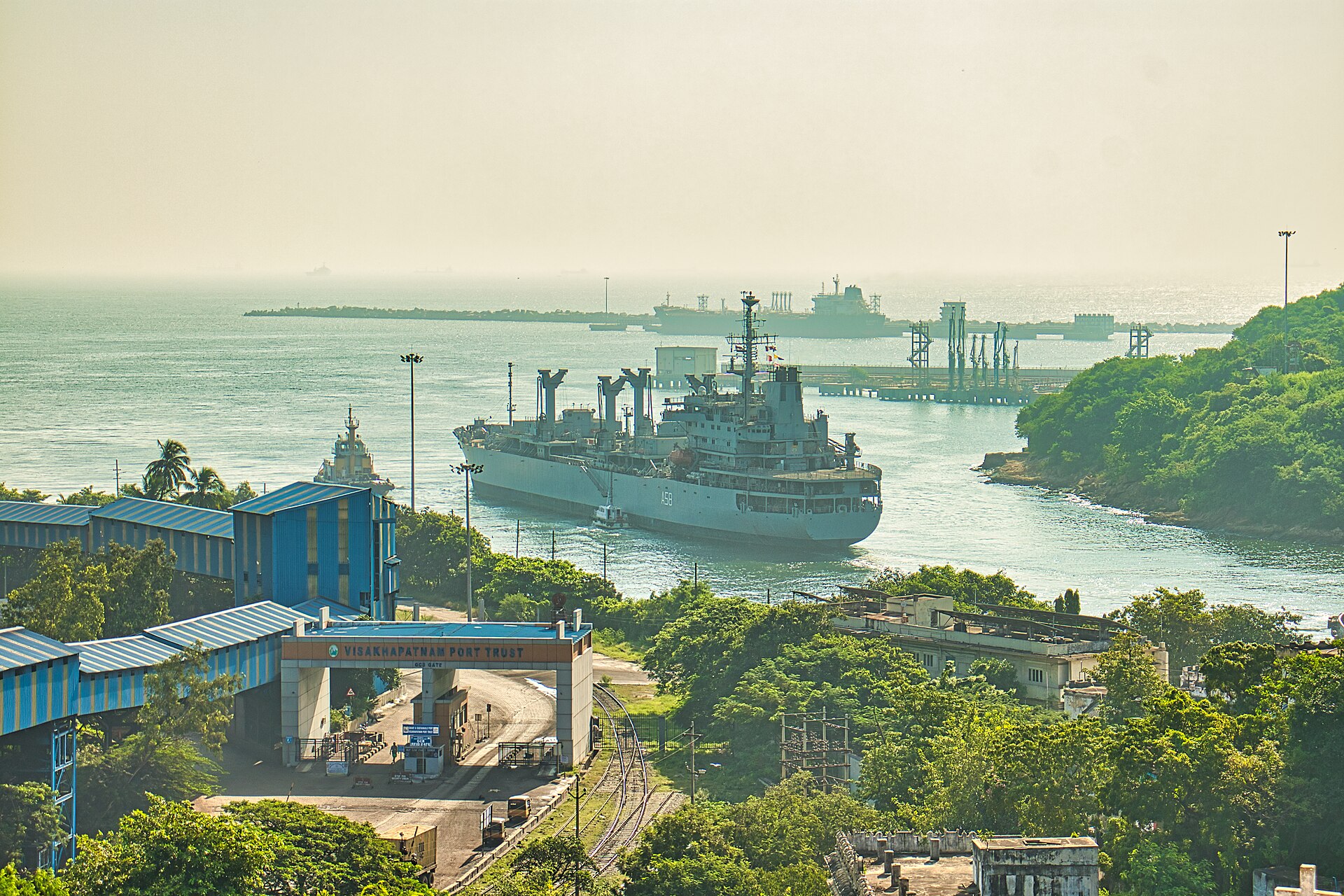
Naval officers and maritime security officials from the Colombo Security Conclave spent three days simulating a coordinated response to smuggling, trafficking and illegal fishing across the Indian Ocean, in a table-top exercise that concluded on 11 September 2026 at India’s Eastern Naval Command in Visakhapatnam.
The exercise, opened on 9 September by Rear Admiral Manoj Jha, Chief Staff Officer (Operations) at Eastern Naval Command, brought together delegations and maritime security experts from the Conclave’s member and observer states for more than 72 hours of simulated scenarios built around the theme “Coordinated Response to Illicit Maritime Activities in the Indian Ocean Region.”
Four kinds of threat, one region
Participants worked through scenarios covering maritime terrorism, narcotics smuggling, human trafficking, and illegal, unreported and unregulated fishing, according to India’s Press Information Bureau. Rather than deploying ships, the exercise tested how quickly information moves between capitals and naval commands when a crisis breaks out in shared waters. Delegates reviewed existing standard operating procedures and worked to streamline information-sharing arrangements meant to strengthen what the Conclave calls collective maritime domain awareness.
A grouping still filling out its membership
The Colombo Security Conclave began as a trilateral arrangement between India, Sri Lanka and the Maldives and has since added Mauritius as a founding member, with Bangladesh and Seychelles promoted from observer status to full members as the grouping formalised its structure over the past year. It operates around five pillars: maritime safety and security, counter-terrorism, combating trafficking and organised crime, cybersecurity, and humanitarian assistance and disaster relief. An interim secretariat is based in Colombo while members work toward converting the Conclave into a fuller international organisation.
The Visakhapatnam exercise was described by organisers as consistent with India’s MAHASAGAR vision, an acronym for Mutual and Holistic Advancement for Security and Growth Across Regions, which frames New Delhi’s approach to maritime partnerships across the Indian Ocean.
Why it matters
The Indian Ocean carries a large share of global energy and container shipping, and its smaller littoral and island states have limited capacity on their own to police trafficking routes or respond to a hijacking or oil spill. A table-top exercise does not move a single ship, but it is where the practical mechanics of cooperation, who calls whom, in what order, under what legal authority, get tested before an actual emergency. For member states still building a shared secretariat, the drill is also a way of showing that a young security initiative is developing real operational habits rather than remaining a diplomatic statement of intent.



Leave a Reply