

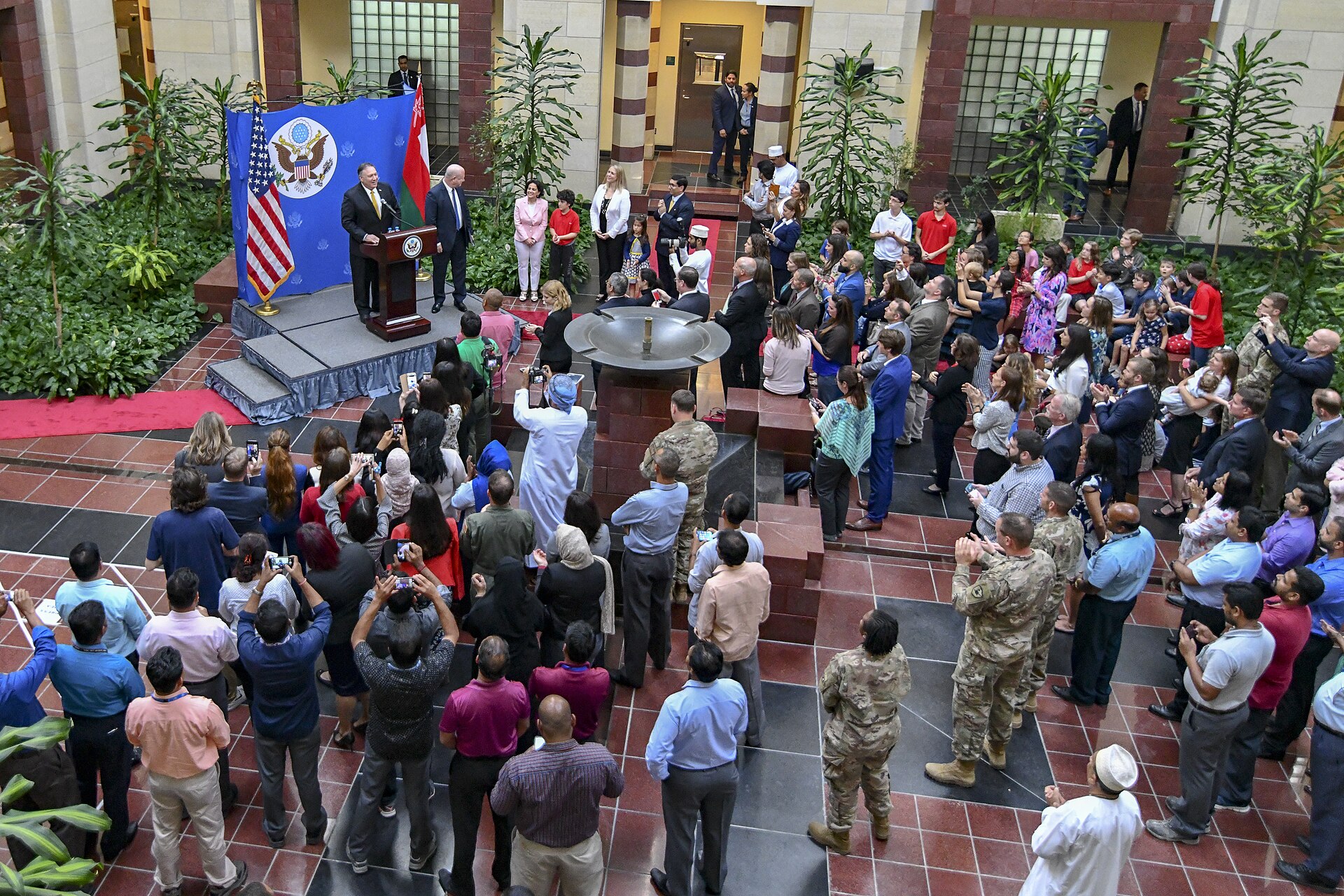
US officials held an undisclosed meeting with representatives of Yemen’s Houthi movement at the American embassy in Muscat over the weekend of 12-13 September 2026, days after the group completed its takeover of Yemen’s Red Sea coastline. Oman, which has served as the main channel of contact between Washington and the Houthis for several years, helped arrange the meeting, according to multiple reports citing unnamed sources.
The Houthi delegation reportedly included Mohammad Abdulsalam, the group’s chief negotiator and a figure under US sanctions, and senior official Abdelmalik al-Ajiri. During the talks, the Houthis told US officials they did not intend to attack American vessels and remained committed to the ceasefire the group reached with Washington in May 2025. They also said they would not target Israeli or other commercial shipping, with one stated exception: vessels owned by Saudi Arabia, against which the group has declared its own blockade.
Assurances, not agreements
The Muscat channel produced verbal assurances rather than a written agreement. One source said a prisoner-swap arrangement, an idea that has circulated in parallel talks mediated separately by Oman and the United Nations, was not the focus of this particular meeting and was not concluded. A broader exchange planned for July had already stalled amid the rise in tensions following the Houthis’ southward advance along the coast.
Oman’s narrow but persistent role
Oman has positioned itself for years as the only Gulf state with a working line to the Houthi leadership, a role that has let it host back-channel contacts between the group and Washington even as Gulf neighbours align against the Houthis militarily. That position has become more delicate as the Houthis’ territorial gains put them in more direct confrontation with Saudi Arabia, one of Oman’s fellow Gulf Cooperation Council members, over shipping access.
Why it matters
An informal understanding that keeps American and Israeli-linked shipping out of the Houthis’ sights does not resolve the wider crisis facing Saudi Arabia or global shippers rerouting around southern Africa, and it stops well short of a ceasefire in Yemen’s renewed civil war. But it illustrates how Washington has chosen to manage the Houthi threat through a narrow, transactional channel that protects its own interests and Israel’s without committing to a broader settlement, leaving Oman to carry the diplomatic weight of a relationship few other governments are willing or able to maintain.



Leave a Reply