

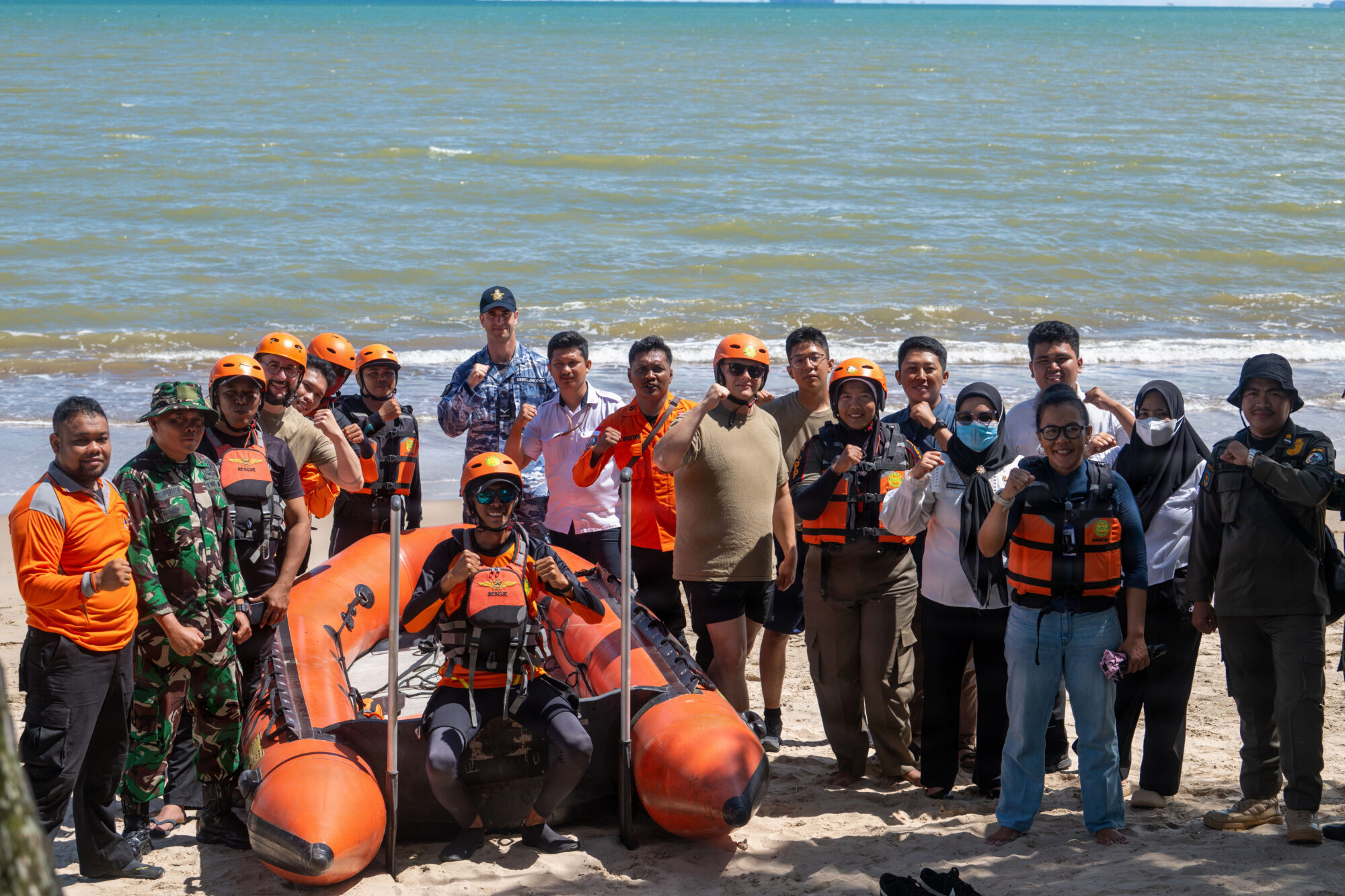
About 2,200 personnel from the militaries and civilian agencies of all 19 ASEAN Defence Ministers’ Meeting-Plus countries took part in Exercise Trident Resolve, a combined field training exercise held in Banten, Indonesia, from 20 to 26 September 2026. Co-hosted by the United States and Indonesia, it was described by organisers as the largest ADMM-Plus exercise by personnel numbers in a decade.
The exercise brought together three of the ADMM-Plus framework’s expert working groups, covering cyber security, humanitarian assistance and disaster relief, and military medicine, for what organisers said was the first time all three had trained together in a single combined field exercise rather than separately. Activities reportedly included simulated disaster-response drills, joint medical exercises treating mock casualties, and cyber-defence scenarios run alongside physical field training involving personnel and equipment from across the region.
Ten ASEAN states, nine dialogue partners
The ADMM-Plus format brings together the ten ASEAN member states with eight dialogue partners, Australia, China, India, Japan, New Zealand, South Korea, Russia and the United States, plus the ASEAN Secretariat, making a framework of participants that spans states with sharply different strategic interests in the region. Running a joint exercise that includes both American and Chinese forces under one umbrella is, organisers say, part of the point: it gives militaries that otherwise rarely train together a structured, low-stakes setting to practise coordination on non-traditional security tasks such as earthquake or typhoon response.
Why it matters
Disaster response is one of the few areas of defence cooperation where ASEAN’s dialogue partners can train together without touching on the disputes, over the South China Sea chief among them, that otherwise divide many of the same countries. A larger, more complex field exercise signals that this cooperation is deepening even as diplomatic disagreements over maritime boundaries continue elsewhere in the region. For Indonesia and the wider ASEAN grouping, hosting the largest such exercise in a decade also reinforces a claim to regional convening power at a moment when other blocs and bilateral pacts are competing for the same countries’ attention.



Leave a Reply