

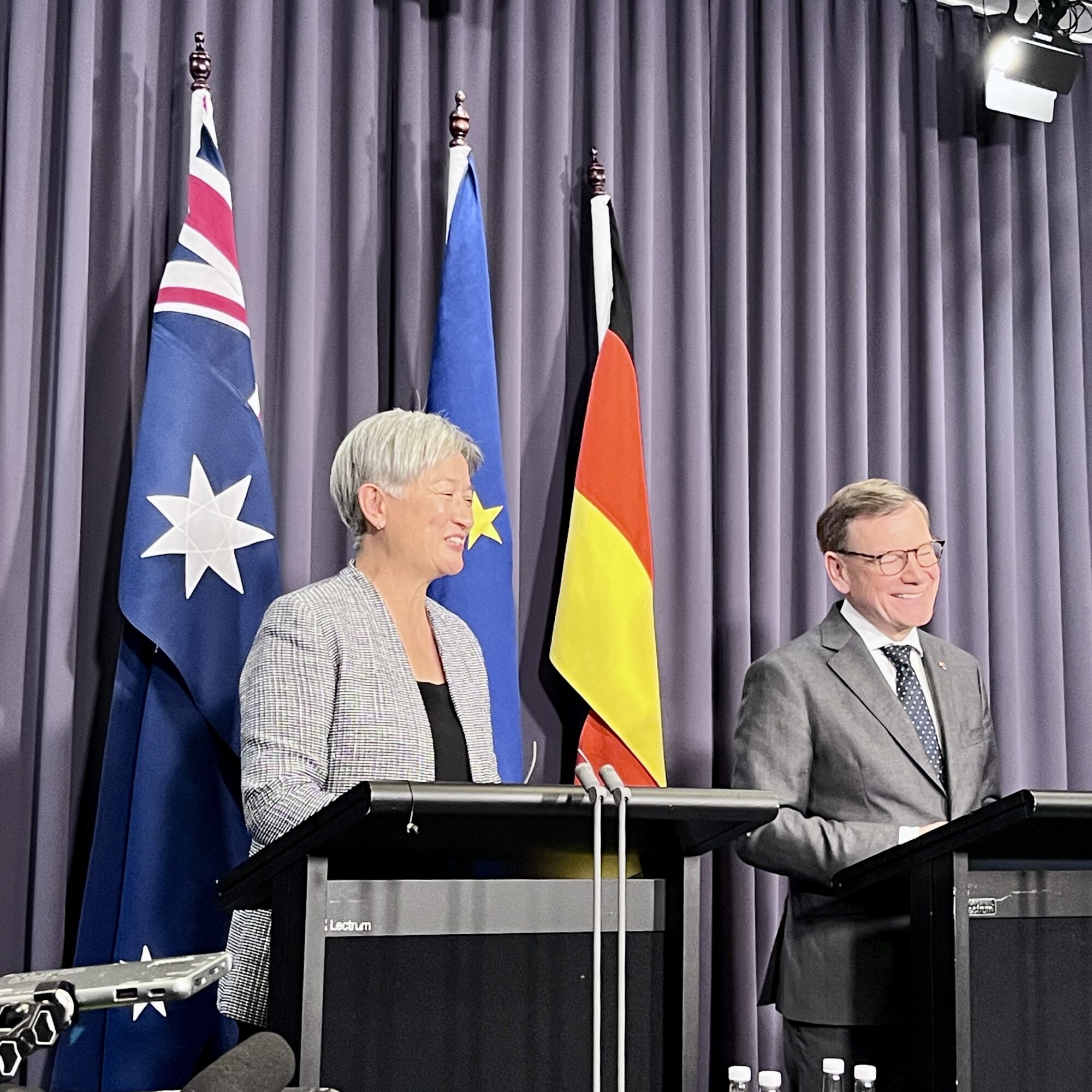
Foreign ministers and senior officials from Australia, France, Germany, Japan, New Zealand, Poland, South Korea and the United Kingdom issued a joint statement on 22 September 2026 on the sidelines of UN General Assembly high-level week in New York, warning against disruption to key global shipping routes and reaffirming opposition to any unilateral change to the status quo across the Taiwan Strait. It was the second meeting of the group, known as the European and Indo-Pacific Partners (EIPP), following its debut a year earlier.
A stark warning on shipping lanes
The eight governments said “disruption of sea lanes, including the Strait of Hormuz and the Bab-el-Mandab Strait, whether by force, threat or the introduction of unlawful tolls or conditions for transit, threatens security and prosperity of all,” and called on “all countries to speak out wherever it occurs.” They pledged to “stand together” in upholding the UN Convention on the Law of the Sea. South Korea’s representative, Chang Wook-jin, coordinator-general for international organisations and global affairs at Seoul’s foreign ministry, took part alongside counterparts including Australian Foreign Minister Penny Wong and German Foreign Minister Johann Wadephul.
Taiwan Strait and Ukraine
On East Asia, the ministers said they “oppose any unilateral attempts to change the status quo across the Taiwan Strait” and encouraged continued dialogue between the parties concerned. The statement also addressed Russia’s war against Ukraine, calling for “a full ceasefire” and reaffirming “the need for a just and lasting peace, in line with the principles of the UN Charter and international law,” while noting that the strategic environment had grown “more volatile and fragmented” since the group’s first meeting in September 2025.
Why it matters
By naming both the Taiwan Strait and the Strait of Hormuz and Bab-el-Mandeb in the same statement, the eight countries are drawing an explicit link between security risks in the Indo-Pacific and interruptions to Middle Eastern shipping lanes that have rattled global energy markets during 2026. The declaration carries no enforcement mechanism, but it signals that a wider circle of European and Indo-Pacific democracies now treats freedom of navigation in both regions as a shared strategic interest rather than separate, distant problems.



Leave a Reply