

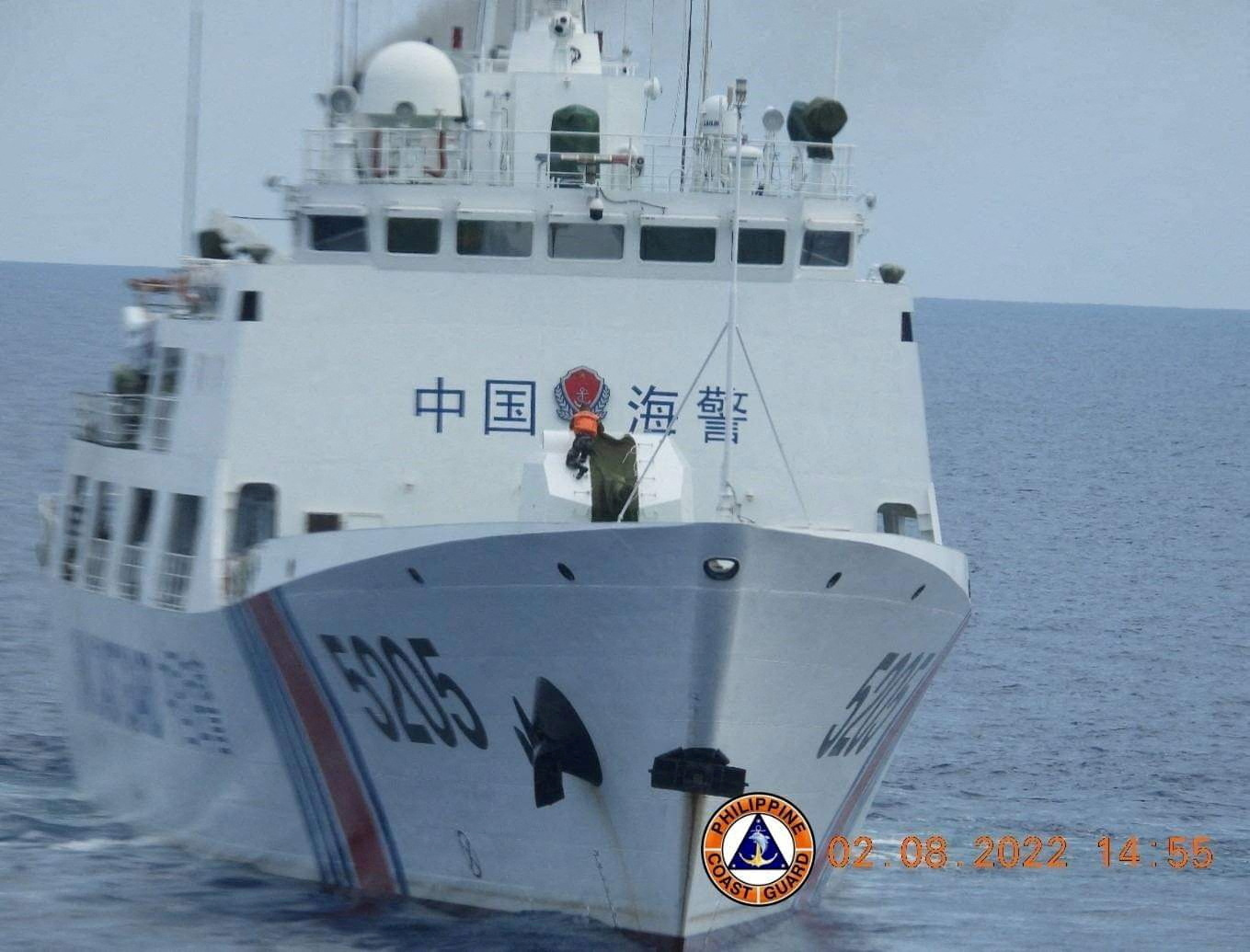
A China Coast Guard vessel rammed a Philippine fisheries and aquatic resources ship during a resupply patrol in the South China Sea on 18 September 2026, prompting a formal protest from Manila’s Department of Foreign Affairs, which said there was no justification for the collision.
The incident occurred around 11am local time, roughly 54 nautical miles off the coast of Palawan and within the Philippines’ exclusive economic zone, when China Coast Guard vessel CCG-21585 struck the Bureau of Fisheries and Aquatic Resources ship BRP Datu Magat Salamat as it carried out what Manila described as a routine, lawful humanitarian mission supporting Filipino fisherfolk. The impact damaged the Philippine vessel’s starboard railings, metal stanchions and deck fixtures, though no injuries were reported.
“Illegal, coercive, aggressive and dangerous”
The Department of Foreign Affairs said “there is no justification for the CCG vessel to undertake aggressive actions against a Philippine civilian law enforcement vessel, and cause damage to the ship and endanger the safety of the civilian crew.” Philippine officials separately described the manoeuvre as illegal, coercive, aggressive and dangerous, rejecting any suggestion that the fisheries vessel’s activity warranted the response.
Part of a wider pattern
The collision came roughly a week before a separate stand-off at Ren’ai Jiao, known to Manila as Second Thomas Shoal, where the Philippines sent a supply ship on 24 September to a grounded Philippine vessel despite Chinese objections. China’s coast guard responded by monitoring the ship and issuing loudspeaker warnings, with a spokesperson saying Manila had “seriously violated the Declaration on the Conduct of Parties in the South China Sea” and vowing continued law enforcement patrols around the shoal and adjacent waters. China and the Philippines had already clashed three times in a single week in July 2026 at Scarborough Shoal and Second Thomas Shoal, prompting joint maritime drills involving the United States, the Philippines and Japan.
Why it matters
Neither government shows signs of altering its underlying position: Manila continues to assert its exclusive economic zone rights under the 2016 international arbitral ruling that rejected most of China’s claims in the South China Sea, while Beijing continues to treat its coast guard patrols as routine law enforcement within waters it claims as its own. Repeated collisions involving unarmed fisheries and resupply vessels, rather than warships, keep the dispute below the threshold of open conflict, but each incident adds to a record of confrontations that regional partners increasingly cite to justify a larger foreign naval and coast guard presence in waters both countries claim.



Leave a Reply