

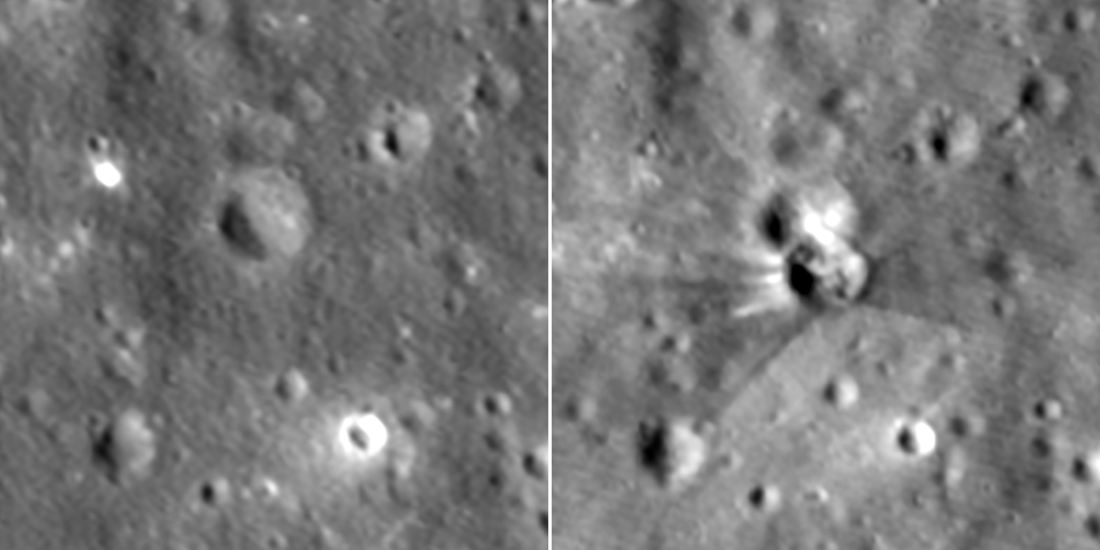
A spent SpaceX Falcon 9 upper stage struck the Moon on 5 August 2026, and NASA’s Lunar Reconnaissance Orbiter (LRO) has since photographed the fresh crater the impact left behind, near Einstein Crater on the lunar far side. NASA says the roughly 3,900-kilogram stage had been drifting in a Moon-crossing orbit since it deployed two lunar landers, Blue Ghost-1 and Hakuto-R Mission 2, the year before, and its eventual lunar impact had been predicted by trackers months in advance, giving scientists advance notice to plan follow-up observations once the impact occurred.
What the Before-and-After Images Show
LRO’s before-and-after images reveal a new, roughly 60-foot-wide, double-lobed crater with bright ejecta rays radiating outward, consistent with a high-speed, shallow-angle impact. NASA estimates the stage struck the surface at around 5,400 miles per hour. The agency describes the crater as less than 10 feet deep, a scale typical of debris impacts rather than natural meteoroid strikes, which tend to be more circular.
A Rare but Recurring Event
According to NASA, this is only the third confirmed instance of a human-made rocket body unintentionally striking the Moon, following the third stage that delivered the Soviet Luna 2 probe in 1959 and a Chinese Long March upper stage in 2022. As more countries and private companies launch lunar missions, space agencies have increasingly used telescopes to track defunct hardware left in Moon-crossing orbits, both out of scientific interest and to catalogue where such debris eventually lands.
Why It Matters
The Moon has no atmosphere to burn up falling debris, so discarded rocket stages in high orbits can remain hazards for years before eventually colliding with its surface. As lunar exploration accelerates, with multiple government and commercial landers now planned, tracking this kind of debris and understanding where it may strike helps agencies avoid interference with active missions and lunar bases under consideration for the years ahead.



Leave a Reply