

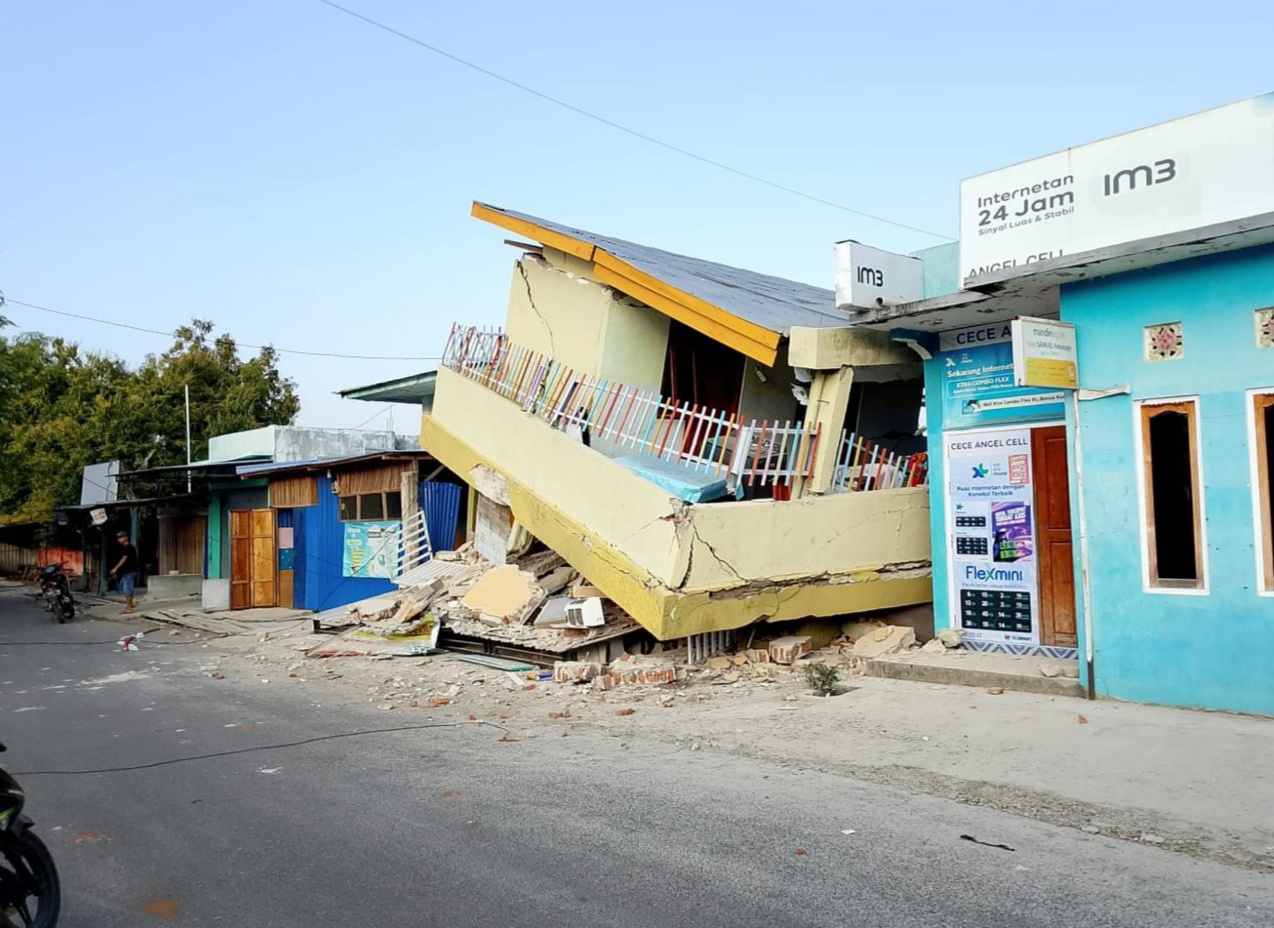
A magnitude 7.7 earthquake struck off the northern coast of East Nusa Tenggara province on 15 August 2026, centred about 68 kilometres north-northwest of Ende on Indonesia’s Flores island, according to the US Geological Survey (USGS). The quake occurred at a shallow depth of around 10 kilometres and was followed by at least 11 aftershocks, including several above magnitude 5.5.
Tsunami Warning and Shaking
Indonesia’s Agency for Meteorology, Climatology and Geophysics (BMKG) issued an early tsunami warning covering West Nusa Tenggara, East Nusa Tenggara, South Sulawesi and Southeast Sulawesi provinces. The USGS estimated that approximately 1.5 million people were exposed to strong to severe shaking. The agency attributed the quake to reverse faulting at shallow depth in a zone where the Australian and Sunda tectonic plates converge, part of the Pacific Ring of Fire.
Damage on Flores
Photographs distributed by Indonesia’s National Agency for Disaster Countermeasure showed collapsed shopfronts and homes on Flores, with masonry buildings sheared apart by the shaking. The region has a documented history of destructive earthquakes: a magnitude 7.8 quake struck just 63 kilometres away in 1992, killing more than 2,500 people, a comparison Indonesian authorities cited while assessing the scale of this event.
Why It Matters
Indonesia sits atop one of the world’s most seismically active zones, where a chain of subduction faults routinely produces damaging earthquakes and tsunami risk for coastal communities. The rapid tsunami warning issued for four provinces reflects lessons learned from Indonesia’s history of devastating tsunamis, even as the country’s more remote island communities continue to face high vulnerability to structural collapse from strong shaking. National and provincial disaster agencies deployed assessment teams to Flores in the hours after the quake, working to establish the full extent of damage across scattered rural settlements that are often difficult to reach quickly, with some areas accessible only by boat or on foot in the days immediately after the quake.



Leave a Reply