

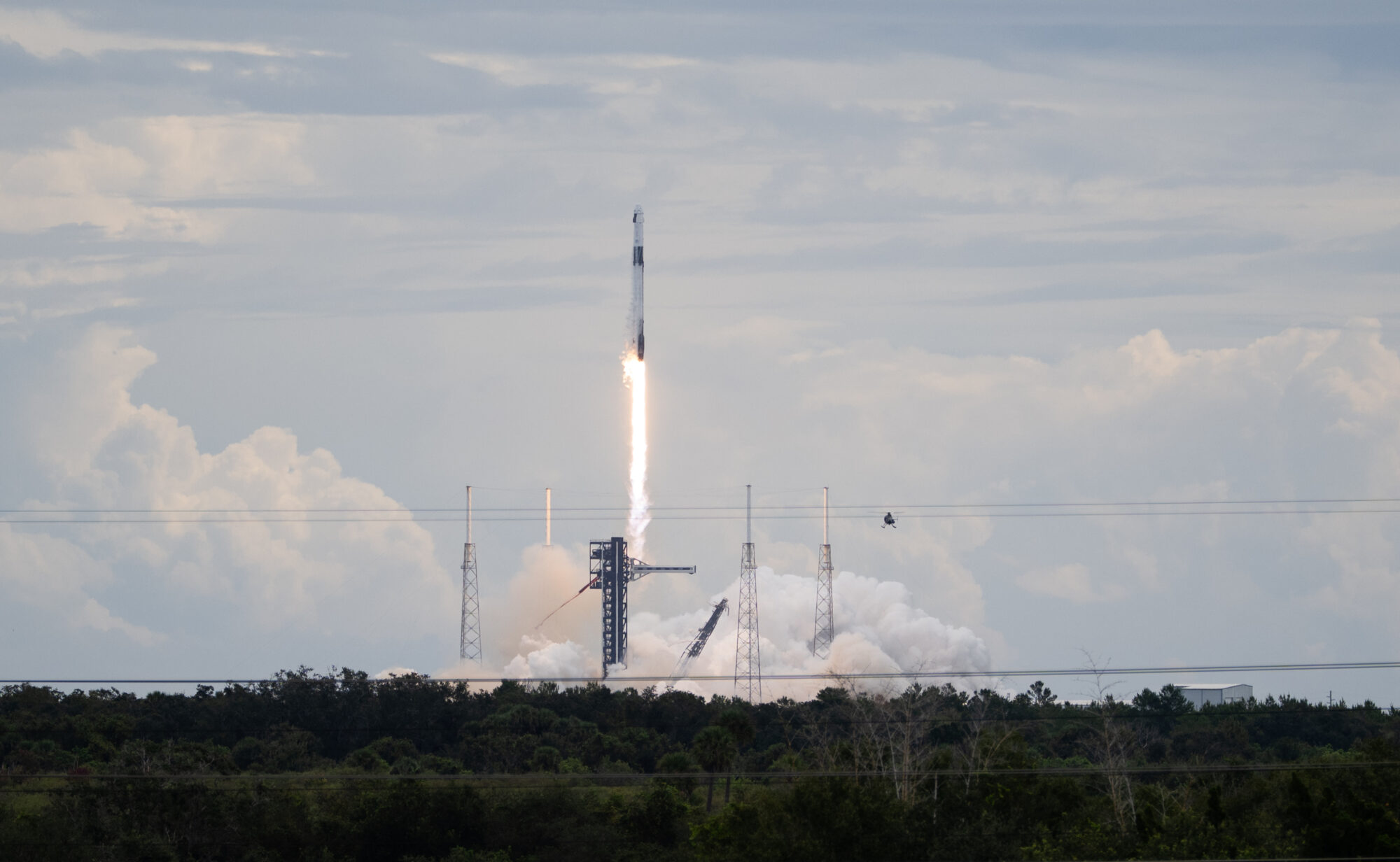
NASA’s SpaceX Crew-13 mission lifted off for the International Space Station at 11:10 a.m. EDT on 1 October 2026 from Space Launch Complex 40 at Cape Canaveral Space Force Station in Florida, according to a NASA news release. A Falcon 9 rocket carried a Dragon spacecraft with four crew members towards the orbiting laboratory.
The Crew and the Flight
NASA astronaut Jessica Watkins is commander of the mission, with NASA astronaut Luke Delaney as pilot. They are joined by Joshua Kutryk of the Canadian Space Agency and Roscosmos cosmonaut Sergey Teteryatnikov, both mission specialists, NASA said. The crew is due to join Expedition 75 on the station alongside NASA astronaut Anil Menon and Roscosmos cosmonauts Pyotr Dubrov and Anna Kikina.
According to the agency, the Dragon was scheduled to dock autonomously with the forward port of the station’s Harmony module at about 7 p.m. EDT, after a flight of roughly seven hours and 50 minutes. NASA described this as the fastest launch-to-docking by a US spacecraft in the history of the space station.
Science on Board
NASA said the research planned for the mission includes studies using human stem cell-derived tissue aimed at personalised medicine, crop production experiments using autonomous plant-growth systems, research into blood-flow abnormalities in microgravity, and tests of a new inflight diagnostic health-monitoring device. NASA Administrator Jared Isaacman said the mission demonstrates America’s capability in human spaceflight and the strength of its commercial partnerships.
Why It Matters
Shorter transit times may sound like a technical footnote, but they matter for crews and for planners. A flight of under eight hours reduces the time astronauts spend confined in a small capsule before reaching the station, which can improve comfort and allow work to begin sooner. The crew also reflects the international character of the station, with American, Canadian and Russian participants working together despite wider tensions on Earth. As the station moves towards the end of its planned lifetime and commercial successors are discussed, routine, reliable crew rotations carried out by a private provider are a key test of the model on which NASA now relies for access to low Earth orbit.



Leave a Reply