

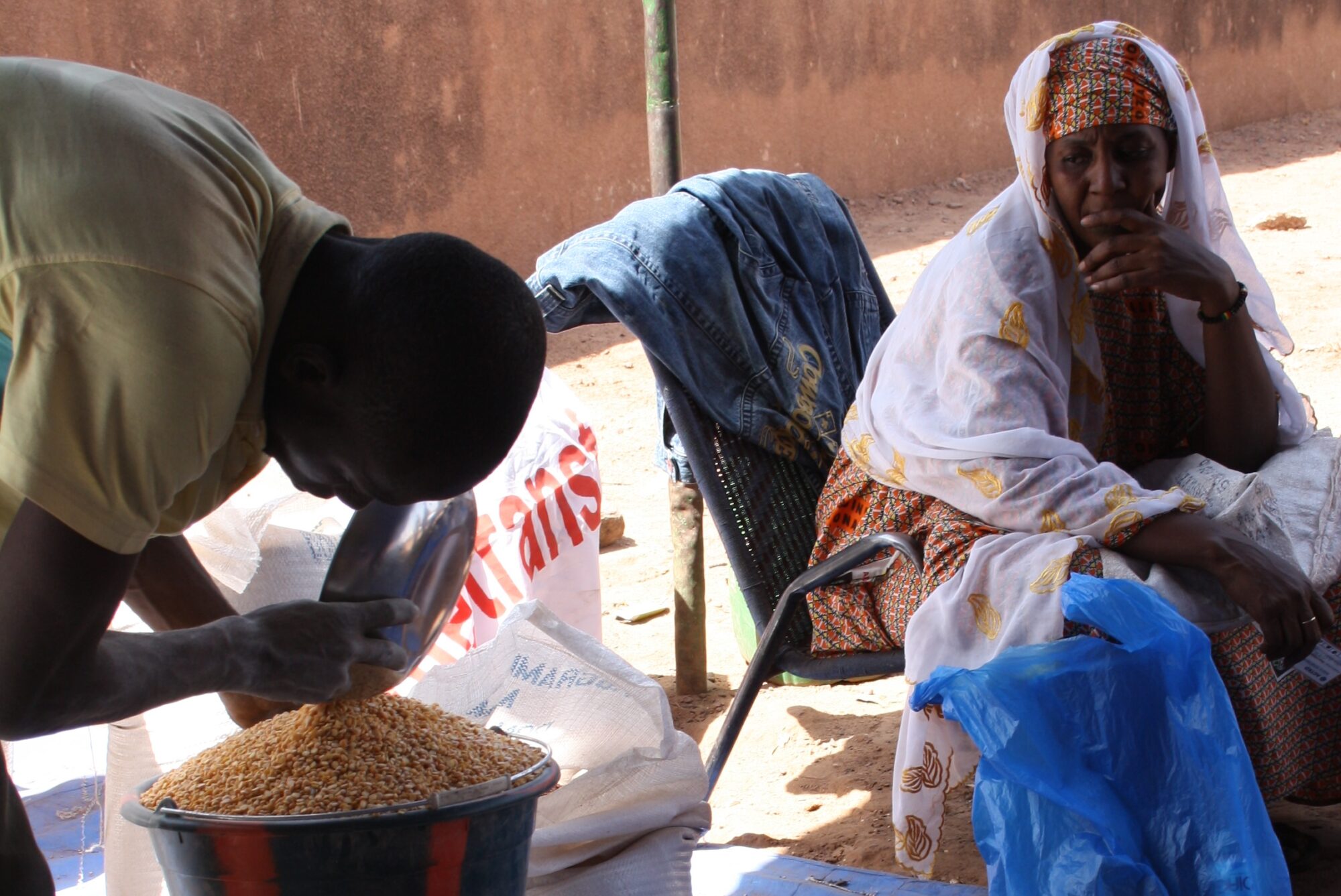
This is an analysis piece. It offers interpretation of a development reported by UN Women; the facts are attributed to the organisation, and the reasoning is the author’s own.
The Development
On 2 October 2026, UN Women Deputy Executive Director Nyaradzayi Gumbonzvanda presented a new analysis at the Palais des Nations in Geneva. UN Women estimates that, under a moderate scenario, 11.7 million additional women and girls across 28 countries could become food insecure by the end of December 2026. The organisation links this to disruptions to shipping through the Strait of Hormuz, which it says are raising energy, fertiliser and transport costs. UN Women stresses that these are scenario-based estimates, not forecasts.
According to the analysis, women and girls make up 53 per cent of the projected 22 million additional people affected. That is on top of 208 million women and girls in the same countries who were food insecure or undernourished before the escalation. The share varies by country: UN Women says women and girls are 60 per cent of those facing potential food insecurity in Afghanistan, more than 57 per cent in Yemen and nearly 56 per cent in Sudan. In South Sudan, it says, the additional number represents around 14 per cent of the female population, or about one in seven women and girls, the highest proportion.
Reading the Numbers
The figure of 53 per cent is only modestly above half, so the headline numbers alone do not show that women are uniquely exposed. The more telling detail is in the structural indicators UN Women cites. In Egypt, Iraq, Palestine, Sudan and Syria, more than 80 per cent of women are outside the labour force, rising to around 95 per cent in Afghanistan and Yemen. In Iraq, Lebanon, Pakistan and Yemen, fewer than one in five women owns a bank or mobile-money account.
Taken together, these indicators suggest an argument: when prices rise, households need income or savings to cushion the blow, and women with limited paid work and limited access to accounts have fewer ways of doing so. That is an interpretation, not a finding of the UN Women analysis, and it rests on the assumption that these indicators translate into reduced resilience, which the figures alone do not prove.
UN Women called for protecting women’s access to food and resources, targeting resources where women and girls face multiple overlapping risks, and making women’s and girls’ experiences visible in food-security data. Ms Gumbonzvanda concluded that to end the suffering of women and girls, “we need peace and security”.
Why It Matters
The analysis illustrates how a disruption in one region can reach households in many others through prices, and how the effect depends on what each household can fall back on. Because the numbers are a moderate scenario rather than a prediction, the sensible reading is as a measure of exposure: it shows where the risk is concentrated if the disruption continues, not what will certainly happen. Its call to improve data on women’s food security also points to a limit of the estimate itself, since better data would sharpen future analyses.



Leave a Reply