

The Royal Swedish Academy of Sciences announced on 6 October 2026 that it has decided to award the Nobel Prize in Physics 2026 to Francis Halzen of the University of Wisconsin-Madison in the United States “for decisive contributions to the IceCube Neutrino Observatory and the discovery of high-energy neutrinos of astrophysical origin”.
Capturing Particles From the Universe
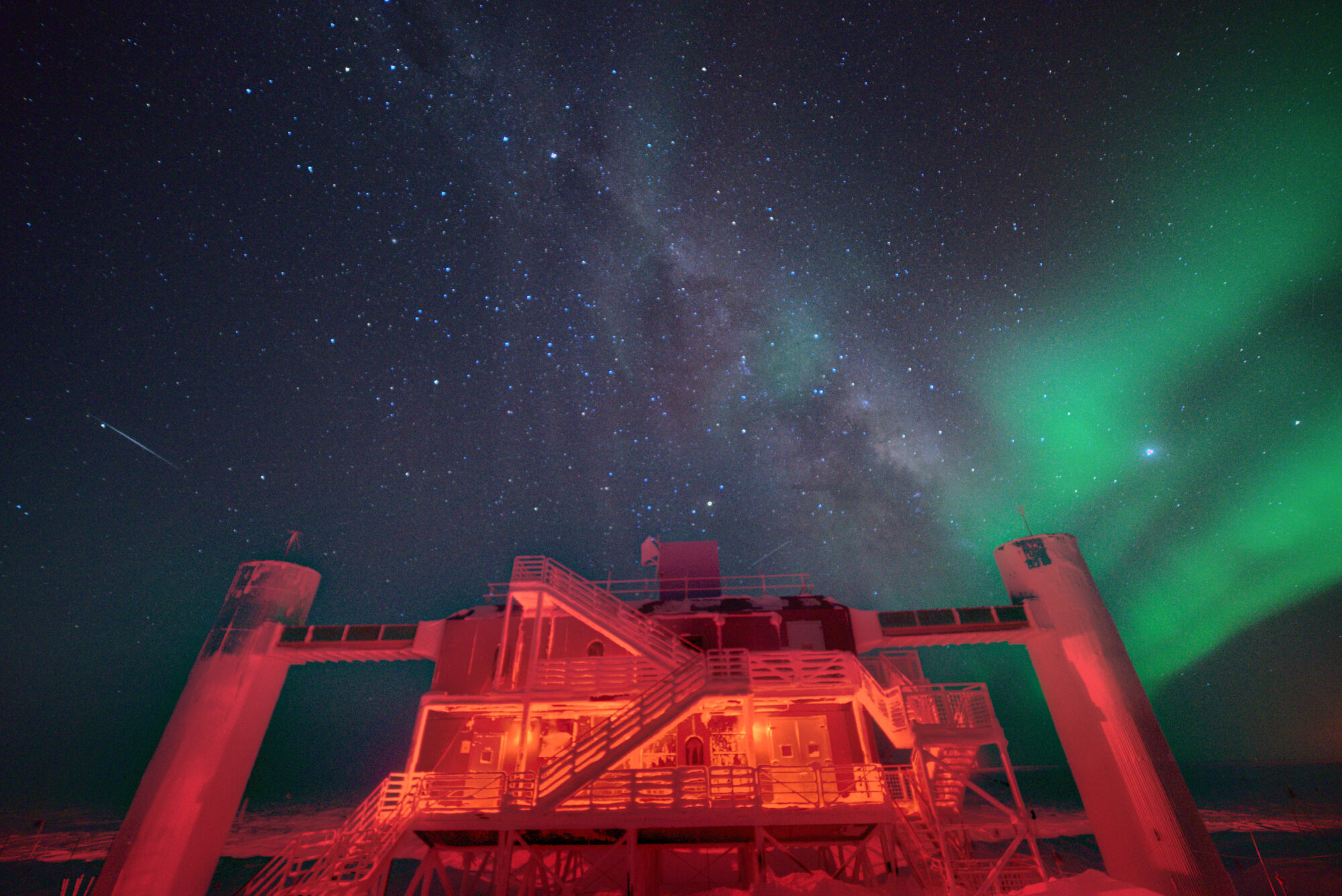
According to the Nobel announcement, Halzen realised that ice at the South Pole could be used to track neutrinos, elusive particles that pass through the Earth and through human bodies without being noticed. The Academy said his vision and scientific leadership were fundamental for IceCube, a cubic kilometre of ice equipped with light sensors, which lets researchers capture neutrinos from extremely energy-rich processes in the distant universe.
The Academy said Halzen first presented his vision for capturing neutrinos at the South Pole in 1988. When a neutrino collides with an atomic nucleus, it produces a flash of light that sensors in the clear glacial ice can track. IceCube covers an entire cubic kilometre and was finished in 2011, the announcement said. Researchers soon discovered the first high-energy neutrinos and, a few years later, published their discovery of neutrinos that must originate far outside the solar system.
“Francis Halzen has led an international team of researchers and engineers who have provided us with a fantastic instrument,” said Mark Pearce, Chair of the Nobel Committee for Physics. “His tenacity and scientific vision has paved the way for a new kind of astronomy.”
The Laureate
The Academy’s biographical note says Halzen was born in 1944 in Tienen, Belgium, received his PhD in 1969 from KU Leuven, and is a professor at the University of Wisconsin-Madison. The prize amount is 12 million Swedish kronor.
Why It Matters
The award recognises both a discovery and the construction of the instrument that made it possible. The Academy’s own framing, that neutrinos can carry information not available in any other way, explains why a detector built in polar ice is treated as a new window on the cosmos. The Nobel Committee’s chair also stressed leadership of a large international team, a reminder that discoveries of this kind rest on collective engineering as well as individual vision.



Leave a Reply