

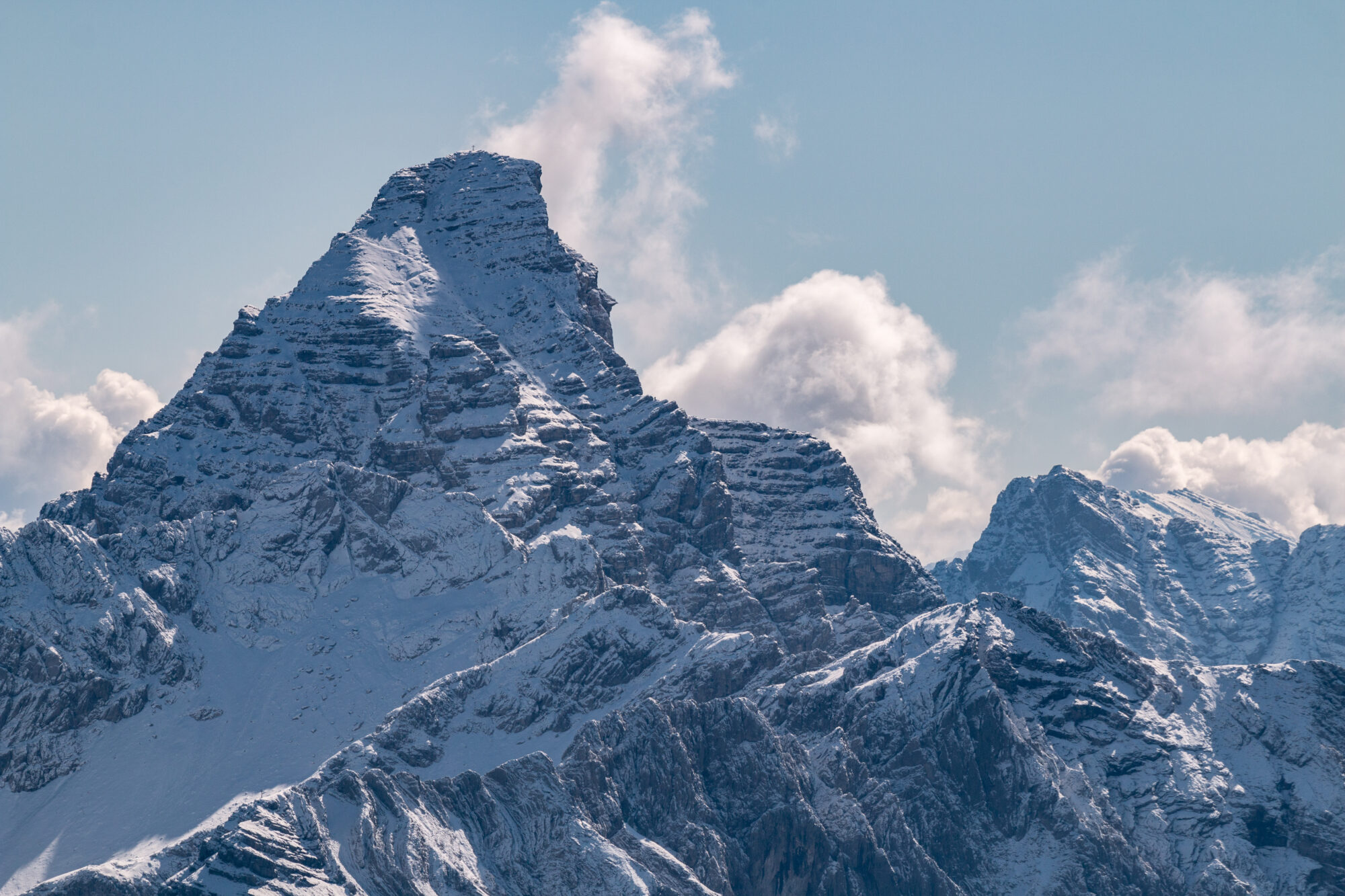
This is an analysis piece. It offers the author’s interpretation of one reported development: a Euronews report, published on 11 October 2026, on the Hochvogel, a 2,592-metre peak on the border between Germany and the Austrian region of Tyrol, where researchers warn that another major rockfall could be imminent.
The Reported Facts
According to Euronews, around 2,000 cubic metres of rock broke away from the mountain in June. Researchers now warn that between 250,000 and 400,000 cubic metres of debris could come down. A fissure that has existed since the 19th century has widened from roughly shoulder-width to several metres, and in spring the instruments recorded movement of up to five millimetres per week, compared with an average of around 1.8 millimetres per year for the Alps. A new crack on the south-west ridge, which the scientists call Fissure 6, is regarded as the key weak point.
More than 30 sensors now cover the summit to millimetre precision, with data reaching the researchers several times an hour. The mountain has been closed to climbers on the Austrian side for some time, while the ascent from Germany remains open, the report says.
The Argument: Warnings Buy Time, Not Safety
Analysis: The Hochvogel suggests that an early-warning system is best understood as a way of buying decision time, not of preventing a collapse, and that the value of that time depends on whether a reading can be turned quickly into a closure.
Geology professor Michael Krautblatter of the Technical University of Munich told the German Alpine Club that the signals a mountain gives off arrive, often, “just days or hours” before an event. His stated hope, Euronews reports, is that the technology will keep the Alps accessible while letting authorities close danger areas before disaster strikes. On that reading, a short lead time is only useful if someone has the authority and a procedure to act on it. Euronews does not say who would decide to close the German-side ascent, or on what threshold.
The report also quotes researcher Johannes Leinauer as saying heavy precipitation has a clear influence on the mountain, and that thunderstorms are becoming more frequent and intense because of climate change. If that is right, a system like this may be asked to cover more days of elevated risk, not fewer. Euronews also says similar systems are in use at only two other locations, the Partnach Gorge and the Höllental Gorge. The author reads that as a sign the approach is still concentrated at a few sites; the report does not say how many other slopes might need it.
Why It Matters
One mountain cannot stand for the whole range, but the questions it raises apply widely: who acts on a warning, how often the triggers occur and how many sites are watched. Euronews reports no date for a collapse and no decision to restrict the German ascent. The next sign will be whether the warning changes access to the peak.



Leave a Reply