
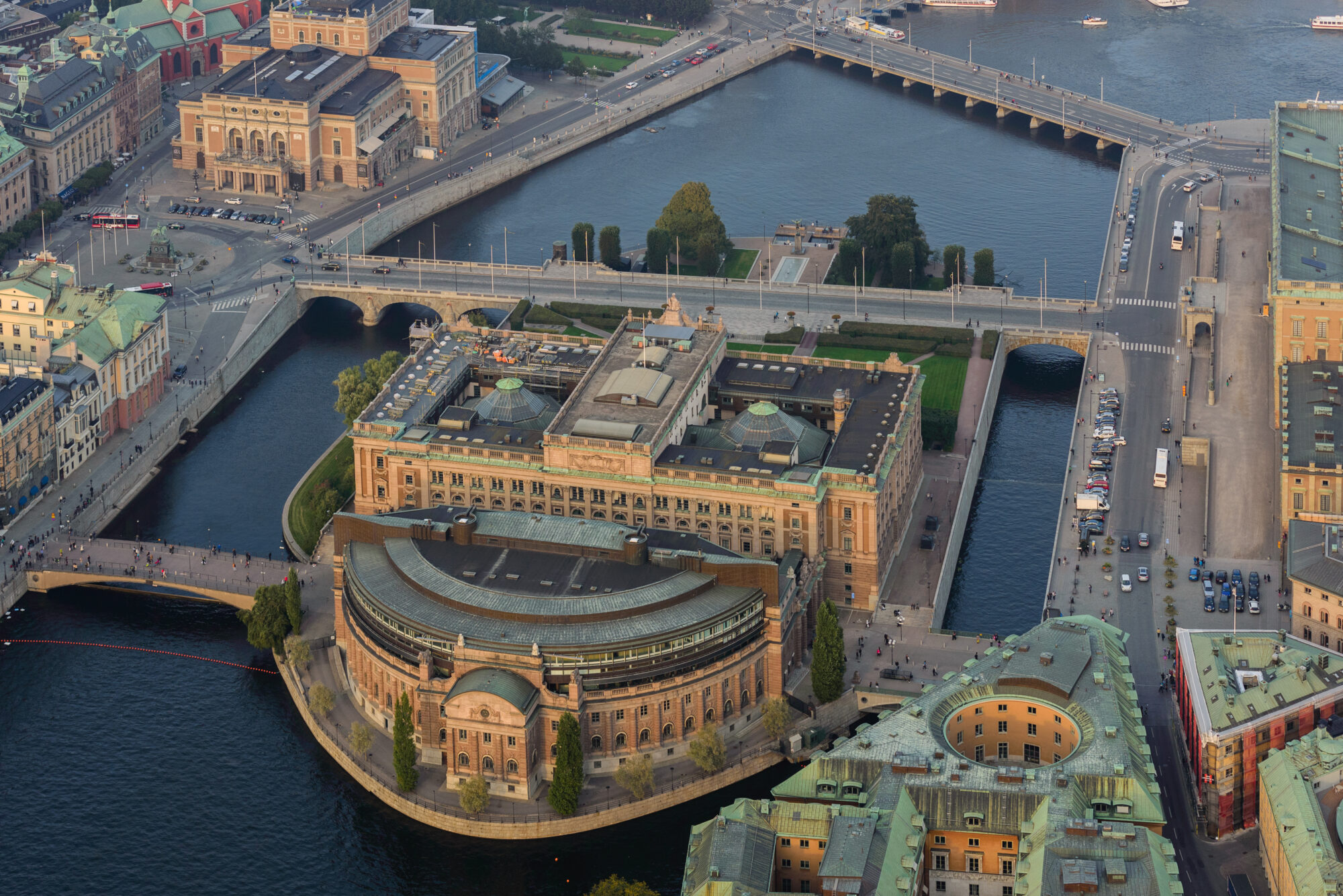
Sweden’s parliament, the Riksdag, on Thursday 15 October rejected Social Democratic leader Magdalena Andersson as prime minister, according to the Riksdag’s own account of the vote. The Speaker’s proposal was defeated by 248 votes to 99, with no abstentions and two members absent.
Under the rule set out by the Riksdag, a candidate is rejected if at least 175 members vote against. The Social Democrats were the only party to back Andersson, with all 99 of their members voting in favour. The Moderates (70), Sweden Democrats (62), Left Party (29), Centre Party (25), Christian Democrats (22), Greens (21) and Liberals (19) voted against, the Riksdag said.
How Sweden Got Here
Riksdag elections were held on 13 September. On 17 September, Prime Minister Ulf Kristersson of the Moderate Party asked to be discharged, and the Speaker discharged him and the other ministers. Until a new government takes office at a Council of State, Kristersson remains prime minister in a caretaker government made up of Moderate, Christian Democrat and Liberal representatives, the Riksdag said. The Speaker’s task includes interview rounds with all parties and talks with the Deputy Speakers, and also keeps King Carl XVI Gustaf informed.
What Happens Next
The Speaker can now put forward a new candidate. The Riksdag says the Speaker may present four proposals in total, and that if none is approved, an extraordinary election to the Riksdag must be held within three months. The Riksdag’s page does not say who the next candidate will be.
Why It Matters
Sweden’s procedure is designed to keep a government in place while parties bargain: a prime ministerial candidate is only blocked if an outright majority votes against, and a caretaker cabinet continues in the meantime. The rejection does not itself trigger new elections, but it starts a clock. If four candidates fail, voters would be called back to the polls within months of the September election, which gives the parties a strong incentive to find a workable majority before then.



Leave a Reply