

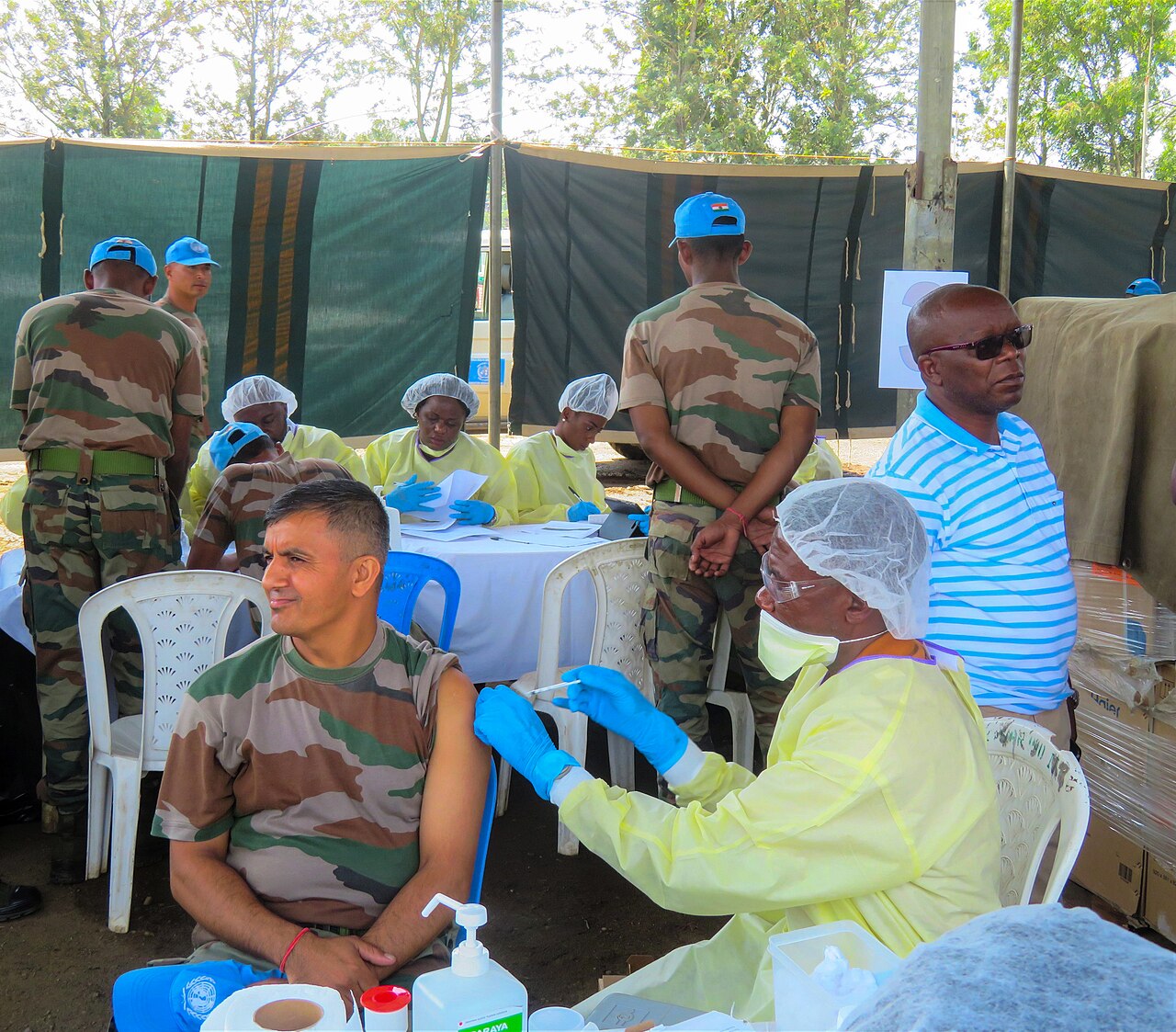
The World Health Organization announced on Friday 23 October that a clinical trial of Ebola vaccines has begun in the Democratic Republic of the Congo, the first clinical trial of an Ebola vaccine in the current outbreak, according to Al Jazeera. Director-General Tedros Adhanom Ghebreyesus said in a social media post that participants had been vaccinated with Ervebo in Bunia, the capital of Ituri province and the epicentre of the outbreak.
“This trial will help us understand whether any of the vaccine candidates designed for Bundibugyo virus work,” Dr Tedros wrote, as quoted by the broadcaster.
How the Trial Works
Ervebo is approved for the more common Zaire strain of Ebola, Al Jazeera explained, while this outbreak is being driven by the Bundibugyo species. The trial will therefore examine whether Ervebo offers any cross-protection. Known as Tumaini, it is a single framework designed to test the safety, efficacy and immunogenicity of several vaccines, and it uses ring vaccination, in which contacts judged to be at high risk of infection are immunised.
Two candidates made specifically for Bundibugyo are expected to join. One is a ChAdOx1 adenoviral-vector vaccine from the University of Oxford, and the other is an mRNA vaccine from the US company Moderna. Both are in earlier-stage, smaller trials funded by the Coalition for Epidemic Preparedness Innovations (CEPI), which says they will enter the study “shortly”. Pregnant women and children aged 12 and over are included, two groups often left out of clinical trials, according to the report.
The WHO’s emergencies director, Chikwe Ihekweazu, said the trial was designed to produce rigorous evidence on whether the vaccines could protect people at risk.
The Outbreak Behind It
Al Jazeera described it as the DRC’s 17th and worst-ever Ebola outbreak, declared in May. Al Jazeera reported more than 9,700 cases and more than 4,600 deaths. The WHO has declared a public health emergency of international concern, its second-highest alert level, and the outbreak has been recorded in four countries across eastern, central and western Africa, the widest geographic spread of any Ebola outbreak on the continent to date.
Why It Matters
Without a vaccine licensed for the species causing this outbreak, any evidence from a trial would be valuable. A trial that can compare vaccines inside one protocol could shorten the time needed to learn what works, and it may leave a ready-made template for the next Bundibugyo flare-up. The inclusion of pregnant women and adolescents is also notable, since evidence for those groups is often thin when a vaccine is later rolled out. Results are not yet available, so what the trial can promise is evidence rather than protection, and the wider public-health response remains essential in the meantime.


Leave a Reply