

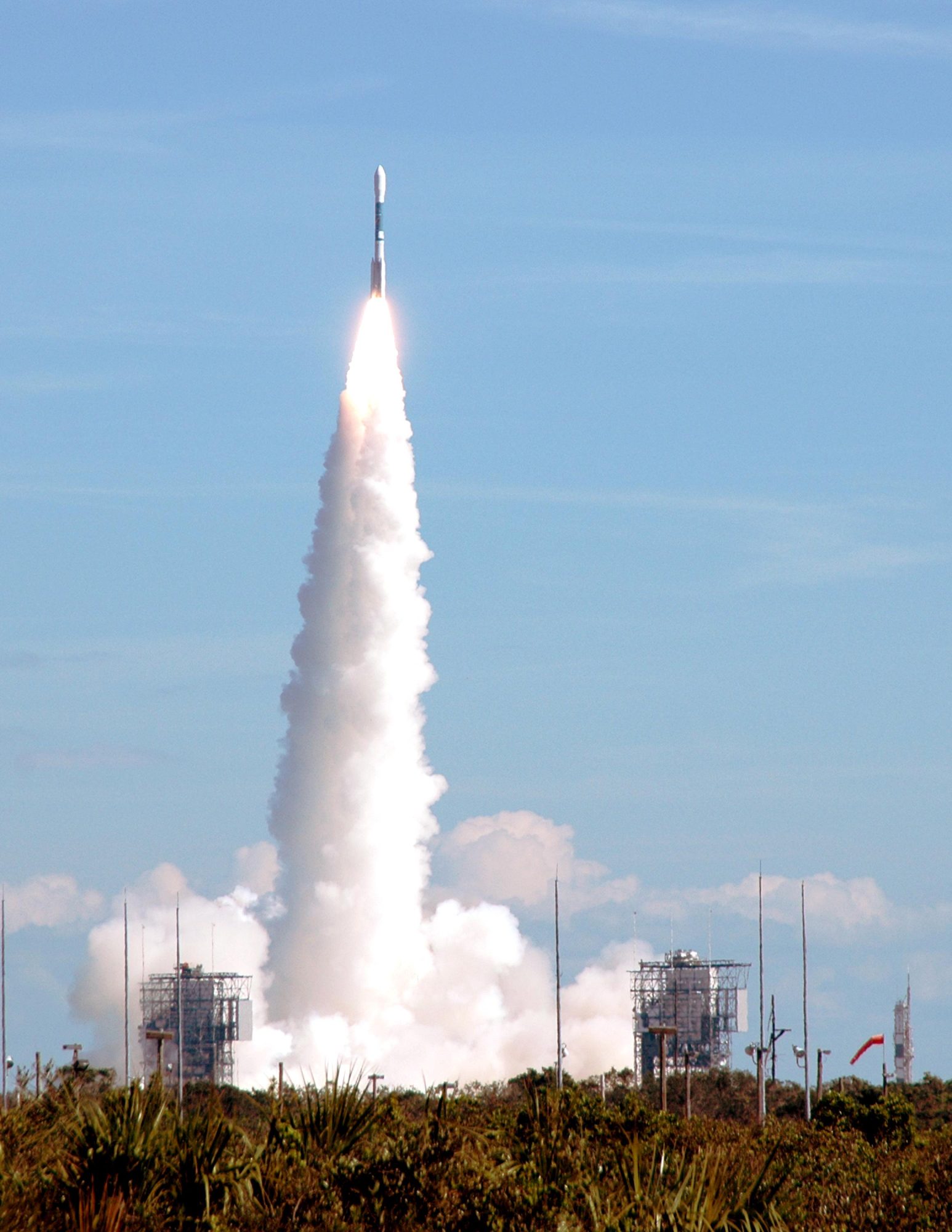
NASA says its Neil Gehrels Swift Observatory has ended its science mission after nearly 22 years. In an article published on 23 October 2026 and updated on 26 October, the agency said the spacecraft’s orbit has dropped below 171 miles (275 kilometres), the altitude at which greater atmospheric drag prevents its telescopes from observing targets steadily. Swift made its final observation on 20 October 2026 and is expected to re-enter the atmosphere within the next few weeks.
A short mission that ran long
According to NASA, Swift launched on 20 November 2004 and began operations the following month. It was designed for a two-year primary mission but operated for more than ten times that long. In that time it observed more than 2,000 gamma-ray bursts and studied more than 1,400 supernovae. It also monitored active galaxies, carried out an all-sky X-ray survey, and studied asteroids and comets. NASA says data from Swift has contributed to about 7,000 published scientific papers.
One early result came in May 2005, when Swift detected the afterglow of a burst catalogued as GRB 050509B. NASA describes it as the first short gamma-ray burst with a detected afterglow, and says the observations supported the idea that short bursts come from the merger of neutron stars. In 2018 the agency renamed the mission in honour of Neil Gehrels, its first principal investigator, after his death.
Speed and the archive
NASA says Swift could schedule up to 75 independent targets a day, and that observations of sudden events could be commanded from the ground in as little as a few minutes. S. Bradley Cenko, the mission’s principal investigator at NASA’s Goddard Space Flight Center, said Swift was designed as a satellite dedicated to studying gamma-ray bursts. John Nousek, the mission operations director and a professor at Penn State, spoke of the unique speed of response of the Swift hardware and the extraordinary success of its rapid mission operations. Shawn Domagal-Goldman, director of the Astrophysics Division at NASA Headquarters, said Swift delivered an “incredible, lasting return on investment for the nation”.
The mission’s archive holds nearly 22 years of brightness measurements and multiwavelength spectra, along with more than 1.5 million images from its Ultraviolet/Optical Telescope. NASA puts the public dataset at about 12 terabytes. The agency says it will keep looking for new ways to respond rapidly to cosmic events, using current missions to fill the gap.
Why It Matters
In our view, Swift’s closing days show how much a mission planned for two years can deliver when it keeps working and its data are shared openly. The public archive means researchers can keep drawing on it long after the spacecraft is gone. NASA says it will keep looking for new ways to react rapidly to cosmic events and is using current missions to help fill the gap in the meantime. How closely they can match Swift’s speed of response will become clear only as they are put to use.



Leave a Reply