

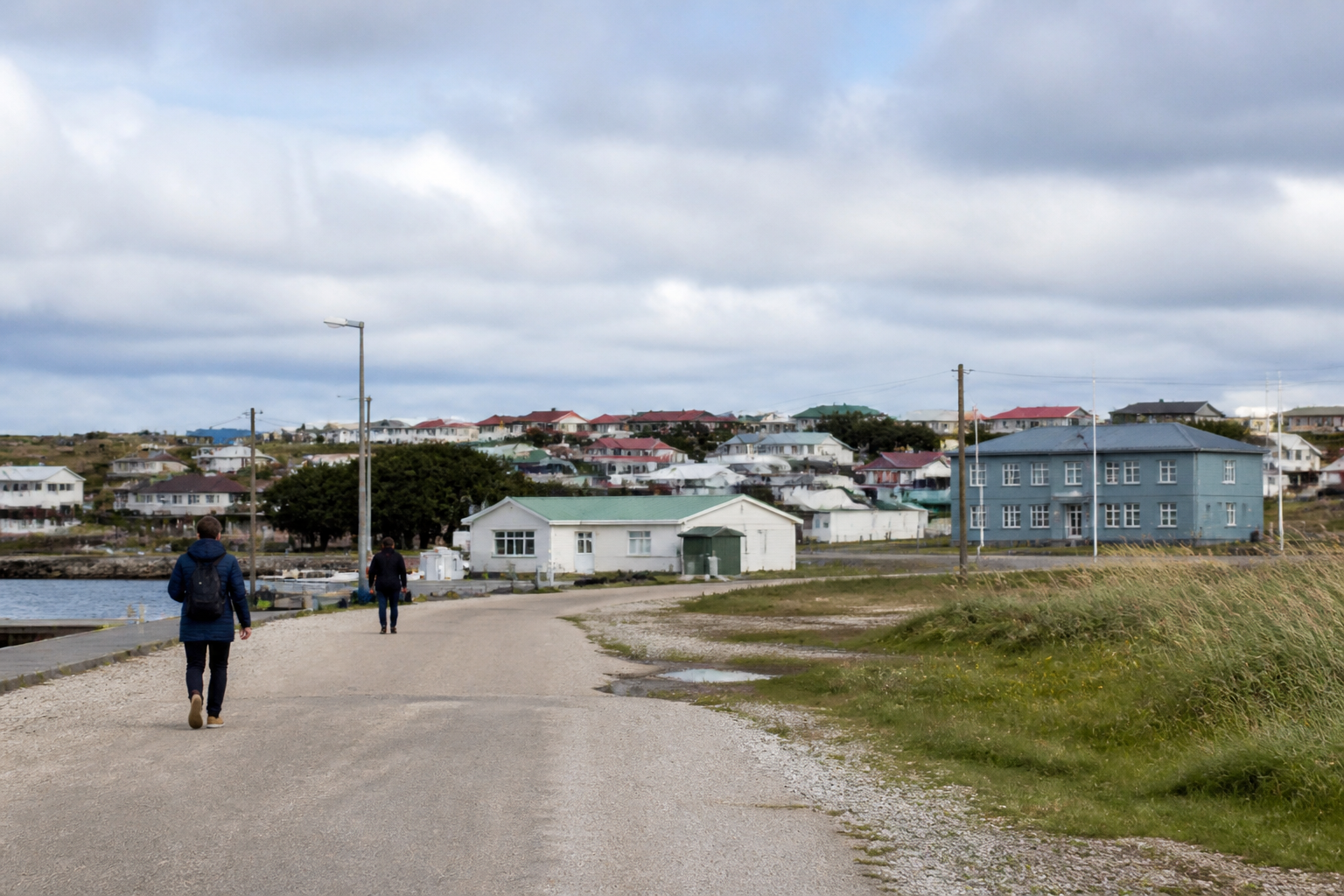
The long-running dispute over the Falkland Islands has returned to the centre of international attention after Argentine President Javier Milei again asserted his country’s claim and suggested that global political shifts could improve Argentina’s prospects.
Downing Street responded on September 4, 2026 by restating the United Kingdom’s position that support for the Falkland Islanders is unwavering. The government said the islands are, and will remain, a British Overseas Territory in accordance with the wishes of their residents.
For the roughly 3,500 people who live across the remote South Atlantic territory, the exchange is not an abstract argument over maps. It touches questions of personal security, family history, access to work and education, and the right of a small community to determine its own political future.
A dispute with two national narratives
Argentina refers to the islands as the Islas Malvinas and maintains that they form part of its national territory. Its foreign ministry has repeatedly described the British presence as an occupation and called for negotiations over sovereignty. In a statement issued in January 2025, Buenos Aires reaffirmed its claim to the Falkland Islands, South Georgia and the South Sandwich Islands, while also presenting diplomacy as the route to a peaceful settlement.
The United Kingdom rejects Argentina’s sovereignty claim and places emphasis on the principle of self-determination. British ministers point to the islands’ elected institutions and to a 2013 referendum, in which residents voted overwhelmingly to retain their status as a British Overseas Territory.
These are not competing descriptions of a settled legal question. The sovereignty dispute remains unresolved, and the two governments interpret the history, international law and the relevance of the islanders’ wishes differently. The United Nations has recognised the existence of a dispute and has urged negotiations, but no agreement has been reached.
Why the issue is resurfacing now
Milei’s latest intervention came in a televised address in which he said that international developments were creating more favourable conditions for Argentina’s claim. His government also announced measures intended to strengthen sanctions against companies involved in oil-related activity around the islands.
The remarks arrive amid heightened attention to offshore energy prospects, including the Sea Lion project in the North Falkland Basin. Argentina says unilateral resource exploitation in the disputed area breaches international expectations and its domestic law. The companies involved and the authorities on the islands have treated the project as lawful under the territory’s own regulatory framework.
The disagreement over energy is therefore both economic and political. For the Falkland Islands, natural resources could support public finances and employment, but development also risks intensifying pressure from Buenos Aires and complicating relations with neighbouring South American states.
Cooperation without a sovereignty settlement
Despite the renewed rhetoric, Britain and Argentina have not abandoned every channel of practical cooperation. In recent years, the two sides have worked on humanitarian arrangements, including travel by Argentine families to visit the graves of relatives who died during the 1982 war. British officials have also referred to cooperation on fisheries and regional transport.
That coexistence is fragile. London argues that dialogue on practical matters does not require reopening sovereignty negotiations. Buenos Aires maintains that cooperation should not be used to sideline the underlying dispute. Each government can therefore describe the same contact as evidence of pragmatism while preserving its fundamental position.
The 1982 war remains the emotional centre of the disagreement. Britain retook the islands after Argentina’s military occupation, at a cost of hundreds of lives on both sides. The conflict ended with British control restored, but it did not resolve the competing claims or the grief carried by veterans and families.
The people at the centre
The most consequential question is whether the islanders will continue to have meaningful control over their own future. Their elected government manages domestic affairs, while Britain retains responsibility for defence and foreign relations. The UK says it will not negotiate the islands’ future without the islanders’ consent.
Argentina disputes the weight London gives to self-determination, arguing that the sovereignty question must be settled between the two states. That disagreement is unlikely to disappear through a single speech or diplomatic response.
For now, the immediate outcome is a familiar one: stronger language, competing legal claims and renewed attention to resources, while practical life on the islands continues under the protection of the existing political order. The central test for all parties will be whether they can manage the dispute without allowing national rhetoric to narrow the space for cooperation or unsettle the community that lives there.


Leave a Reply