

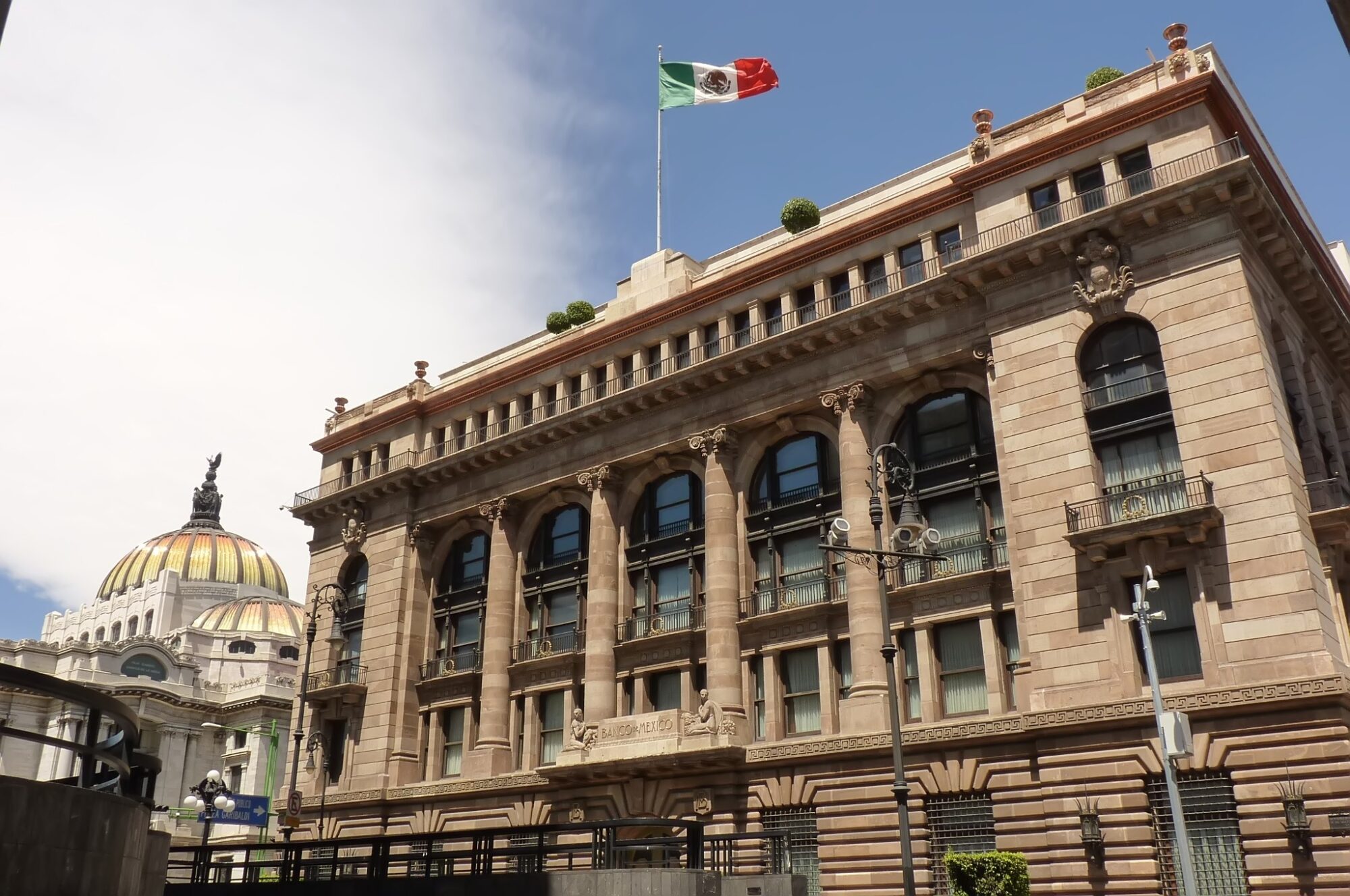
The Bank of Mexico (Banxico) left its benchmark interest rate at 6.50% on Thursday 6 August, according to its monetary policy announcement. The Board of Governors decided unanimously, with all of its members present, to keep the target for the one-day interbank rate at that level. Banxico’s published list of decisions shows that the previous meeting, on 25 June, also left the rate unchanged. Bloomberg Línea reported that the outcome was in line with what most analysts expected and that 6.50% is the level at which the bank ended the cycle of cuts it began in March 2024.
What the Board Said
In its statement, the board said it considers it appropriate to keep the reference rate at its current level and judges its monetary stance adequate to meet the challenges of the macroeconomic environment, including those arising from the international context. It noted that the Mexican economy registered a reactivation in the second quarter after contracting in the first, while it continues to expect slack conditions throughout the forecast horizon. BBVA Research, in a note on the decision, said the board signalled that it is comfortable with the policy rate where it is, and that it expects Banxico to hold at 6.50% through year-end.
Banxico said headline inflation fell from 3.55% in the first half of June to 3.10% in the first half of July, with core inflation easing from 4.12% to 3.95%. Even so, it said it expects headline and core inflation to decline more gradually than it previously anticipated, and that headline inflation should converge to the 3% target in the fourth quarter of 2027. The forecast table published with the statement shows that at the previous meeting, on 25 June, the bank projected the 3.0% level would be reached in the second quarter of 2027. The same table puts third-quarter 2026 headline inflation at 3.5%, down from 3.8% in the earlier projection.
Risks to the Outlook
Among the upside risks to inflation, the statement lists the persistence of core inflation, disruptions from trade policies or an inflationary impact from geopolitical conflicts, weather-related effects, cost pressures and a tendency for the peso to depreciate. On the downside it cites weaker-than-expected activity in Mexico or the United States, a smaller pass-through of cost increases, and reduced pressures from the peso’s appreciation since last year. The board said it considers the balance of risks to the inflation path to retain an upward bias.
Why It Matters
For businesses and borrowers in Mexico, a prolonged pause points to stable financing costs rather than further relief, with the policy rate at 6.50% against annual headline inflation of 3.10% in the first half of July, according to Banxico’s figures. The board itself says inflation will approach its target more slowly than it had expected, and describes the risks as tilted to the upside. Its stated position is that holding the rate is appropriate, so its next decisions will depend on how prices evolve against its own forecasts.



Leave a Reply