

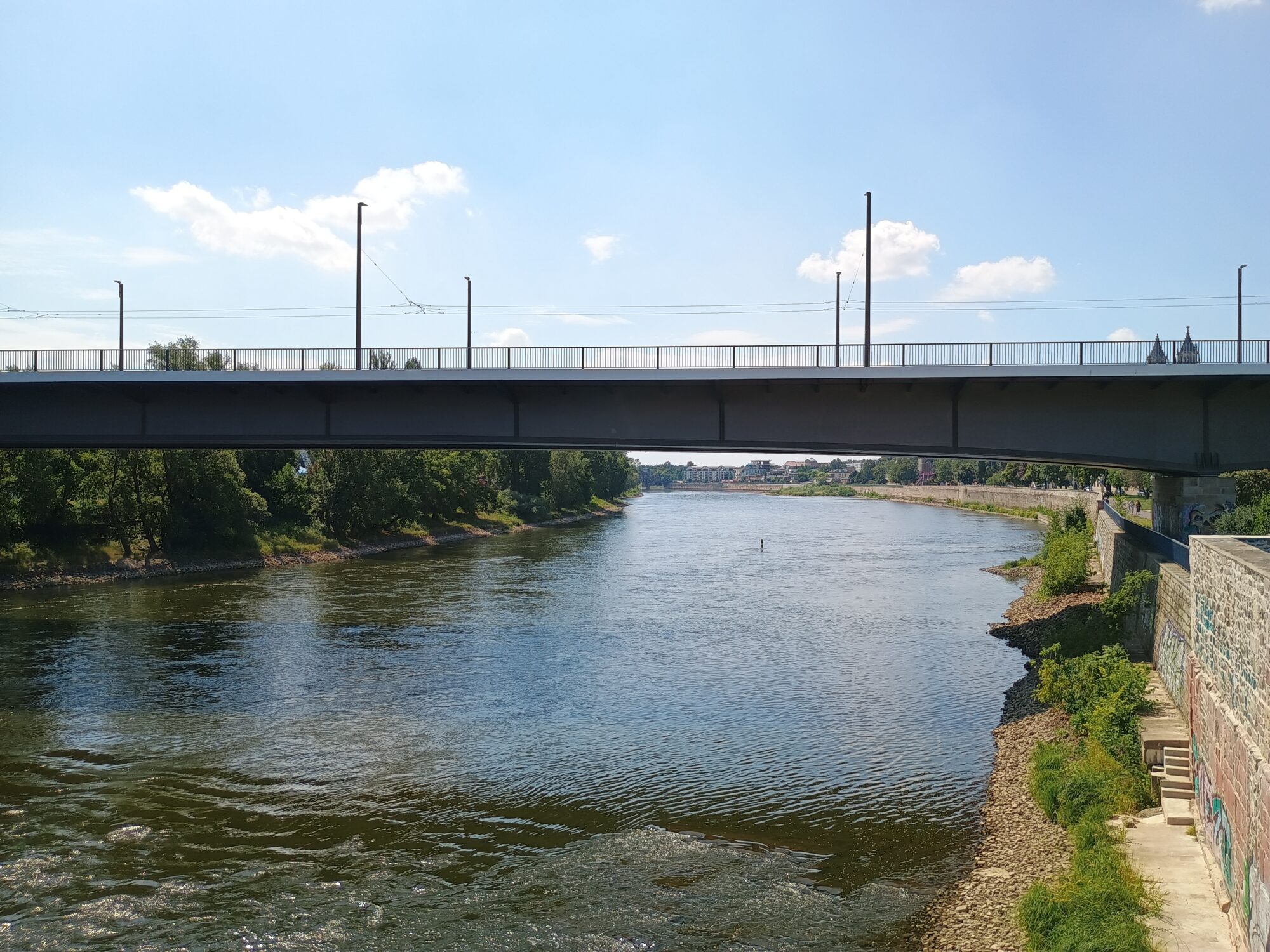
Record temperatures swept across Central Europe in early August, with Slovakia reaching 42.2C in the village of Dolne Plachtince and Austria hitting 41.2C in Bad Deutsch-Altenburg, part of a heatwave affecting Slovakia, Austria, Hungary, Serbia, Montenegro, Italy, Germany and the UK. All 27 of Italy’s major cities were placed on the highest heat alert for the first time this year, while Hungary recorded an overnight low of 28C in Budapest, itself a record. Rivers including the Elbe fell towards historic lows, and images from Magdeburg in early August showed sandbanks exposed along stretches normally covered by water.
Infrastructure built for a cooler climate
The heatwave’s effects went well beyond discomfort. Nuclear power plants along the Danube operated at reduced capacity because falling river levels limited the water available for cooling, while Germany’s persistent drought forced some cargo that would normally move by river onto roads instead. Seven consecutive weeks of minimal rainfall left parts of England in drought too, and wildfires broke out in Serbia and Montenegro. At least four deaths were reported, including a 19-year-old agricultural worker in Italy. Scientists quoted in coverage of the heatwave noted that Europe is warming at roughly twice the global average rate, making the kind of extremes seen this August increasingly the norm rather than the exception.
A recurring test, not a one-off event
This was the fifth heatwave of the summer for parts of Europe, following earlier bouts of extreme heat as far back as May. The repetition matters: infrastructure such as nuclear cooling systems, river shipping routes and electricity grids was largely designed for the climate of past decades, and each successive heatwave narrows the margin these systems have to absorb further stress before they fail rather than merely strain.
Why It Matters
Extreme heat is often discussed as a public health issue, and rightly so, but August’s events show it is equally an infrastructure and economic one, touching energy supply, freight and agriculture simultaneously. Governments across the continent now face a choice between reactive responses to each new heatwave and the costlier, slower work of adapting power, transport and water systems to a climate that has already changed.



Leave a Reply