

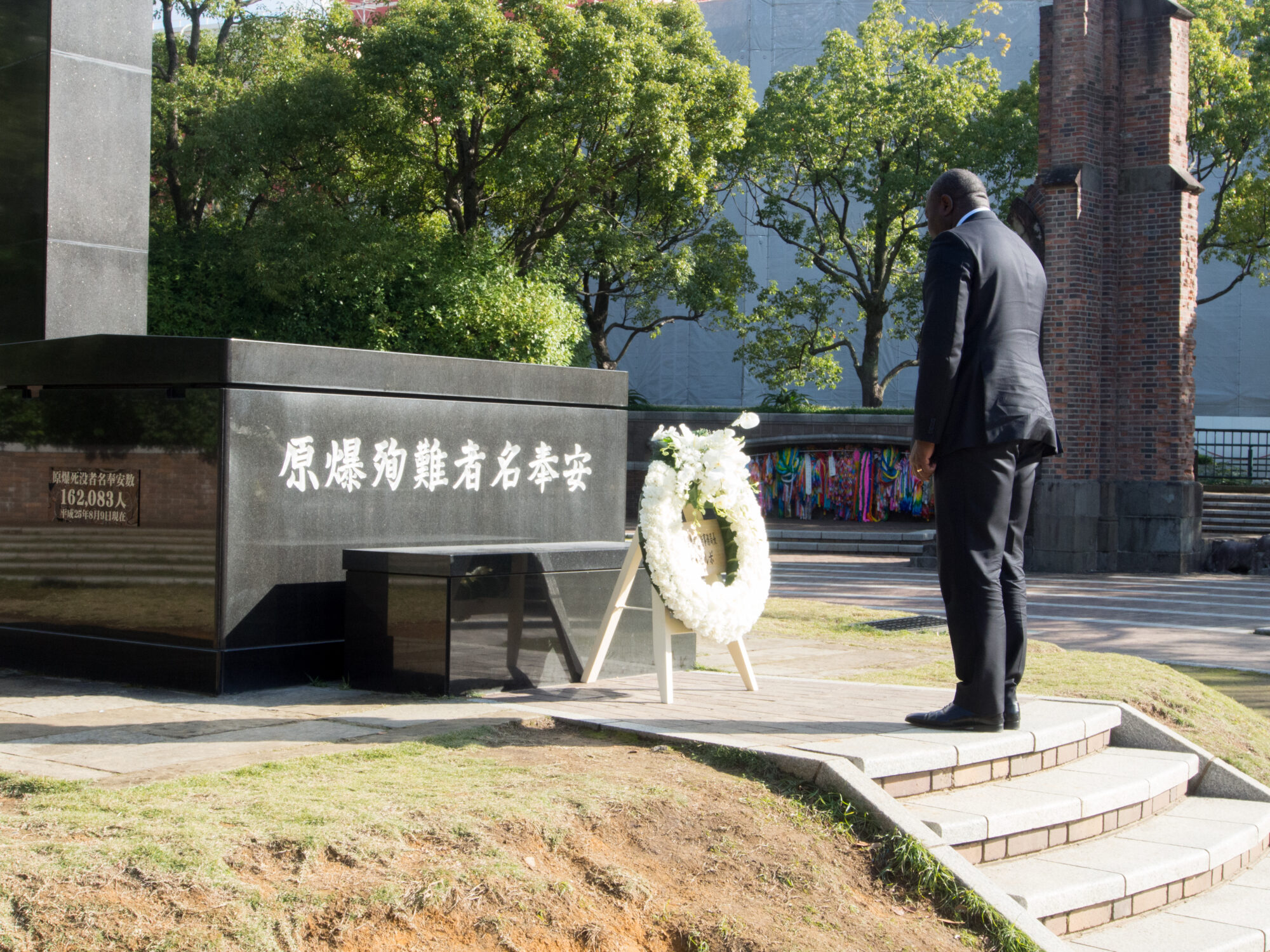
Nagasaki held its annual Peace Memorial Ceremony on Sunday 9 August, the 81st anniversary of the atomic bombing, with Mayor Shiro Suzuki setting out the city’s call for nuclear abolition in the Peace Declaration. According to Japan’s Prime Minister’s Office, about 2,600 people attended, including survivors and bereaved family members, representatives of international organisations including the United Nations, and delegates from 98 countries and the European Union.
The Mayor’s Declaration
The Yomiuri Shimbun, in a report carried by the Asia News Network, said Mr Suzuki expressed serious concern about signs of a reversal in nuclear disarmament while major powers take advantage of what he called the rule of force. He declared that “Nagasaki must remain the last atomic bombing site” and said the city will work with peace seekers around the world towards total abolition. The report said he referred to three consecutive failures to adopt a final document at Review Conferences of the Treaty on the Non-Proliferation of Nuclear Weapons, and described nuclear weapons as an absolute evil rather than a necessary one. He also told the story of Katsuji Yoshida, a survivor who suffered severe facial burns and spoke publicly about his experience.
The Government’s Position
Prime Minister Sanae Takaichi attended and addressed the ceremony. According to the text of her address published by the Prime Minister’s Office, she said Japan remains firmly committed to the Three Non-Nuclear Principles and is advancing “realistic and practical efforts” towards a world without nuclear weapons. The Prime Minister’s Office said she later visited the Nagasaki Atomic Bomb Museum, received requests from representatives of seven survivors’ organisations, spoke to the press and visited a nursing home for survivors.
Participants observed a minute of silence at 11:02 a.m., the time the bomb was dropped, and the Bell of Nagasaki was rung, the sources said. Three register books containing the names of 2,773 victims whose deaths were confirmed over the past year were dedicated. According to Japan’s health ministry, as cited by Yomiuri, 91,105 people held an Atomic Bomb Survivor’s Health Handbook at the end of March, with an average age of 86.66.
Why It Matters
The two statements delivered in Nagasaki differ in emphasis. The mayor spoke as a civic leader calling for abolition and criticising the state of multilateral talks, while the prime minister described realistic and practical efforts and reaffirmed Japan’s existing Three Non-Nuclear Principles. The ceremony also reflects the ageing of the survivors, whose average age Japan’s health ministry puts at 86.66.



Leave a Reply