

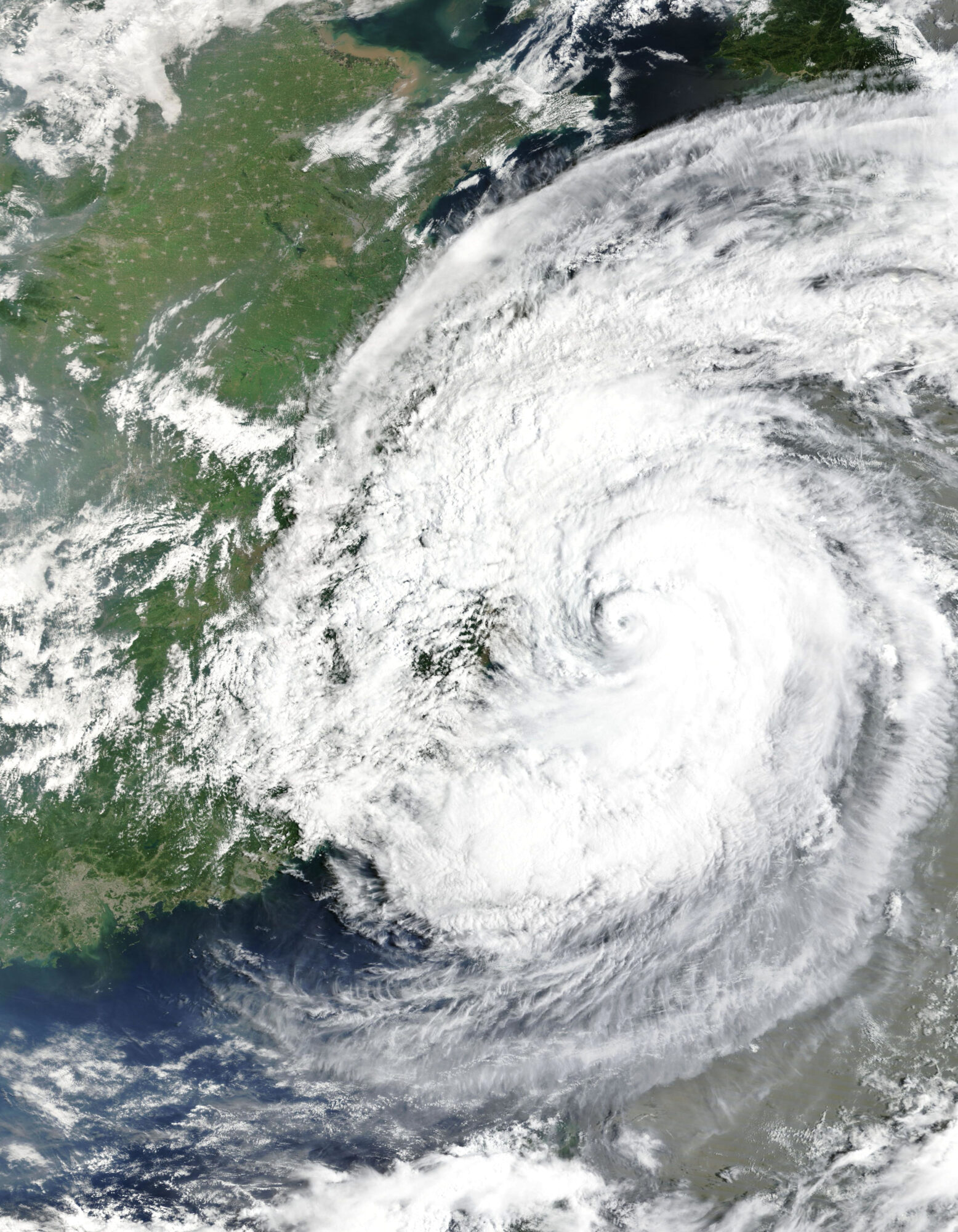
Typhoon Dolphin made landfall on China’s densely populated eastern coast on Sunday 9 August, according to the country’s National Meteorological Centre, after authorities moved large numbers of people out of its path. Euronews reports that the storm prompted more than one million evacuations, over 1,000 flight cancellations and a top-level alert.
The centre of the typhoon crossed the coastline near Yuhuan City in Zhejiang Province at about 5:30 pm local time (09:30 GMT), the meteorological centre said in an online post. It put maximum wind speeds near the centre at more than 150 kilometres per hour at landfall and warned that parts of central and eastern Zhejiang could receive between 250 and 500 millimetres of rain. Xinhua, citing the same centre, reported the landfall at Yuhuan at around 5:30 pm and gave the maximum sustained wind near the centre as 42 metres per second (Force 14). China Daily reported that the typhoon made a second landfall in Yueqing about 70 minutes later.
Evacuations and Disrupted Travel
According to Euronews, authorities relocated more than 900,000 residents from the city of Wenzhou and opened more than 1,000 emergency shelters. In neighbouring Fujian, the state news agency Xinhua reported that nearly 99,000 people were moved from risky areas on Saturday evening. Xinhua also said services on more than 200 ferry routes in Zhejiang and Fujian were suspended and work on offshore projects was halted.
Euronews cited state broadcaster CCTV as reporting that nearly 1,400 flights were cancelled at Shanghai’s two main passenger airports, with a further 270 cancelled at Hangzhou; China Daily later put the Hangzhou Xiaoshan airport figure at 388. The meteorological centre issued its red typhoon alert, its most severe warning, on Sunday morning, forecasting what it called “extraordinary torrential rain” in some areas. Heavy rainfall was also expected in Shanghai and parts of Fujian, Anhui and Jiangsu through Monday afternoon.
Impact Beyond the Mainland
Before reaching China, Dolphin brought heavy rain and strong winds to Okinawa in Japan. The island’s government said seven people suffered minor injuries, and the regional utility reported that 5,290 households were without electricity on Sunday afternoon. In Taiwan, Euronews says dozens of ferry services were suspended and more than 180 flights cancelled.
The storm was expected to weaken after landfall as it moved northwest over eastern China. Euronews noted that it arrived about two weeks after Typhoon Noul struck Guangdong province, which authorities described at the time as the strongest storm to hit China this year.
Why It Matters
The scale of the pre-landfall response, with hundreds of thousands relocated in a single city and air, rail and sea services curtailed across several provinces, suggests how coastal China manages typhoon risk through early, large-scale movement of people. The meteorological centre’s warning of heavy rain also points to the period after landfall, when flooding can pose a threat alongside the wind. The Euronews report gave no damage or casualty figures for mainland China, so the storm’s full impact was not yet clear.



Leave a Reply