

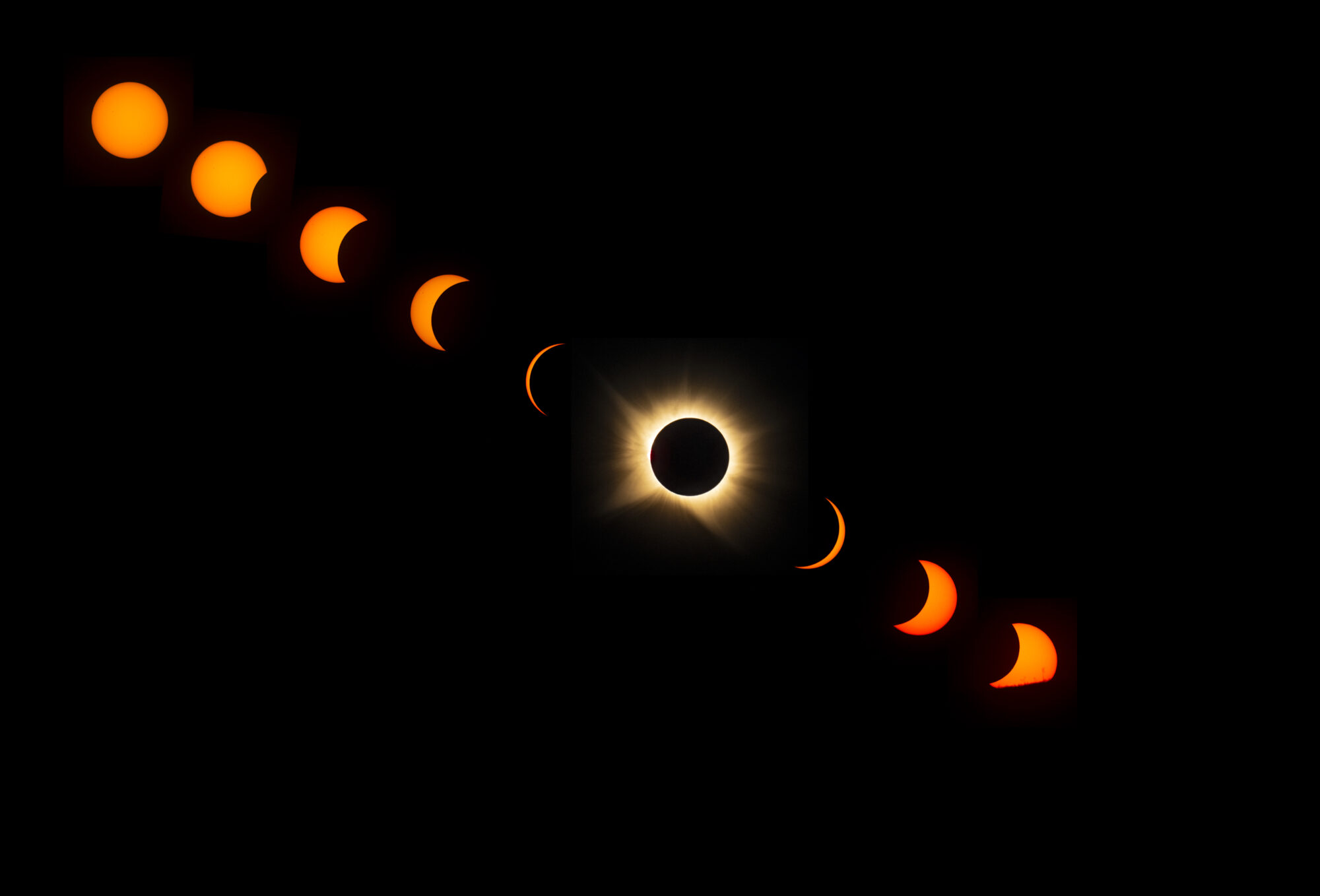
A total solar eclipse crossed a narrow path over northern Russia, Greenland, Iceland and northern Spain on 12 August 2026, with a small corner of Portugal also within the path of totality, according to NASA. The event coincided with the New Moon and fell on the same night as the peak of the annual Perseid meteor shower, giving skywatchers along the path two celestial events within hours of each other.
Where Totality Was Visible
Within the narrow band of totality, the Moon fully blocked the Sun’s disk, briefly revealing the Sun’s outer atmosphere, or corona, as a pale ring of light. NASA notes that observers across a much wider area, stretching from Alaska to North Carolina in the United States, saw only a partial eclipse, with the Moon taking a modest bite out of the Sun depending on location.
Viewing Safety
NASA advised that anyone viewing the partial phases needed certified eclipse glasses or safe solar viewers, warning that ordinary sunglasses, binoculars, telescopes or cameras without proper solar filters are not safe for looking directly at the Sun. Only within the path of totality, during the brief period when the Sun’s disk is completely covered, is it safe to view the eclipse without a filter. Skywatchers along the route also had a chance to see planets and bright stars emerge briefly in the darkened midday sky, an effect that occurs only during the short window of totality.
Why It Matters
Total solar eclipses are rare for any given location, often visible from the same place only once every few centuries, which is why paths crossing accessible regions such as Iceland and Spain draw astronomers, scientists and travellers from around the world. Beyond the spectacle, eclipses give researchers a limited window to study the Sun’s corona from the ground, complementing measurements from space-based solar observatories. Northern Spain and Iceland, both well served by international airports, saw a notable influx of eclipse tourism in the days surrounding the event, echoing the economic boost host regions have reported after past eclipses crossed populated areas.



Leave a Reply