
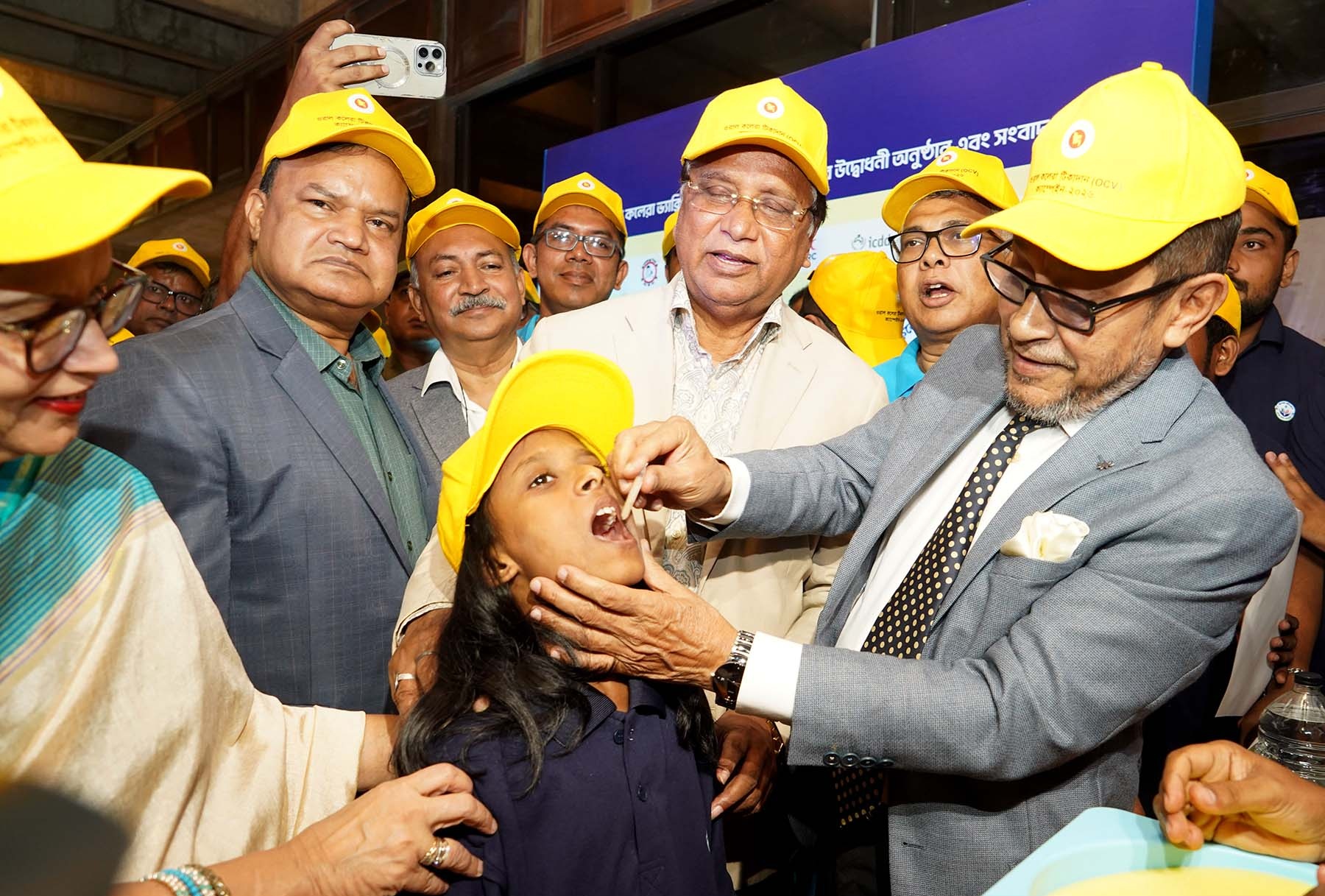
Bangladesh’s Health and Family Welfare Minister, Sardar Md. Sakhawat Hossain, inaugurated a Preventive Oral Cholera Vaccination Campaign on 20 August 2026 at the Nagar Bhaban auditorium of Dhaka South City Corporation. The campaign targets 5.175 million people across 14 high-risk city corporation areas and upazilas nationwide, under the slogan “Protect yourself. Protect your family. Protect your community.”
How the campaign works
The vaccine is offered free of charge daily from 8am to 5pm to everyone aged one year and above, except pregnant women. Two doses are required, spaced 14 days apart: the first dose ran from 22 August to 21 September, with the second dose to follow from 26 September to 25 October. According to organisers, the 14 priority areas were selected based on an assessment of disease burden, population density, vulnerability, and prior vaccination and transmission risk.
International backing
WHO Representative Dr Ahmed Jamsheed Mohamed and UNICEF Deputy Representative Peter George L. Mays attended the launch. According to WHO, 10.3 million vaccine doses are planned for delivery to Bangladesh for this campaign, financed by Gavi, the Vaccine Alliance, and procured and delivered by UNICEF, part of a wider resumption of preventive cholera vaccination that Gavi and WHO restarted globally earlier in 2026 as vaccine supply improved.
Why It Matters
Cholera remains a recurring risk in densely populated, flood-prone parts of Bangladesh, where outbreaks can spread quickly through contaminated water. A large-scale preventive campaign, rather than a reactive response after an outbreak begins, is intended to reduce the number of people who fall seriously ill and ease pressure on health facilities during the country’s monsoon and post-monsoon months. Delivering two doses over a roughly two-month window, rather than a single visit, also requires organisers to sustain outreach and public messaging long enough to bring people back for their second dose, which health officials generally consider the harder half of any two-dose campaign to complete.



Leave a Reply