

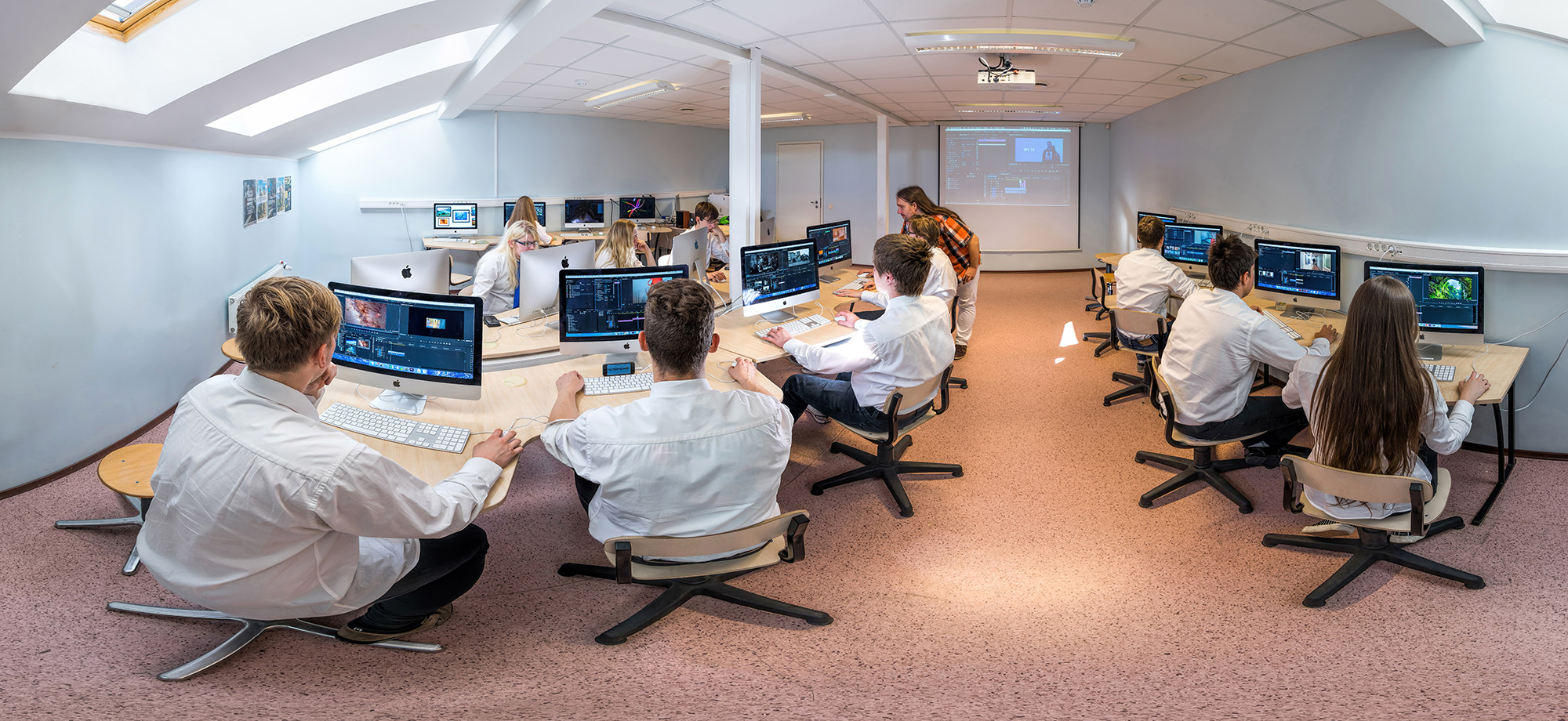
Estonia’s AI Leap programme, a nationwide initiative giving students and teachers free access to leading AI tools, expanded this September to vocational schools and a new cohort of 10th and 11th grade students, adding roughly 38,000 students and 2,000 teachers to the scheme. The programme, a public-private partnership between Estonia’s Ministry of Education and Research and companies including Telia and OpenAI, launched with upper secondary schools in September 2025 and is being studied for its impact on learning outcomes in collaboration with the University of Tartu and Stanford University.
Guided tools, not open access
Rather than simply permitting students to use commercial chatbots, the programme provides customised versions of ChatGPT and Gemini, described by organisers as “Socratic” models built to guide students toward answers through questioning rather than supplying them outright. AI Leap chief executive Ivo Visak has said the goal is not to increase students’ use of AI generally but “to provide a pedagogically guided alternative to widely used commercial AI models,” a distinction the programme’s designers see as central to whether AI helps or undermines learning.
An open question, deliberately being tested
Early uptake data from earlier in 2026 showed roughly 47% of students with activated accounts using the tool weekly, but adoption is not the same as proven benefit, which is precisely why the programme includes formal academic partners rather than launching on the assumption that guided AI access automatically improves outcomes. Estonia’s approach, treating the question as one to be studied rather than settled by policy alone, differs from jurisdictions that have instead moved to restrict or ban AI chatbots in schools over concerns about academic integrity.
Why It Matters
As governments worldwide wrestle with whether to open classrooms to generative AI or wall them off, Estonia’s experiment, run at national scale and paired with independent research, is likely to become a reference point either way. A small, digitally advanced country’s willingness to expand rather than pause its programme, backed by data collection built in from the start, offers other education systems a rare real-world test of what guided AI access in schools actually does to how students think and learn.



Leave a Reply