
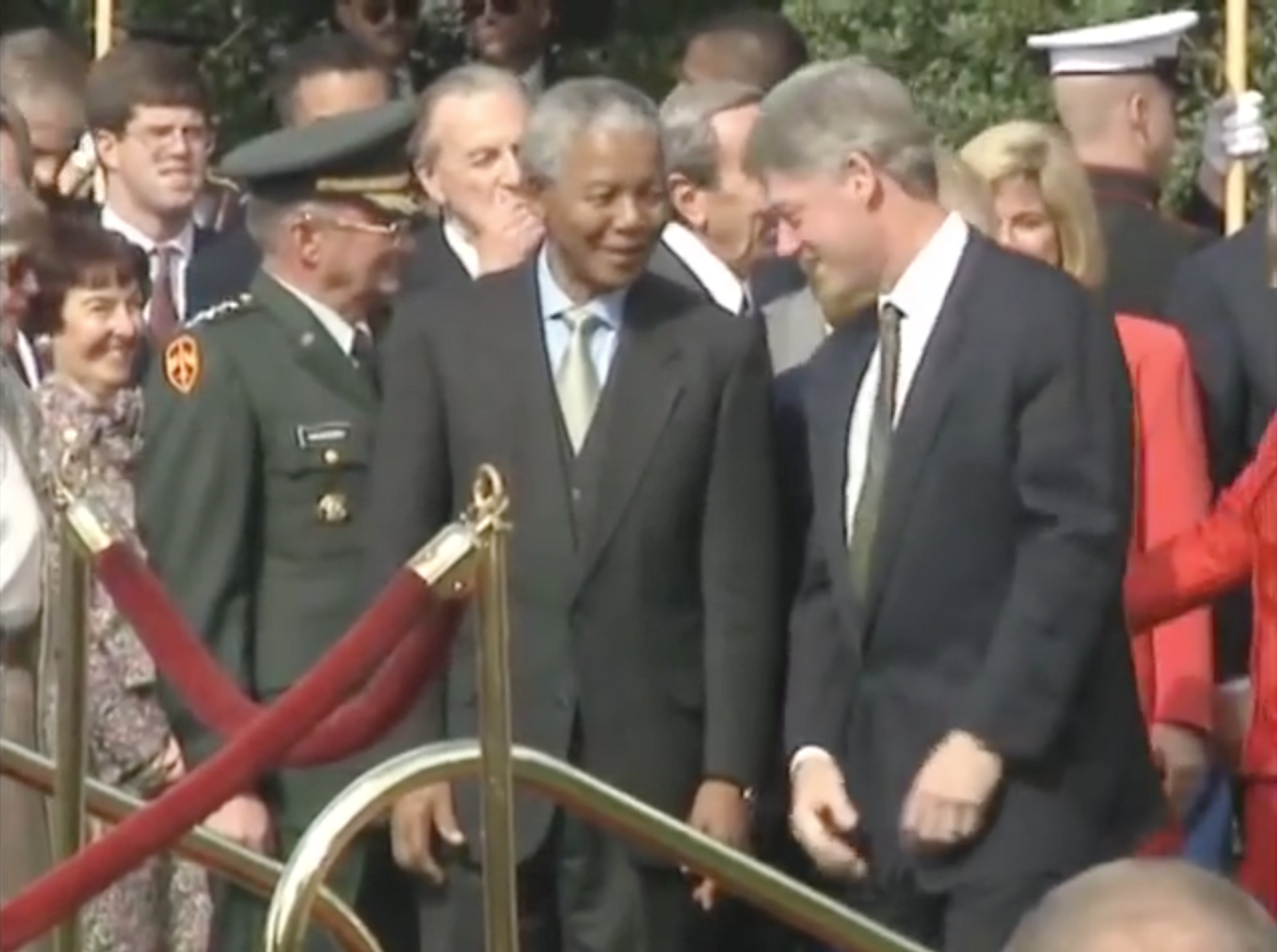
In 1995, South Africa established its Truth and Reconciliation Commission (TRC) under the Promotion of National Unity and Reconciliation Act. President Nelson Mandela appointed Archbishop Desmond Tutu as its chairperson. The commission was created to investigate gross human-rights violations committed during the conflict of the apartheid era, restore the dignity of victims and recommend measures for reconciliation and reparation.
Rather than relying exclusively on criminal prosecutions, the TRC offered a conditional amnesty process. Applicants had to show that their acts were associated with a political objective, committed within the relevant period and fully disclose all material facts. Amnesty was not automatic, and it was granted by the commission’s independent Amnesty Committee. Victims were given opportunities to testify, while public hearings brought accounts of violence and abuse into the national record.
The Thinking Behind the Choice
Mandela described the policy dilemma in an address to Parliament on 18 August 1994. South Africa, he said, had to confront a past of gross human-rights violations that threatened to remain “like a festering sore.” He also argued that any amnesty arrangement had to address the plight of victims. The approach that followed sought to combine truth-seeking, public acknowledgment, limited conditional amnesty and recommendations for reparations.
The legislation did not treat truth-telling as a substitute for every form of accountability. It required the commission to investigate violations, establish what had happened to victims, identify those involved and consider accountability. Nor was the TRC simply a blanket amnesty scheme: people who did not qualify for amnesty remained potentially subject to prosecution, although the later record of prosecutions and implementation of the commission’s recommendations became a major source of criticism.
The commission presented its report to Mandela in 1998. Its findings and recommendations were contested, including by the African National Congress, and the process was criticised by victims and others who believed that amnesty did not provide sufficient justice. Yet the TRC created a substantial public record of apartheid-era abuses and made reconciliation a central part of South Africa’s democratic transition.
A Model With Real Limits
South Africa’s experience influenced transitional-justice debates internationally and was subsequently studied by countries confronting legacies of authoritarian rule, political violence and human-rights abuse. Its international reputation, however, has never erased its domestic limitations. In 2025, the Nelson Mandela Foundation described the TRC’s legacy as increasingly contested, pointing to unresolved questions about prosecutions, reparations, access to the archive and the failure to carry many recommendations forward.
For leadership audiences, the enduring lesson is not that reconciliation guarantees a clean outcome. It is that Mandela accepted restraint, compromise and institutional process as necessary tools of democratic leadership. He had publicly committed to serving one term and stepped down in 1999, allowing Thabo Mbeki to succeed him. That decision did not remove the country’s problems, but it reinforced a principle vital to a fragile democracy: political authority should help build institutions capable of outlasting any individual leader.
Key Insights
- South Africa’s TRC was established by the 1995 Promotion of National Unity and Reconciliation Act and chaired by Archbishop Desmond Tutu.
- Conditional amnesty required full disclosure of relevant facts and a demonstrable political objective; it was not a general pardon.
- The TRC combined testimony, investigation, reparations recommendations and accountability inquiries, but its implementation and legacy remain contested.
- Mandela served one presidential term and stepped down in 1999, making institutional continuity part of his leadership example.


Leave a Reply