

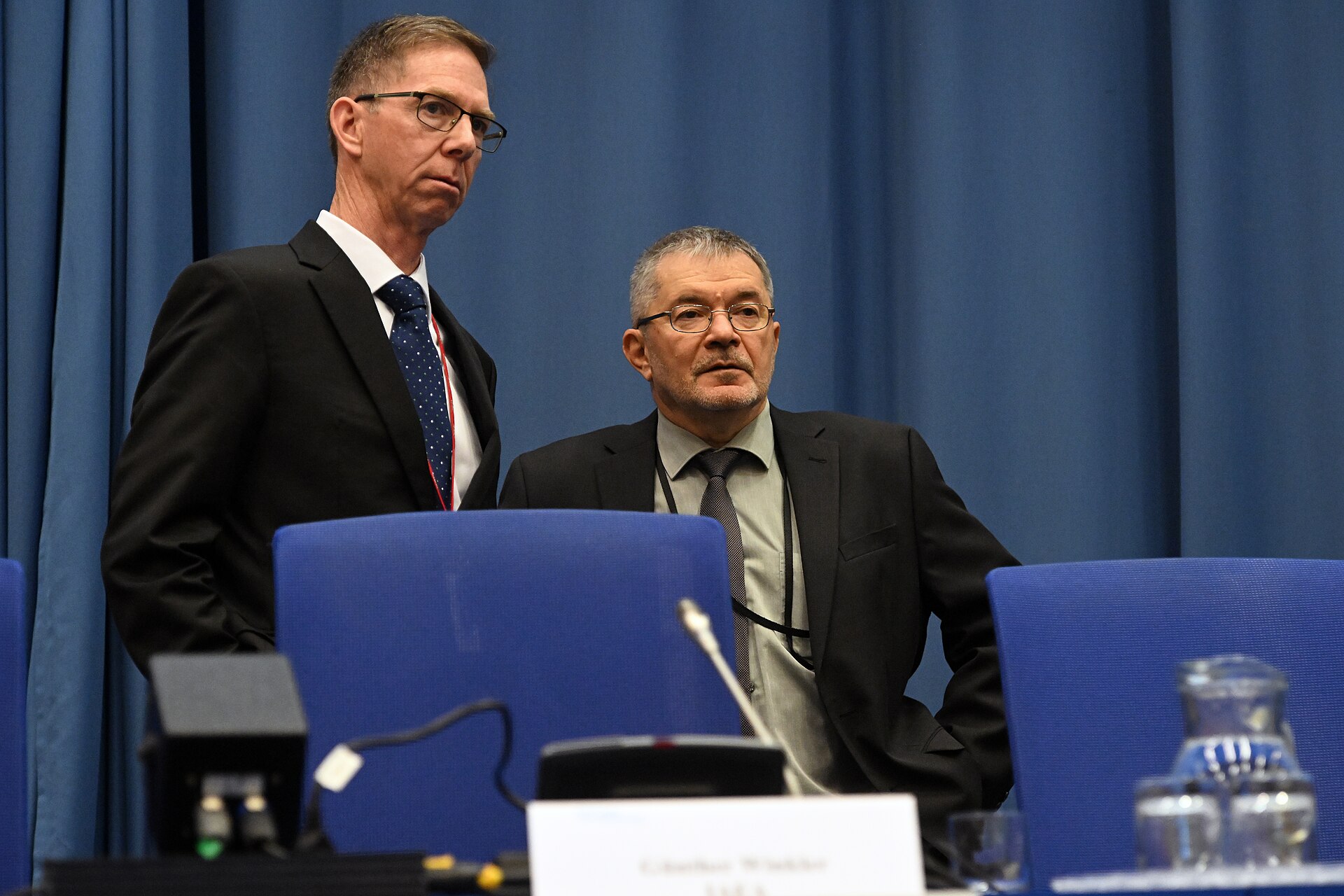
The International Atomic Energy Agency’s 35-nation Board of Governors voted on 9 September to report Iran to the UN Security Council over its non-proliferation obligations, the first such referral in 20 years. The resolution, proposed by the United States, Britain, France and Germany, passed 23 votes in favour to three against, with eight abstentions; Russia and China voted against it. Iran’s mission to the IAEA rejected the outcome, saying the resolution was adopted without consensus and describing what it called “criminal acts of aggression” by the United States and Israel, while stating that Washington’s objective to force Iran into “surrender” would “never happen.”
What prompted the referral
IAEA Director General Rafael Grossi told the board that the agency’s inability to verify Iran’s compliance was “a matter of serious proliferation concern,” citing a lack of information about Iranian nuclear facilities and an inability to account for the size or location of Iran’s stockpile of enriched uranium. The vote follows the reimposition of UN sanctions on Iran in September 2025 through the JCPOA’s so-called snapback mechanism, a process Russia has separately disputed, arguing that the underlying Security Council resolution had already expired when the mechanism was invoked.
A vote both sides can claim differently
Supporters of the resolution frame it as a necessary response to a verified information gap that the IAEA itself has repeatedly flagged. Iran, along with Russia and China, frames the same vote as a politically driven escalation rather than a technical finding, part of a broader dispute over whether the snapback sanctions process was ever legally valid in the first place. Because Russia and China hold Security Council vetoes, the practical effect of the IAEA’s referral on any future Council action remains limited regardless of which reading is accepted.
Why It Matters
The vote formalises a widening rift between the IAEA and Iran over verification at a moment when trust in the international nuclear oversight system is already strained by disputes over the legality of the snapback sanctions themselves. Whether the referral leads to further Council action or simply hardens existing positions will depend on decisions in capitals far from Vienna, but it marks a rare and significant step back onto the Security Council’s agenda for an issue that had been managed through the IAEA for two decades.



Leave a Reply