
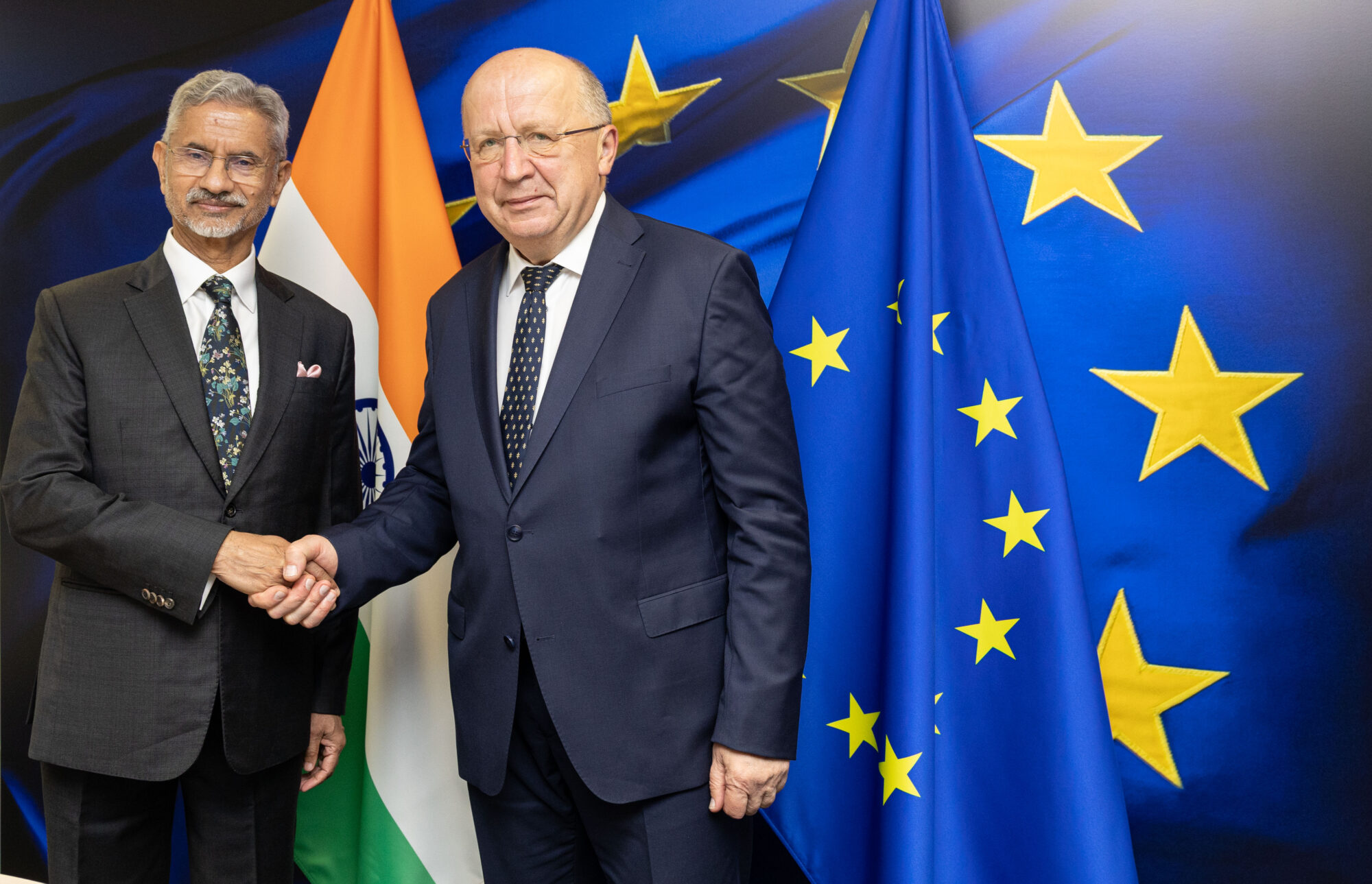
Indian and European Union officials meeting in Brussels on 20-21 September 2026 advanced discussions on the India-Middle East-Europe Economic Corridor and cooperation on green shipping, part of a broader push to turn the two sides’ strategic partnership from declared priorities into working programmes.
External Affairs Minister S Jaishankar met European Commissioner for International Partnerships Jozef Sikela to discuss what officials described as advanced cooperation in connectivity, trilateral partnerships, the corridor known as IMEC, and sustainable shipping initiatives. Jaishankar said the talks underlined “the importance of IMEC and sustainable shipping initiatives in strengthening India-EU cooperation.” Separately, India’s ambassador to the EU, Pranay Verma, met Pietro Ducci, the European Parliament’s director-general for external policies, to discuss inter-parliamentary cooperation and high-level exchanges.
A corridor still mostly on paper
IMEC, first announced in 2023 alongside a G20 summit in New Delhi, envisions rail and shipping links running from India through the Gulf and Israel to Europe, intended in part as an alternative route to China’s Belt and Road Initiative. Progress on the corridor has been slower than its early billing suggested, complicated by conflict and instability across parts of the Middle East that the proposed route would cross. The September talks in Brussels focused on process, cooperation frameworks, trilateral partnerships and parliamentary engagement, rather than announcing new infrastructure commitments.
Why it matters
The EU-India relationship has been billed by both sides as a strategic partnership for several years, but has often struggled to move past joint statements toward projects with fixed budgets and timelines. Keeping IMEC alive as a talking point, even without new money attached, matters to India because it offers an alternative to routes dominated by China, and to the EU because it wants a stake in Indo-Pacific and Gulf connectivity that does not run through Beijing. Whether the corridor becomes more than a recurring line in joint statements will depend on progress that has so far been most visible in ministerial meetings rather than on the ground.



Leave a Reply