

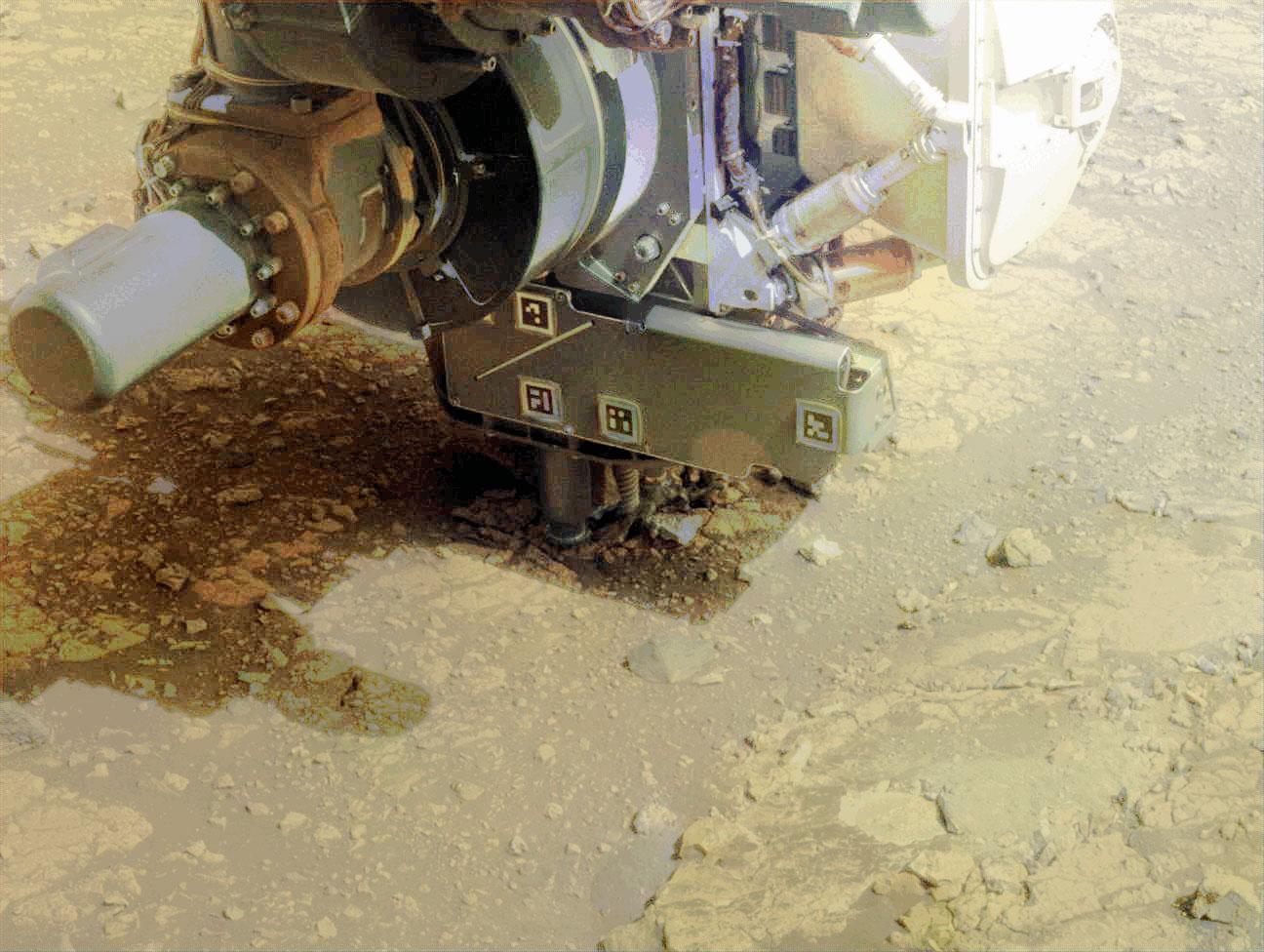
NASA announced on 21 September 2026 that its Perseverance rover has uncovered evidence of a complex history of water activity at the edge of Mars’s Jezero Crater, including at least three distinct episodes of water-rock interaction, one of which involved hot groundwater moving beneath the surface. The findings come from a region known as the Margin Unit, along the rim of the crater, which Perseverance has been exploring since 2023.
Layers of Ancient Water History
According to NASA’s Jet Propulsion Laboratory, the rock record in the Margin Unit points to a sequence that included ancient lakes, later groundwater circulation, and finally hydrothermal fluids, meaning heated water, moving through the rock. Each episode left a distinct chemical and mineral signature that scientists were able to read from samples the rover drilled and analysed on site, using instruments on Perseverance’s robotic arm designed to identify minerals formed in the presence of liquid water.
Why Hot Water Matters
Hydrothermal systems, where heated water circulates through rock, are considered especially significant to astrobiologists because similar conditions on Earth support microbial life in places such as deep-sea vents and geothermal springs. Finding evidence that Mars once hosted this kind of environment adds a new category of potentially habitable setting to the list already identified by earlier discoveries of ancient lakes and rivers in Jezero Crater.
Why It Matters
Perseverance’s core mission is to search for signs that Mars could once have supported life and to collect samples for eventual return to Earth. Evidence of a hydrothermal system adds weight to the case that Jezero Crater experienced multiple, chemically diverse environments capable of sustaining life over time, rather than a single brief wet period, strengthening the scientific rationale for prioritising samples from this specific region when a sample-return mission eventually brings them home to laboratories on Earth for more detailed analysis.



Leave a Reply