

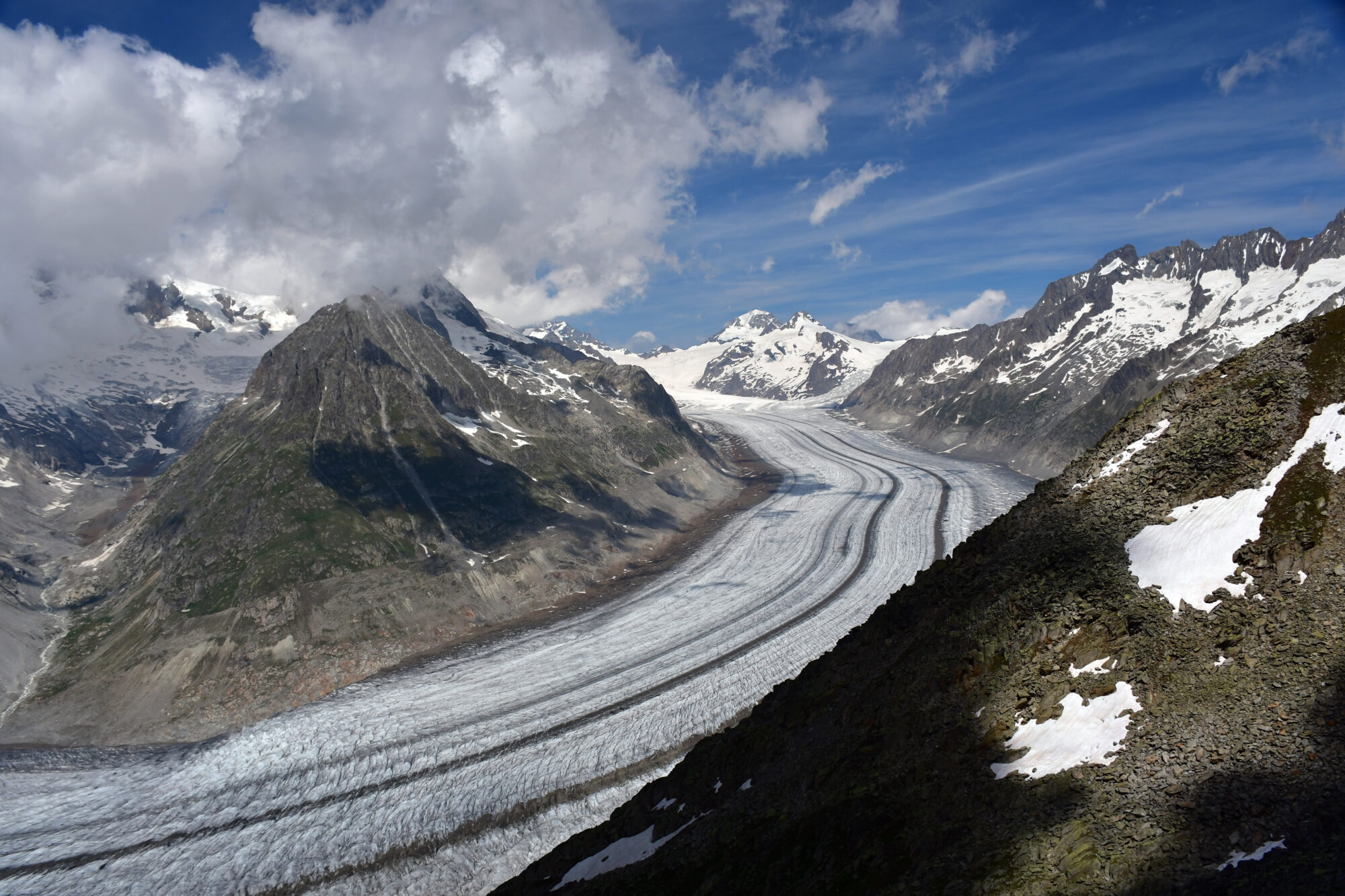
Swiss glaciers lost an estimated 5.5 per cent of their ice volume in the hydrological year 2025/2026, according to the annual report of Glacier Monitoring Switzerland (GLAMOS), published on 23 September 2026. The report says the year produced the second-lowest mass balance on record, behind 2022.
What the Measurements Found
GLAMOS said ice loss was measured on 23 glaciers across the Swiss Alps. The average mass balance was minus 2.9 metres water equivalent, which, extrapolated to all glaciers, corresponds to the 5.5 per cent reduction in Swiss ice volume, the report says. The report says this is only slightly short of the 2022 record value of minus 3.13 metres water equivalent.
At some sites, losses were the largest since measurements began, GLAMOS said, including on the tongues of the Grosser Aletsch, Rhone and Gries glaciers. The highest local annual ablation reached almost 10 metres of ice on low-lying glacier tongues such as the Rhone, and about 13 metres at the lowest site on the Grosser Aletsch glacier, at 1,980 metres above sea level. On all surveyed glaciers, substantial ice loss extended to the highest observation points, above 3,300 metres, and all winter snow had disappeared even at the topmost measurement sites.
Longer-Term Picture and Causes
Over 2022 to 2026, GLAMOS said, melt rates were more than twice as high as in any previously monitored five-year period, resulting in an ice volume loss of almost 20 per cent since 2021. The report attributes the 2026 losses to a very dry winter, with a Swiss-wide snow deficit on glaciers of 25 per cent, and to the hottest June to August on record, citing MeteoSwiss, followed by intense heatwaves.
Why It Matters
GLAMOS explains that, in September, glaciers should still be covered by several metres of winter snow to be in balance. The finding that no winter snow remained even at the highest sites therefore means the glaciers had no snow cover left to offset melting. The report describes one year of measurements and the five-year comparison given above; it does not predict future years.



Leave a Reply