
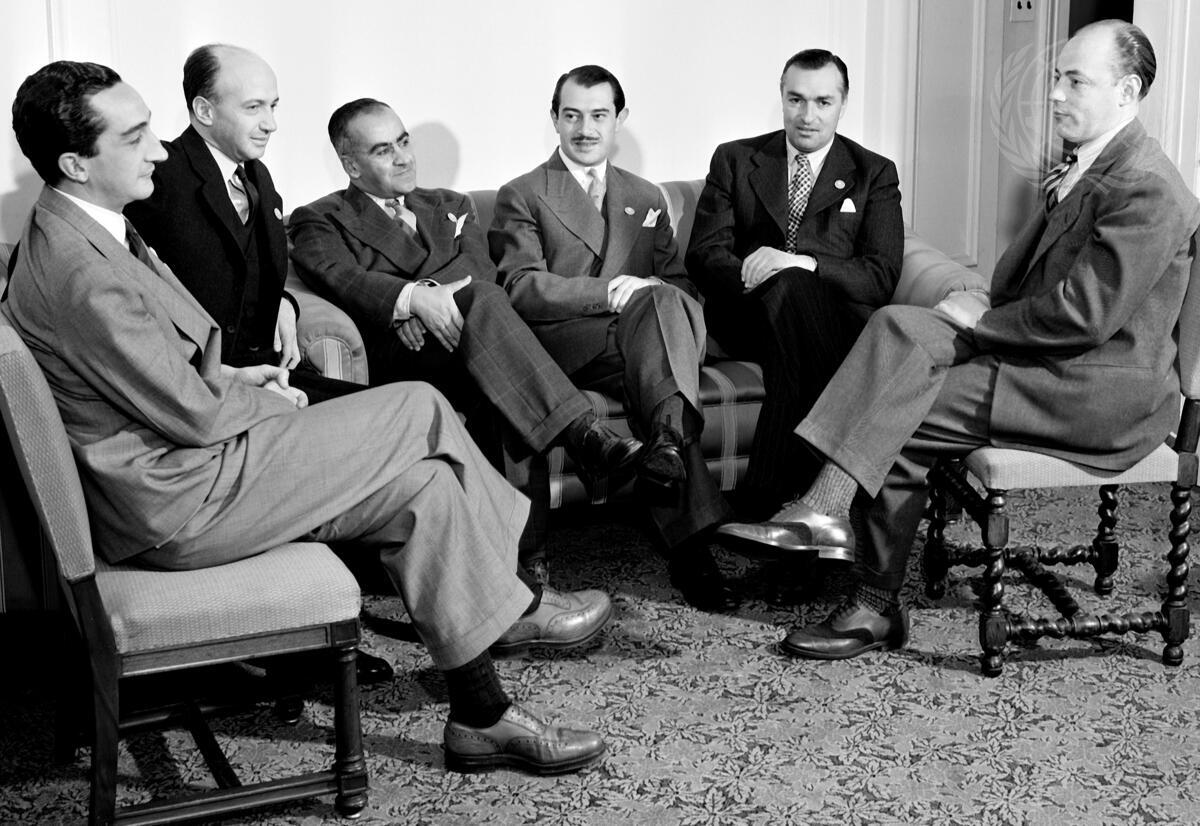
The idea of a permanent international peacekeeping body took shape gradually through the Second World War. On 14 August 1941, Franklin D. Roosevelt and Winston Churchill issued the Atlantic Charter, which called for a postwar “wider and permanent system of general security”. On 1 January 1942, representatives of 26 nations signed the Declaration by United Nations, giving Roosevelt’s coined phrase its first official use.
From Dumbarton Oaks To San Francisco
Detailed planning continued through wartime conferences at Dumbarton Oaks in 1944 and Yalta in early 1945, where the “Big Three” — the US, UK and Soviet Union — agreed to call a founding conference. That conference, the United Nations Conference on International Organization, opened in San Francisco on 25 April 1945 and ran until 26 June, about two months.
On 26 June 1945, representatives of 50 countries signed the UN Charter, formally establishing the organisation whose Charter opens with the peoples of the United Nations “determined to save succeeding generations from the scourge of war.” The Charter came into force on 24 October 1945, once ratified by a majority of signatories including all five permanent Security Council members.
From 51 Members To 193
Eight decades on, the UN counts 193 member states, working through an expansive network of related agencies, funds and programmes. The Charter itself has been formally amended only three times — in 1963, 1965 and 1973 — a degree of textual stability unusual for a document governing an organisation that has grown nearly fourfold in membership. For governance and international-affairs audiences, the UN’s founding remains a useful case study in how post-crisis institutions get built: not from a single visionary document, but through years of incremental, multilateral negotiation under wartime pressure.
Key Insights
- The UN Charter was signed by 50 nations on 26 June 1945, after about two months of negotiation in San Francisco.
- The founding process traces back to the 1941 Atlantic Charter and the 1942 Declaration by United Nations.
- The Charter came into force on 24 October 1945, now marked annually as UN Day.
- The UN has grown from 51 original members to 193 today, with the Charter formally amended only three times.



Leave a Reply