
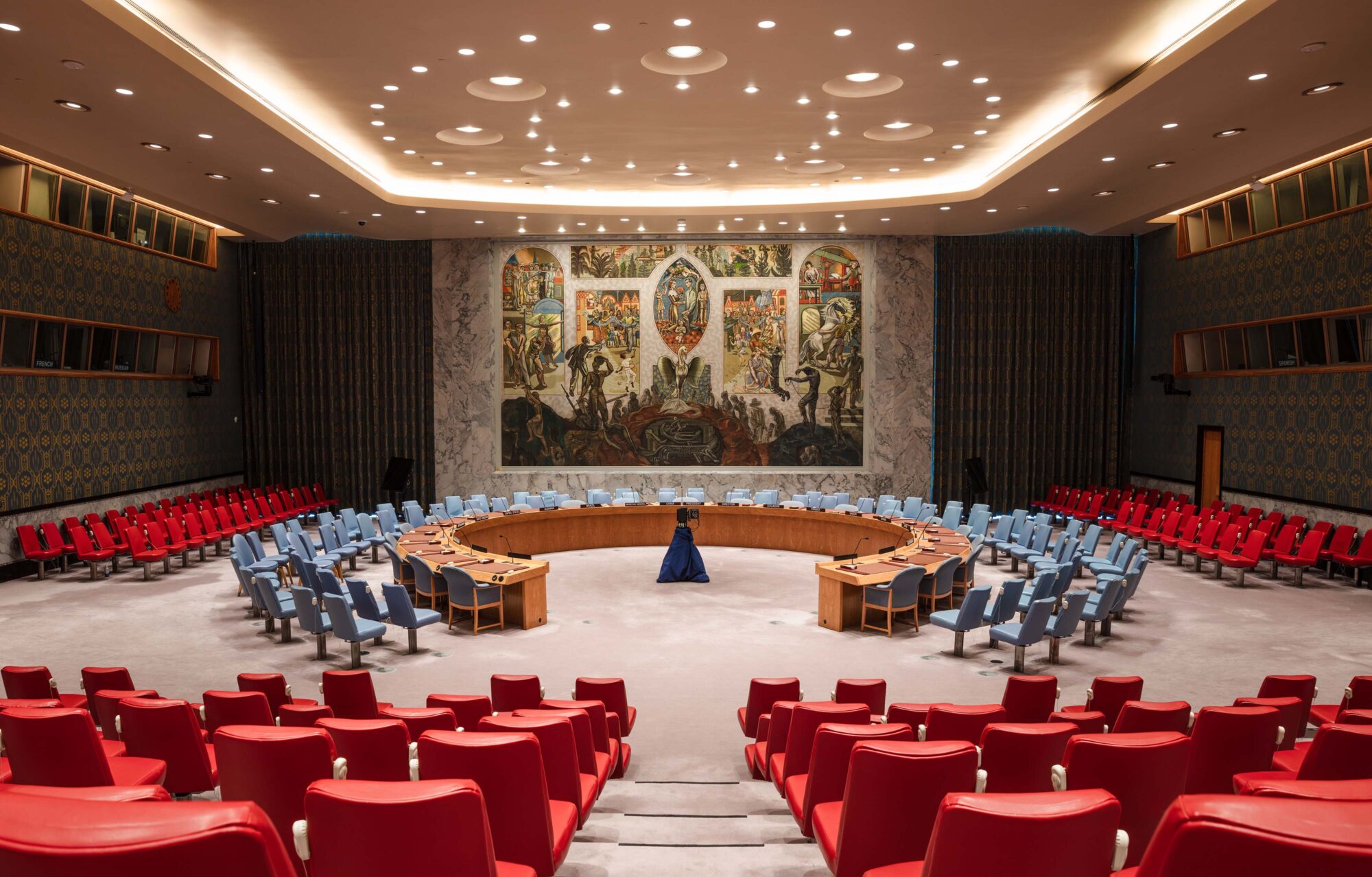
African leaders renewed their long-running campaign for permanent representation on the UN Security Council during the General Assembly’s high-level debate, which ran from 22 to 28 September. Nigeria’s Vice President Kashim Shettima called for at least two permanent African seats with full veto rights, plus five additional non-permanent seats, while Ghana’s President John Mahama told the Assembly that “Security Council reform is not a favour to Africa; it is an imperative for the legitimacy, credibility and survival of the United Nations.” UN Secretary-General Antonio Guterres used one of his final addresses in the role to repeat his own call for the Council to become more representative of today’s geopolitical realities.
A case built on numbers
Africa’s 54 states make up nearly a quarter of the UN’s total membership, yet hold no permanent seats on a Council whose five permanent members, the US, UK, France, Russia and China, have remained unchanged since 1945. The African Union has not settled on which countries would hold any new seats, though Nigeria, Egypt and South Africa are frequently named as candidates, itself a sign of how reform proposals can stall on questions of who benefits even among supporters of the principle.
Why reform keeps stalling
The obstacles are structural rather than rhetorical. Intergovernmental negotiations on Security Council reform have continued since 2008 without resolution, and any change to the UN Charter requires approval from two-thirds of the General Assembly plus every one of the current five permanent members, each of which would need to accept diluting its own relative influence. Existing permanent members have shown little appetite for that, and disagreement persists even among reform advocates over whether new permanent members should hold veto power at all.
Why It Matters
The Security Council’s composition shapes whose voices carry formal weight on matters of international peace and security, from sanctions to peacekeeping mandates. A body that excludes an entire continent from permanent representation faces recurring questions about its legitimacy, even as the practical path to changing that composition remains blocked by the very powers reform would affect most.



Leave a Reply