

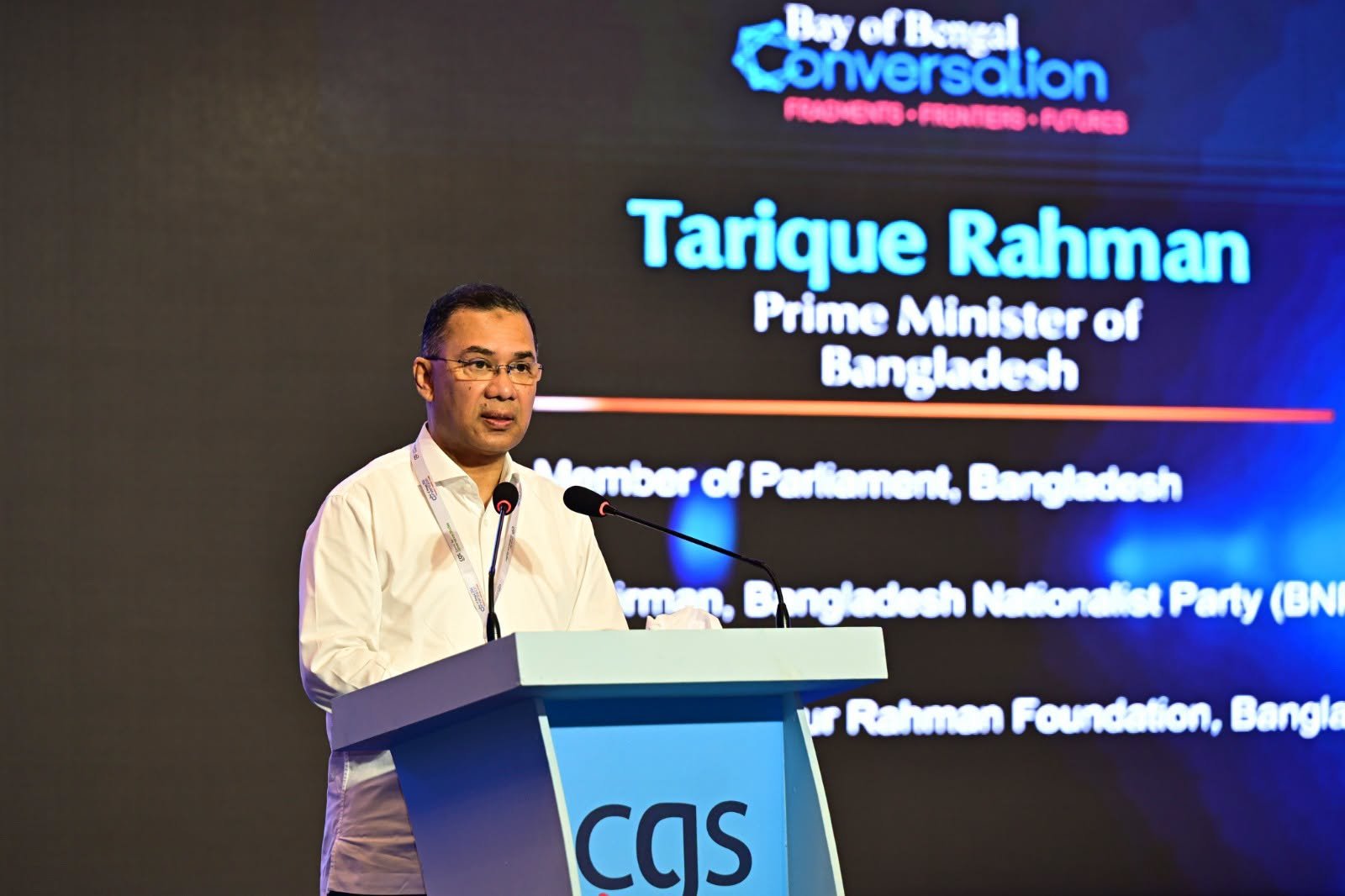
DHAKA, 3 October 2026 — Prime Minister Tarique Rahman used the opening of the fifth Bay of Bengal Conversation in Dhaka on 3 October to call for deeper regional cooperation in trade, energy, technology, climate and maritime affairs, according to a UNB report carried by The Business Standard. “Let the Bay of Bengal become a region where nations grow together, embrace mutual and reciprocal benefits, and citizens expand meaningful cooperation,” he said while inaugurating the three-day forum at the Pan Pacific Sonargaon hotel.
Geography, economy and priorities
“The Bay of Bengal has been shaping our destiny for generations,” he said, according to bdnews24.com. The Prime Minister said Bangladesh’s strategic location, ports, waterways and coastal economy offered significant opportunities to connect the country with the wider world through shipping, fisheries, tourism, energy and regional supply chains, and that its shared geography should become shared prosperity. He said the country believed in dialogue, partnership and mutual respect, and would protect its national interests and sovereignty while working with regional and global partners.
Outlining his government’s five-year priorities, he said Bangladesh was moving “from commitment to implementation”, with a focus on national interests, policy continuity, economic stability and institutional reform. He said the government aimed to make the country an attractive investment destination and a strong manufacturing and investment hub, with jobs in production, services and exports.
According to the same report, he cited social protection initiatives including the Family Card, Farmer’s Card and Health Card and an eventual Universal Card for integrated access to public services. He said the government was working to employ 100,000 healthcare workers, around 80 per cent of them women, to provide basic care, health advice and referrals at community level, and was expanding access to education, including free uniforms, school bags, midday meals and scholarships from Class One. On infrastructure and the environment, he said Bangladesh planned to dig 20,000 kilometres of canals and waterways over the next five years, advance the Padma Barrage project and develop a Teesta Master Plan, and announced a target of planting 250 million trees over five years while expanding solar energy, waste recycling and green factories. These are plans and targets, not completed work.
Governance and the Rohingya
On governance, he said development required strong institutions, with transparency, accountability, human rights, democratic principles and freedom of expression protected, adding that “the rule of law must apply equally to every citizen”. On the Rohingya crisis, he said Bangladesh continued to host around 1.2 million refugees and remained committed to their early, voluntary, safe, dignified and sustainable repatriation to Myanmar. This, he said, “requires sustained political support and global finance”, as well as addressing the root causes of the crisis.
Why It Matters
A prime minister choosing a regional forum to set out economic and foreign-policy priorities signals how Dhaka wants to be seen by its neighbours and partners: as a connector between South and Southeast Asia rather than a country at the end of a supply chain. How far the language of shared prosperity turns into concrete trade, energy and maritime arrangements will depend on follow-through with India, Myanmar, Sri Lanka, Thailand and others around the Bay.



Leave a Reply