

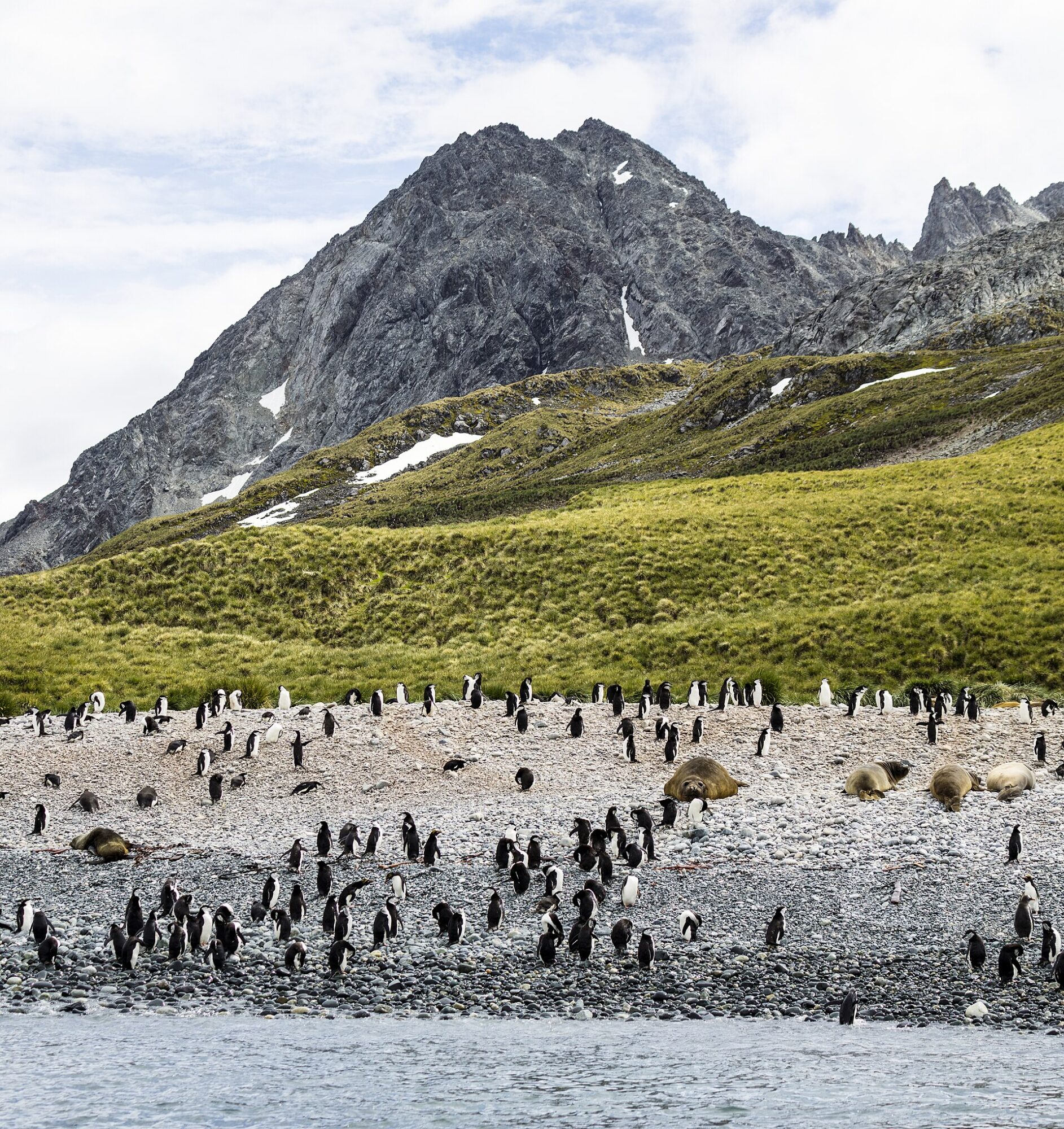
This is an analysis piece, not a news report. It is anchored in one development: researchers at the British Antarctic Survey (BAS) reported on Wednesday 7 October 2026 that Zavodovski Island in the South Sandwich Islands is no longer home to the world’s largest penguin colony, after a sharp fall in chinstrap penguins, according to AFP reporting carried by CBS News. The study was published in the journal Current Biology.
The Facts as Reported
AFP reported that chinstrap breeding numbers on the island fell from around 1.09 million individuals in January 2011 to 402,000 in 2025, a 63 per cent decline, and that BAS put the loss at more than 680,000 birds. Other outlets have given somewhat different absolute totals, so this piece uses the figures that match the study’s reported start and end counts. Macaroni penguins on the island rose over the same period, from around 338,000 to 433,000, and now outnumber chinstraps, according to AFP. The researchers said the Adelie penguins of Cape Adare, with more than one million as of 2018, now make up the world’s largest colony.
Lead author Norman Ratcliffe told AFP the loss was very rapid. The 2016 eruption of the island’s Mount Curry volcano raised fears for the colony, but the study said the decline in chinstrap colony area was under way before the eruption and continued at a constant rate afterwards, and Ratcliffe said he did not think the volcano was the main driver. The scientists instead linked the decline to reduced krill, the chinstraps’ main food, which they said has been pushed south towards colder waters by warming. They suggested chinstraps should be redesignated as endangered by the International Union for Conservation of Nature, from the current least concern.
Analysis: A Shift in Who Lives Where
The most telling detail may not be the loss but the replacement. The study described the switch from chinstraps to macaroni penguins as the most striking change in penguin community composition observed at a single location in Antarctica, and said the most plausible explanation is a climate-induced regime shift that has favoured sub-Antarctic macaronis over maritime Antarctic chinstraps. Macaronis eat a wider range of prey, according to AFP. This points to a story of winners and losers as conditions change, not simply of decline.
CGTN reported Ratcliffe as saying that chinstraps have almost no alternative food during the breeding season, and it added that there are few suitable islands further south on which they could breed, so they cannot simply follow their food. If that is right, adaptation options for the species are limited. What the sources do not tell us is how far the Zavodovski pattern extends: AFP said the findings raise concerns that populations across the wider South Sandwich Islands, home to 38 per cent of the species, have also fallen, but that remains a concern, not a measured result.
Why It Matters
A single colony cannot stand for a whole ocean, yet this study is reported to document a steady decline between 2011 and 2025. It is a reminder that changes in the food web can reshuffle wildlife communities long before a species is formally listed as threatened.



Leave a Reply