

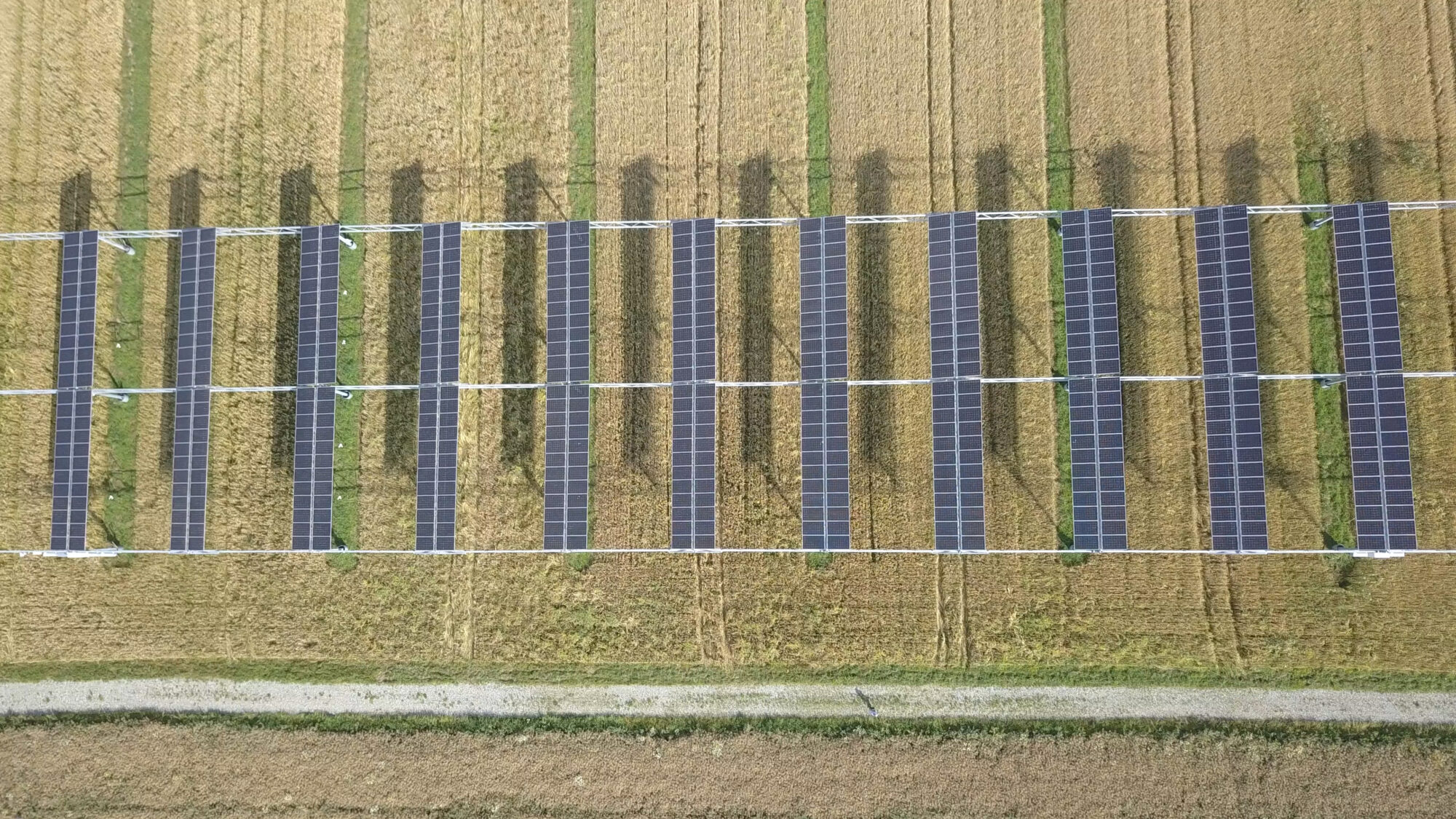
This is an analysis piece. It offers the author’s interpretation of a verifiable development: a Euronews report published on 11 October 2026 asking whether agrivoltaics, which combines solar panels with farming on the same land, can ease competition between agriculture and solar power for space.
The Development
According to Euronews, Silvia Tomasi of Eurac Research describes agrivoltaics as the integration of food production with renewable energy production, with panels installed above, between or beside crops. The outlet cited a 2023 study estimating that Europe could generate 25 times its current electricity demand this way, and noted that solar needs more land than other energy sources, sparking rural land-use conflicts.
The report said agrivoltaics have in some cases been found to improve water-use efficiency and protect crops from extreme weather. In Murcia, Spain, researcher Pilar Flores said her team found that water-stressed peppers grew better under panels than well-watered ones, though she cautioned that results depend on the system and the site. France requires projects to keep at least 90 per cent of local reference crop yields, Euronews said, while Italy requires at least 70 per cent of the area to remain agricultural. It added that Italy has secured €1.7 billion in state aid for the approach.
Fabrizio Garbarino, president of the farmers’ union Associazione Rurale Italiana, called agrivoltaics a shortcut that does not address farmers’ root problems, according to the report. It also cited a 2025 review by the newspaper Today.it finding that about 86 per cent of roughly €775 million in government funds for such projects went to large-scale ones, and a study co-authored by Tomasi finding that benefits can favour large-scale farmers, landowners and investors over smaller farmers and local communities.
Reading the Story
Two points stand out in the author’s reading. First, the debate has shifted from whether to combine solar and farming to how to keep the farming real. The agronomic evidence in the report is conditional, and the yield and land-share rules it describes in France and Italy look like attempts to stop the agricultural half of the label becoming nominal.
Second, the question of who benefits may matter as much as the technology. The same installation can be a lifeline for a farm or a way for outside investors to capture the value of rural land, depending on ownership. Tomasi told Euronews it is “a matter of how the technology is implemented and who really benefits”. The funding figures cited suggest design rules alone may not settle this; the experts quoted urge clearer classification, local input and support for farmers.
Why It Matters
Europe is trying to expand clean power while keeping farmland productive and rural communities on side. Euronews concludes that agrivoltaics is not a silver bullet and that outcomes depend on design, ownership and who benefits. Whether governments write such safeguards into support schemes will show if the approach eases land conflicts or only relocates them.



Leave a Reply