

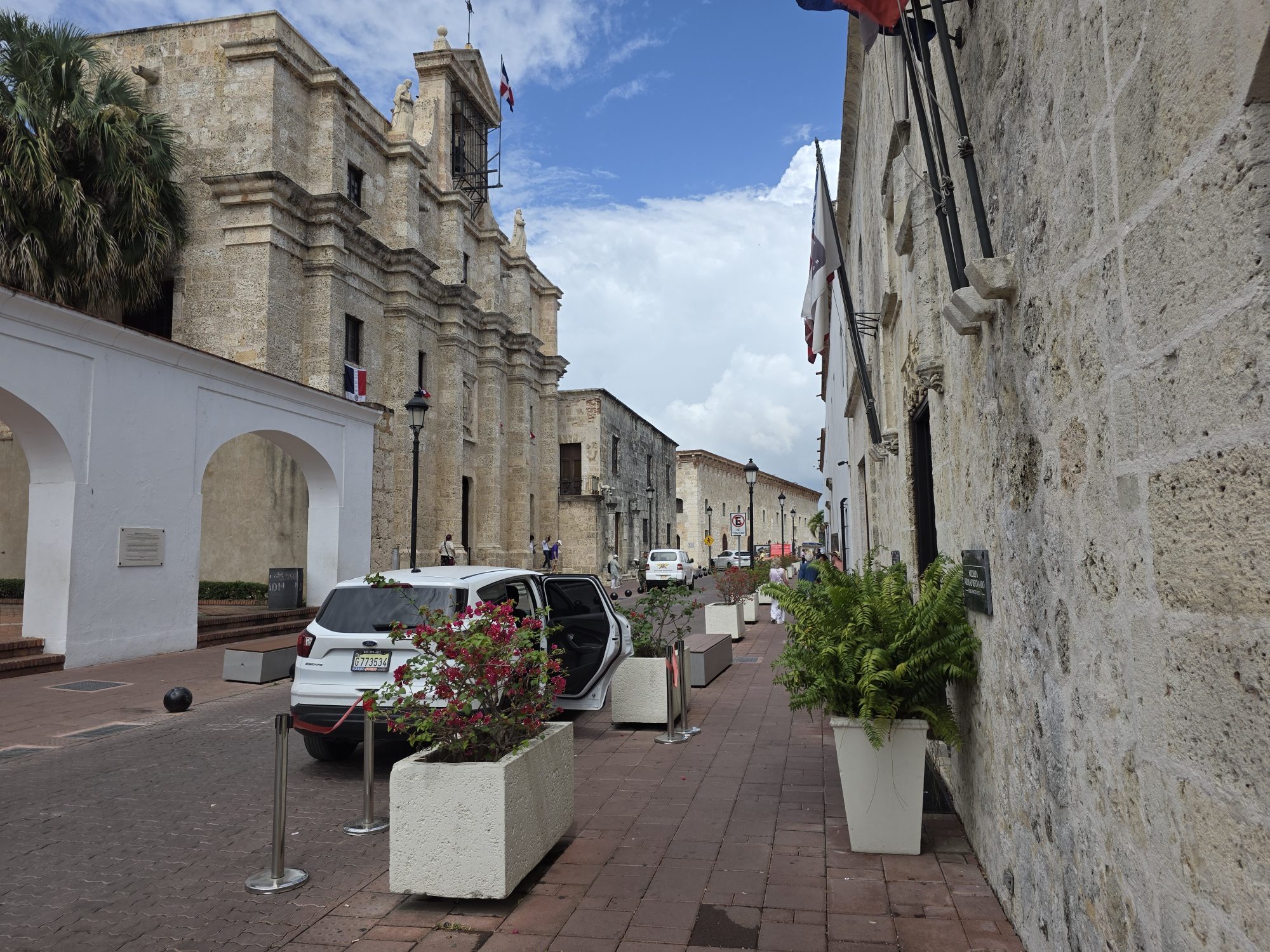
UNESCO’s World Heritage Centre has reported that its Climate Action Toolkit for World Heritage is being tested in the Colonial City of Santo Domingo in the Dominican Republic. In a news item dated 21 October, UNESCO says this is the toolkit’s first pilot at a cultural site and its first in Latin America and the Caribbean. The pilot runs from September to November 2026 and combines online sessions with an in-person workshop held from 5 to 9 October.
What the Toolkit Does
According to UNESCO, the toolkit helps site managers assess climate-related risks to a property’s Outstanding Universal Value, the qualities that earned it a place on the World Heritage List, and build climate action into management and planning. It was developed by UNESCO together with the three Advisory Bodies to the World Heritage Committee, ICCROM, ICOMOS and IUCN, and builds on a policy document on climate action for World Heritage adopted by the General Assembly in November 2023. UNESCO says the governments of the Netherlands, Norway and Australia support its development and pilot testing. An earlier pilot took place at the West Norwegian Fjords in 2025.
Five Days in the Colonial City
UNESCO and the Advisory Bodies organised the workshop with the Dominican Republic’s Ministry of Culture. Participants came from national and local institutions working on heritage conservation, urban planning, disaster risk management and climate action. Over five days, UNESCO says, they examined hazards including hurricanes, heavy rainfall and flooding and their possible effects on the features that give the site its value, using technical discussions, practical exercises and field visits to see how climate projections, scientific data and local knowledge can inform risk assessments and adaptation and mitigation measures.
UNESCO notes that the Colonial City was inscribed on the World Heritage List in 1990. Diana Martínez, Director of Cultural Heritage and the Historic Centre at the National District City Council, is quoted as saying: “The historic centre has been affected in different ways by climate-related events in the past,” with responses, she said, having been largely reactive. The participating institutions plan to use the results to advance a Climate Action Plan for the Colonial City, and UNESCO says the lessons will inform the toolkit’s further development and use at World Heritage properties worldwide.
Why It Matters
Historic city centres can be exposed to storms and flooding, as the Santo Domingo workshop’s focus on hurricanes, heavy rainfall and flooding shows. A practical method for assessing which attributes of a historic centre are most at risk, and what adaptation measures to consider, could help site managers and local authorities plan ahead. The pilot is still under way and the Climate Action Plan is something the institutions intend to advance rather than a finished document, so the real test will be whether the workshop’s findings turn into funded measures. The wider significance lies in the toolkit’s intended use at other sites, where heritage managers face similar questions about climate-related hazards.



Leave a Reply