

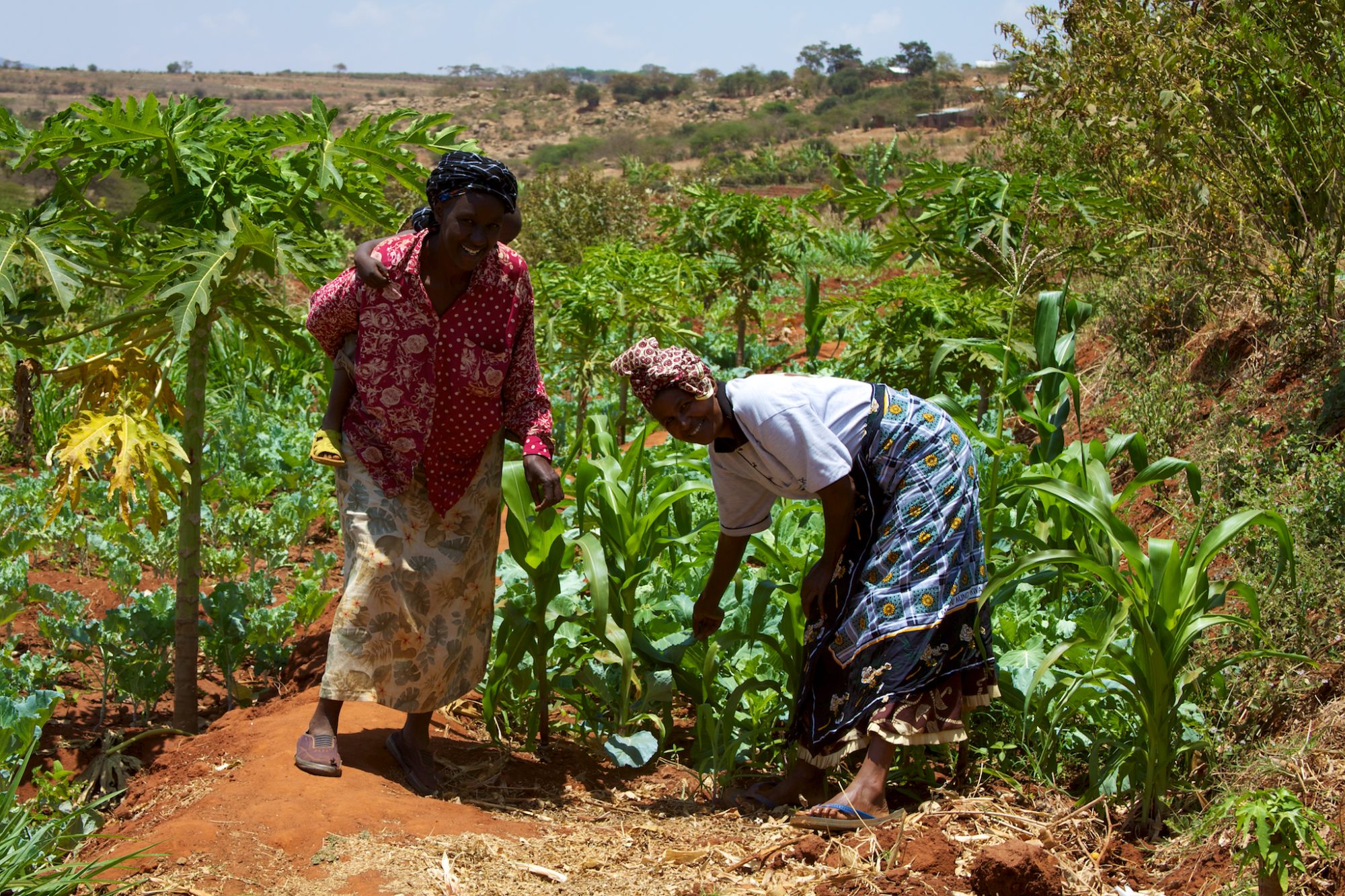
A programme in Kenya is helping farmers understand their soil so they can decide which fertiliser to use and how much, as climate shocks intensify, UN News reported on 23 October 2026. The initiative, Soil Mapping for Resilient Agrifood systems (SoilFER), was launched through a partnership between the UN Food and Agriculture Organization (FAO) and the Kenya Agricultural and Livestock Research Organization (KALRO) at Kabete, with financial support from the United States Department of State and Japan.
Mapping the soil
According to the report, more than 3,600 soil samples have been collected and mapped across 45 counties. They feed a digital soil map that gives farmers information specific to their location. With FAO support, KALRO has renovated three laboratories and equipped them with advanced technology to analyse samples from across the country. The samples are georeferenced, and the results are sent directly to farmers’ mobile phones.
Selected farmers are also trained to diagnose and treat soil degradation. They earn the title of “soil doctor” and then teach their peers. At the launch event, the Kenya Soil Partnership, the Kenya Soil Laboratory Network and the national rollout of the Global Soil Doctors Programme were introduced.
What participants said
Agness Munialo, a farmer from Kakamega county in western Kenya who trained as a soil doctor, said that farmers previously used excessive chemicals, and sometimes more fertiliser, to try to raise yields. “Now we know better,” she said. UN News says her training helped farmers understand the composition, pH levels and fertility of their soil.
Barrack Okoba, FAO-Kenya’s national coordinator for the programme, said that making soil information available is part of building agricultural resilience, and stressed the need to support farmers in sustainable farm management. Jackline Kioko, a KALRO intern who attended the launch, said the information showed her how soil testing could guide decisions on her family’s farm.
Kenya’s Cabinet Secretary for Agriculture, Mutahi Kagwe, called for stronger collaboration among agricultural institutions to coordinate decisions, improve information sharing and bring soil health into the work of all relevant bodies. He urged Kenyans to consider soil testing before deciding what to plant or which fertiliser to use. SoilFER is also being implemented in six other countries: Ghana, Guatemala, Honduras, Mozambique, Tunisia and Zambia.
Why It Matters
As Munialo’s account suggests, applying fertiliser without knowing the soil can mean using more chemicals than needed. Testing that returns results to a phone, combined with peers trained to interpret them, is a way of putting scientific information in reach of farms that may be far from a laboratory. The report presents the approach as a route to resilience in the face of climate shocks. Whether it changes yields and incomes will depend on how widely the testing network and the soil doctors reach, but the programme’s design shows how data, local trainers and national institutions can be combined to support farming households.



Leave a Reply