

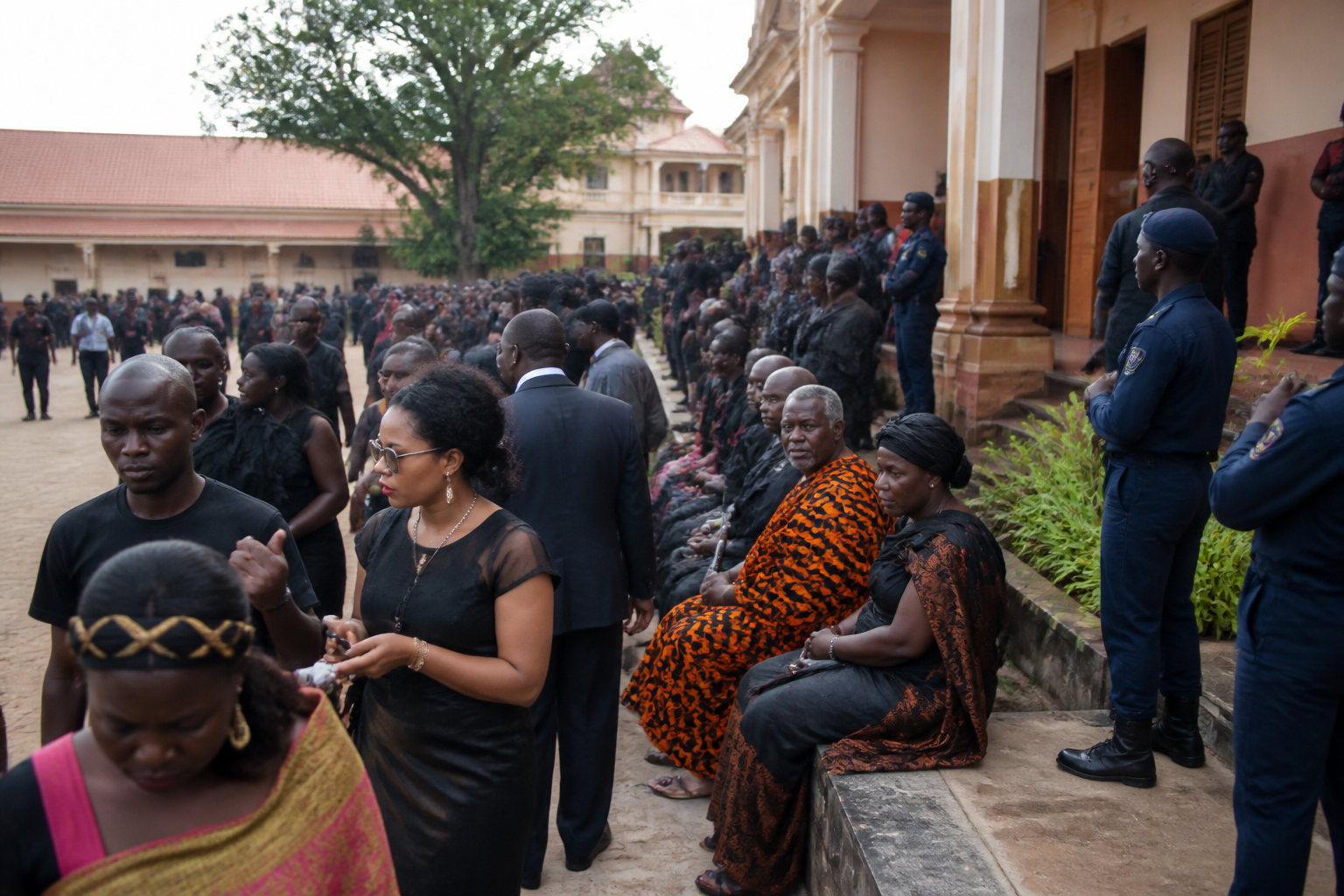
The body of Omukama Oyo Nyimba Kabamba Iguru Rukidi IV, the late king of Uganda’s Tooro Kingdom, returned to the country on Friday, 4 September 2026, beginning a formal period of mourning that will culminate in his burial at the Karambi Royal Tombs.
President Yoweri Museveni received the casket at Entebbe International Airport before it was flown onward to Kyegegwa District. From there, officials said, the remains would proceed to the royal palace without public stops. The government has assumed responsibility for the main funeral costs, including repatriation from the United States, where King Oyo died on 28 August while receiving medical treatment.
The arrival was more than a ceremonial homecoming. For the people of Tooro, it marked the return of a monarch who had occupied the throne for most of his life—and the beginning of a transition whose cultural and legal dimensions are not yet complete.
A king shaped by an unusually long childhood reign
King Oyo became Omukama in 1995, following the death of his father, King Patrick David Matthew Kaboyo Olimi III. He was three years old, making him the world’s youngest reigning monarch at the time. His early years on the throne were managed through regency arrangements, while his public role expanded as he grew into adulthood.
His 31-year reign made him one of Uganda’s longest-serving traditional rulers. Although Uganda’s kings and other cultural leaders do not exercise the executive, legislative or administrative powers of the state, they retain important symbolic authority. Their institutions connect communities to history, language, custom and identity, particularly in regions where cultural belonging remains a central part of public life.
That distinction matters in understanding the scale of the mourning. King Oyo was not a head of government, but his death has affected a living cultural institution with its own leadership structures, rituals and expectations about continuity.
What is confirmed—and what remains unresolved
In its announcement of the death, the Tooro Kingdom said the continuity of the crown was assured and that the late king left behind a prince who would be identified at the appropriate stage of the traditional process. The statement did not publicly name the heir.
Government officials have since urged the royal family, clan leaders, elders and the wider public to remain calm while any succession differences are addressed through cultural and legal mechanisms. This confirms that questions around the next monarch exist, but it does not establish that a formal court case, criminal investigation or settled rival claim is under way.
Uganda’s constitutional framework recognises traditional and cultural institutions while limiting their governmental powers. The Institution of Traditional or Cultural Leaders Act provides that disputes over who should become a traditional leader should first be handled by elders, clan leaders or a community-approved representative body. If those efforts fail, the matter may be referred to the High Court.
That process is significant because a succession dispute is not simply a private family disagreement. It can involve lineage, customary authority, the management of royal property and the public recognition of a new cultural leader. At present, the official record supports caution: the kingdom has announced an heir exists, while the identity and installation process remain to be formally disclosed.
Mourning before succession
The immediate priority is the funeral. The government has announced that the body will lie in state at Karuzika Palace from 4 to 12 September, giving residents, cultural delegations and national leaders an opportunity to pay their respects. Burial is scheduled for 12 September at the Karambi Royal Tombs.
For Tooro, these rites are likely to serve two purposes at once. They will honour a young king whose entire public identity was tied to the crown, while also creating the institutional space in which the kingdom can address the future. The decision to place mourning first may help prevent competing claims from overwhelming the community’s collective farewell.
King Oyo’s death closes an era defined by an extraordinary image: a child monarch who grew into the face of a historic Ugandan kingdom. His final journey home now places that legacy in the hands of the royal family, Tooro’s cultural authorities and the legal framework that governs disputes when tradition and public recognition do not immediately align.


Leave a Reply