

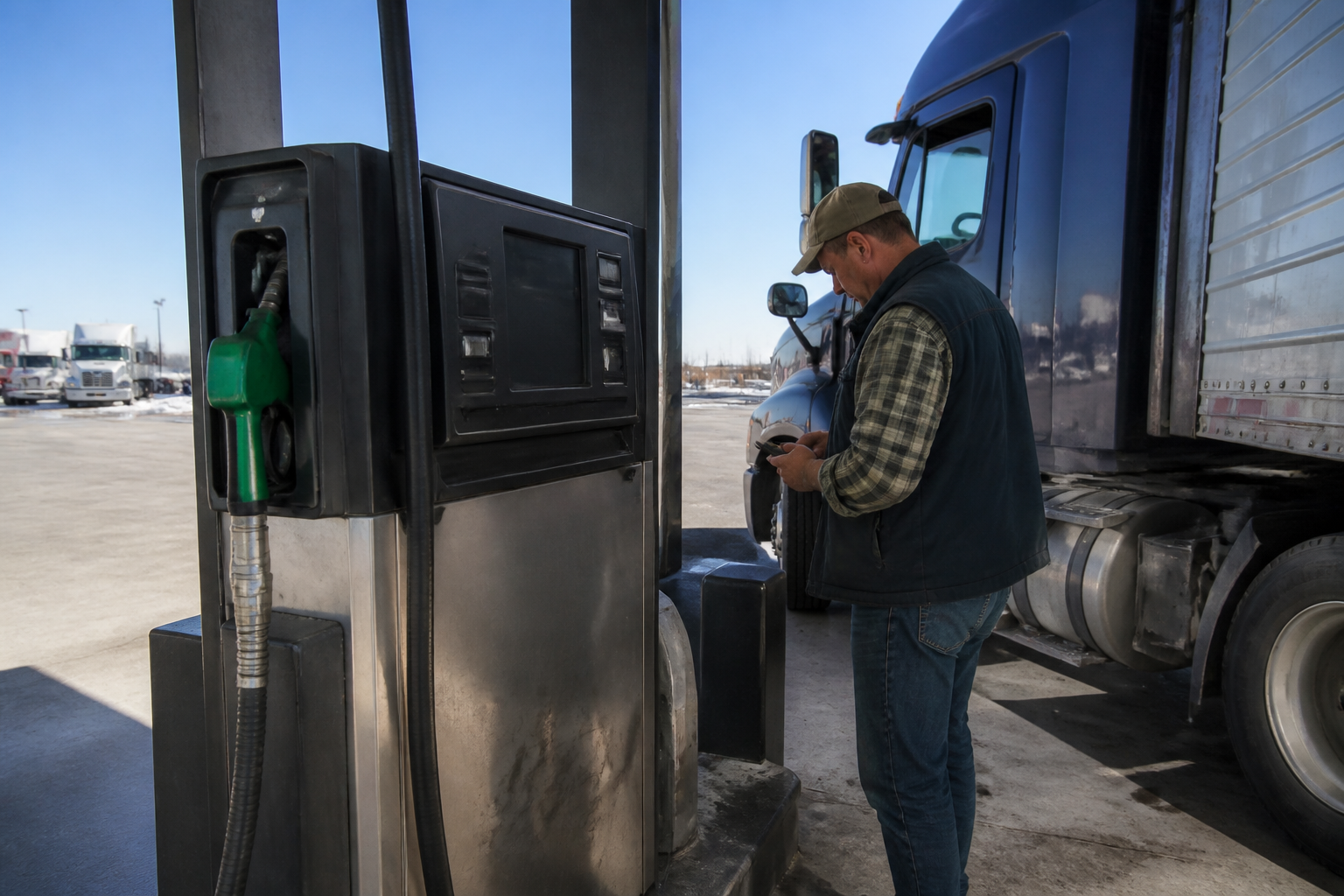
The price of diesel in the United States has reached a record national average of $5.85 a gallon, according to the American Automobile Association’s figures for September 4, 2026. That is above the previous national high of $5.8159, recorded on June 19, 2022, during the energy shock that followed Russia’s full-scale invasion of Ukraine.
The new peak is more than a statistic for motorists. Diesel powers much of the country’s freight movement, agricultural machinery, construction equipment, buses, backup generators and parts of the rail network. When the fuel used to move goods becomes more expensive, the effect can travel well beyond the forecourt: into delivery charges, farm operating costs, building work and the price of everyday products.
A sharp rise since the start of the conflict
AAA’s data shows the national diesel average has risen from $3.7121 a gallon a year earlier and from $3.76 before the US-Israel conflict with Iran began in late February, according to reporting by The Associated Press. On September 4, diesel was up roughly 56% from that pre-conflict level.
The immediate market background is international. Energy supplies and shipping routes have been unsettled by the conflict, including severe restrictions on traffic through the Strait of Hormuz, a vital route for oil and refined petroleum products. The Energy Information Administration has said in its August 2026 outlook that shipments through the waterway were expected to remain severely constrained through August, with flows only gradually increasing in September.
Those conditions have tightened a market already sensitive to refinery capacity, inventories, seasonal demand and disruptions affecting other major suppliers. Diesel is not priced solely by the cost of crude oil. Refining margins, transportation, storage and regional shortages can all magnify movements at the pump.
Why diesel matters more than the headline suggests
Gasoline prices attract the most public attention because of the number of passenger vehicles on American roads. Diesel, however, is closely connected to the wider economy. Truck fleets use it to carry food, manufactured goods and fuel between ports, warehouses, shops and homes. Farmers depend on it during planting and harvest. Contractors use it for excavators, loaders and generators. A prolonged increase therefore creates pressure for businesses that may have limited ability to absorb higher costs.
Large operators can sometimes protect themselves through fuel surcharges, purchasing contracts or hedging. Smaller carriers, independent truckers and family farms are less able to spread or pre-finance the increase. For them, the difference between a manageable operating budget and a loss can be measured in cents per gallon.
Consumers may not see the full effect immediately. Companies often delay price changes, use existing inventory or negotiate with customers before passing costs on. But if elevated diesel prices persist, transport-intensive businesses face a choice between raising prices, reducing margins, cutting routes or postponing investment. None of those responses is cost-free.
What is confirmed—and what remains uncertain
The record retail price is confirmed by AAA, while the EIA provides the federal government’s historical and current petroleum-price data. The connection to the Iran conflict is a market explanation supported by the reported disruption to energy flows and by the EIA’s assessment of constrained Hormuz traffic. It should not be treated as proof that any single government or military decision alone caused the entire increase.
Prices can also reverse quickly if shipping resumes, refinery availability improves, inventories rebuild or crude markets weaken. The EIA’s August outlook anticipated that oil prices could fall later in 2026 as traffic through the Strait of Hormuz gradually recovers and curtailed production returns. That is a forecast, not a guarantee.
For now, the record is being felt most directly by the people and businesses that keep goods moving. A diesel price of $5.85 a gallon is not simply a new number on a national chart; it is a test of how much of America’s transport and food system can absorb another international energy shock before the cost reaches everyone else.



Leave a Reply