

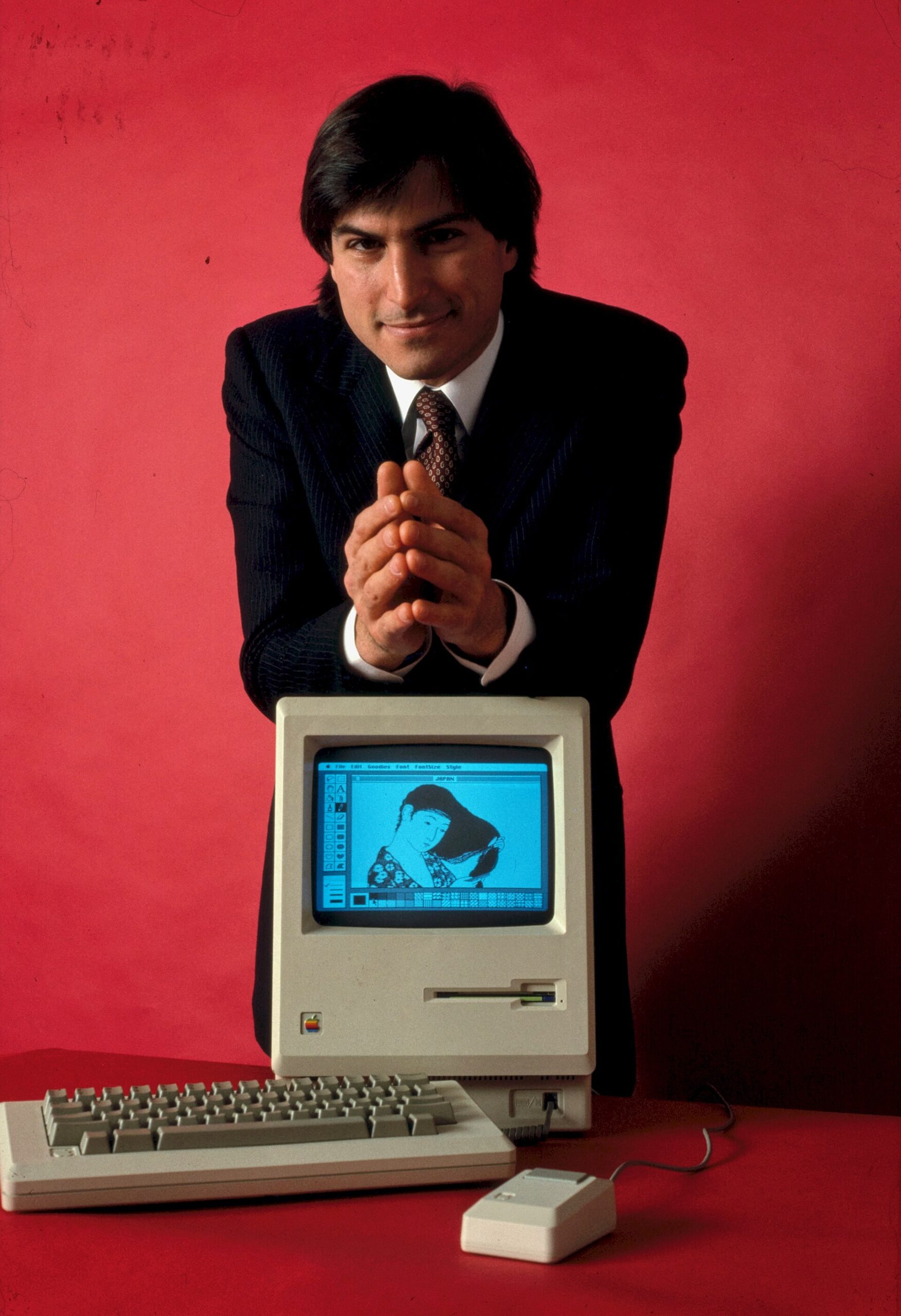
Steve Jobs co-founded Apple with Steve Wozniak in 1976, the two having met five years earlier through a mutual friend and bonded over electronics, and later both attended meetings of Silicon Valley’s Homebrew Computer Club, part of the emerging DIY personal-computing movement. Jobs was ousted from Apple in 1985 following internal conflict, founded NeXT, and returned to a struggling Apple in 1997 when the company acquired his new venture.
A Philosophy, Not Just A Product Line
What distinguished Jobs, by most accounts of his career, was less technical invention than product philosophy. He did not design microprocessors, and the engineering of Apple’s first computers was Wozniak’s work rather than his. His contribution was an insistence — applied ruthlessly across Apple’s product decisions — that technology should serve the human experience of using it, not the other way around. After returning to Apple in 1997, he cut the company’s sprawling product lines down to four core products, redirecting resources toward fewer, more considered products.
That discipline produced a run of releases now treated as a case study in product strategy: the iMac in 1998, signalling Apple’s design-led revival; the iPod in 2001, which, once paired with the iTunes Store (launched in 2003), helped legitimise digital music sales; and the iPhone in 2007, which Apple introduced as three products in one (a revolutionary mobile phone, a widescreen iPod with touch controls and a breakthrough Internet communications device) — a description that, in retrospect, understated how thoroughly it would reshape communication, commerce and media consumption.
What Outlasted Him
Jobs died on 5 October 2011. In the years since, Apple has institutionalised his approach through what Fortune reported as an internal “Apple University” programme, set up under Jobs to pass on how Apple’s top executives think to the next layer of management — an unusually deliberate attempt to make a founder’s instincts survive the founder himself.
Key Insights
- Jobs co-founded Apple in 1976, was ousted in 1985, and returned via Apple’s 1997 acquisition of NeXT.
- On his return, he cut Apple’s product lines to four core products, prioritising focus over breadth.
- The iMac (1998), iPod (2001) and iPhone (2007) mark the core of his product-led resurgence of Apple.
- Apple has since institutionalised his product philosophy through internal leadership training programmes.


Leave a Reply